Living & Growing: The Better Angels of Our Nature
Published 3:00 am Sunday, December 15, 2019
Every Sabbath, Jews all over the world read a section of the Torah, the Five Books of Moses.
We start in October, with Genesis 1:1, and read straight through to Deuteronomy 34:12, breaking up the text into 52 consecutive weekly readings. When we get to the end, we roll the Torah scroll back to the beginning, and dive right back in with, “In the beginning, G-d created the heavens and the earth.” Thus has it been for over 3,300 years.
In this week’s section, we read of Father Jacob sending emissaries to his estranged brother Esau. When they had parted some 20 years before, Esau had promised to murder Jacob if he ever got the chance, and Jacob wanted to ascertain his intentions. The Hebrew word for “emissaries” can also be read as “angels,” and indeed, several commentators suggest that he sent actual angels on this mission, not human emissaries.
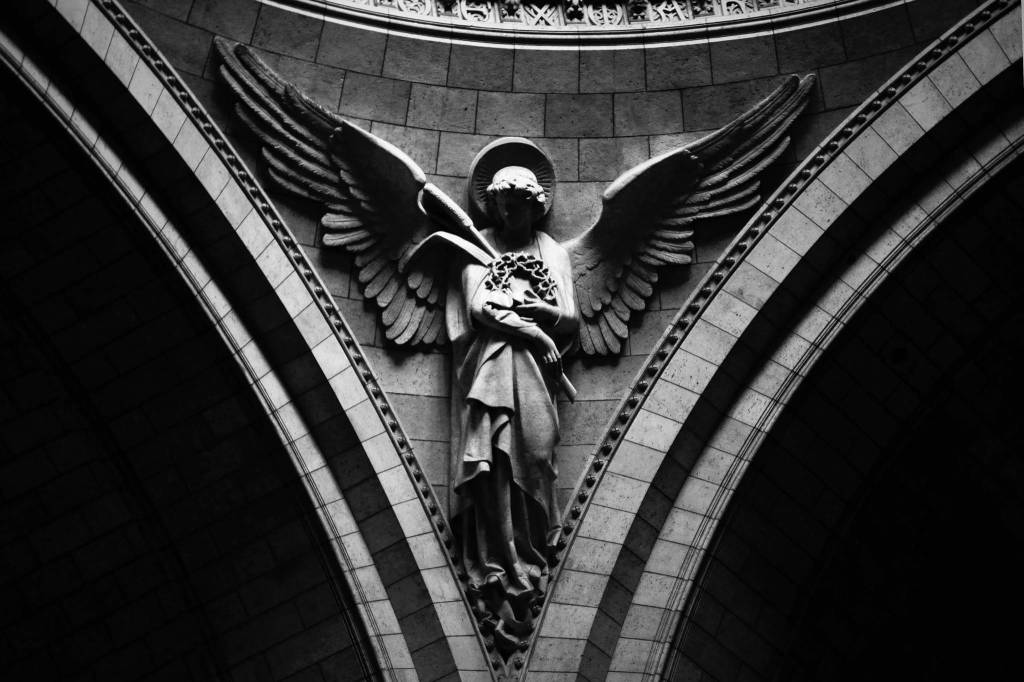
Angels are to Jacob what fast food joints are to I-95. Whenever the Torah paints a portrait of Jacob, angels are photobombing in the background. It’s like he can’t get away from those things.
He leaves home and has a vision of angels going up and down a ladder that stretches to heaven. Later, he follows his path and encounters angels of G-d, and then calls the place Machanaim, the double encampment of angels.
He sends angels to appease his hot-headed brother Esau. Then he wrestles with an angel, Esau’s angel/advocate, who, according some opinions, was none other than Sama-el, the Angel of Death himself.
And at the end of his life, he blesses his grandsons Menasse and Ephraim by invoking the protections of the angel that had rescued him at every crisis in his incredibly crisis-ridden life.
So what’s the deal with the angels, and why do they figure so prominently in Jacob’s life?
The answer depends on one’s understanding of what angels are and what their function is in the unseen world which exists beyond our senses.
The Jewish view on angels is derived from the Hebrew word malach, which (as mentioned above) means both emissary and angel. Basically, angels are G-d’s messengers. Each one is created for a specific task, and ceases to exist when that task is completed. Some angels have ongoing missions and thus exist for eons; others exist for a fleeting moment. They are, to use a cytology analogy, the messenger RNA in the great cytoplasm of the universe.
There is, though, another view of angels in the Torah. “Rabbi Eliezer ben Yaakov said: A person who fulfills one mitzvah (commandment/good deed) acquires for himself a single defending angel. A person who commits one transgression acquires a single accusing angel.” (Avot 4:13)
What a beautiful idea! Normally, we think of angels flitting hither and thither in G-d’s created universe rushing about to do his will. But when we mortals do G-d’s will by doing good deeds, we ourselves create an angel; an advocate that will accompany us through life and stand up for us on that inevitable day when we must give a full accounting for our deeds: the good, the bad and the ugly.
We have the power to create angels. Our good deeds become angels that surround us, protect us, nurture us.
Prior to his encounter with Esau, Jacob prays to G-d: “I am ‘smallified’ by all the kindness and truth with which you have dealt me…” (Genesis 32:11) The simple sense of “smallified” (Heb.: katonti) in the verse is “humbled,” but Rashi, the iconic medieval commentator, suggests otherwise: Jacob was afraid that, measured against all of the abundant kindnesses that G-d had showered him, his good deeds would seem paltry by comparison, and G-d might decide to give him over to the hand of the enemy.
Here we see expression given to the idea that our good deeds are our advocates. Jacob is surrounded by his angels, his good deeds, that he had accumulated throughout his life. In his humility, he was worried that he had not accomplished enough good; but in the end, he had nothing to fear.
We are but the sum of our good deeds, our mitzvot. G-d doesn’t care how much money we pile up, what kind of car we drive, what timepiece dangles from our wrists. Ultimately, our actions will speak more eloquently for us than any image consultant, epitaph or autobiography.
The newspapers are littered with stories of people, once thought to be great, once looked up to and admired as leaders, being dragged away in handcuffs, indicted by their actions.
Let us all join together to flood the world with angels. Do good deeds, unrequited kindnesses to others. Give a homeless person an Andrew Jackson. Call your mother. Pick a mitzvah — any mitzvah — and create an angel.
• Rabbi Yehoshua Mizrachi is with Congregation Sukkat Shalom. “Living Growing” is a weekly column written by different authors and submitted by local clergy and spiritual leaders.