
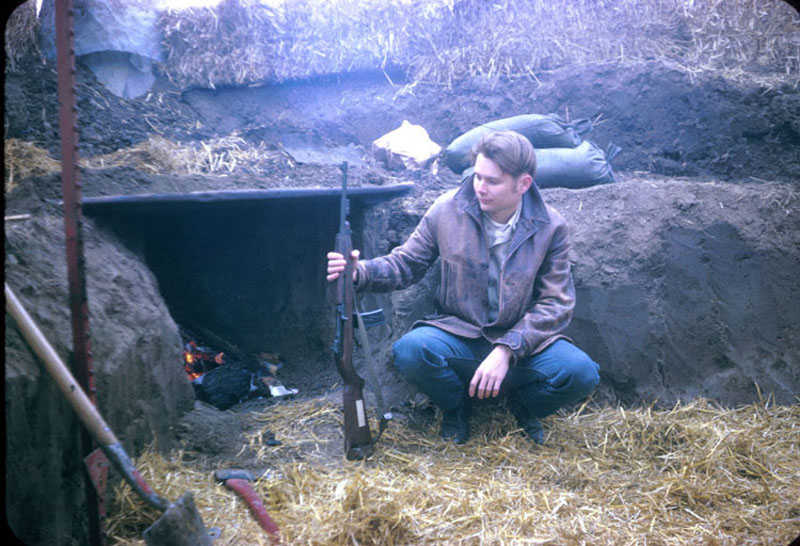
Juneau teacher Paul Kristian Berg has faced choices so difficult most people never have to make them. During the Vietnam War, he set bomb targets for the Navy and then, when he returned home, he was at Pine Ridge Indian Reservation in the 1970s, during the siege of Wounded Knee and the two and a half chaotic years after.
It’s the choices he made in those times, and the post-traumatic stress and guilt he feels about them, that prompted Berg to write “Sandra’s Hands: A Reflective Journey from the Vietnam War to the Siege of Wounded Knee.” A counselor recommended he write the book.
“I found myself later in life troubled by the death of people I had known, particularly children. … I was told to confront the death that bothered me the most, and it was here in the United States. It was Sandra,” he told the Capital City Weekly.
For those who may not be familiar with it, Pine Ridge is a reservation of Oglala Lakota people. It’s also the location of the 1890 massacre at Wounded Knee, where U.S. troops killed at least 150 Sioux (the Lakota are one of several Sioux tribes, as are the Dakota and Nakota), half of them women and children, many of them unarmed. Twenty-five U.S. soldiers were also killed. Today, Pine Ridge is the poorest place in the entire United States, with unemployment between 70 and 80 percent.
In 1973, it was the location of a 71-day occupation, besieged by the FBI, federal marshals and others, when 200 Oglala and members of the militant American Indian Movement (AIM) occupied the town in an effort to depose tribal chairman Dick Wilson and to protest the U.S. government’s treatment of American Indians. In the initial years after the occupiers surrendered, the murder rate on the reservation was the highest per capita in the country; some allege AIM supporters were murdered by the Guardians of Our Oglala Nation, which supported Wilson’s chairmanship, or by authority figures like tribal police.
It was during this “reign of terror” after the siege that Berg’s former student, 15-year-old Sandra Woundedfoot, was murdered by a Bureau of Indian Affairs special investigator.
Berg and his wife, Virginia, left Pine Ridge in 1976. But in 2010, Berg returned, in part to grapple with Sandra’s death.
“Why did I fail to save her?” he asked. “She was my student. I knew she was at risk.”
The trip helped him realize that though short, her life had deep meaning, and had affected many at Pine Ridge — including him.
“Sandra’s death was so brutal that it shocked everybody,” he said. “It brought people together. They mourned her loss… there were still several more killings, but it was Sandra’s death that brought about healing.”
Berg sees a clear parallel between his experience in the Vietnam War and at Pine Ridge. When the U.S. government failed its people — whether it was when his superiors in the military told him to lie about whether or not bombing targets were hit during Vietnam, or when the FBI investigators besieging Wounded Knee terrorized a pair of Oglala grandparents and their two grandchildren — the problems are systemic, not the act of any one person, he said.
Berg isn’t hesitant to point out moral and other failings in the Bureau of Indian Affairs, the FBI, the tribal police, the military, or himself.
His experience setting air targets in Vietnam convinced him, he said, that “military tactics were wrong… the approach was ‘kill as many as we can,’ (but) this battle was in the hearts and minds of the Vietnam people. It was an ideological battle. But the American command structure did not see it that way.”
Disparity of sentencing is also something that greatly upsets him. Sandra’s murderer, special investigator with the BIA Paul Duane Herman, Jr., was sentenced to ten years, according to the FBI. In contrast, Leonard Peltier, an activist and member of the American Indian Movement who killed two FBI agents, was sentenced to two life sentences. Amnesty International has called for Peltier’s release, saying his case was influenced by political factors.
“Sandra’s Hands” is also about Berg’s calling to become a teacher, and his growth along the way.
Berg has taught at the University of Alaska Southeast, the Juneau School District and for seven years taught at Thunder Mountain Academy, a private school he founded in Juneau; he also taught in other Alaskan locations. Now he teaches at the Johnson Youth Center and is a cross-cultural specialist with Goldbelt, Inc.
“While it (the book) may have started as an endeavor in personal healing, it became a historical document,” said Berg, whose tendency, stemming from his training during the war, is to analyze. “But also to draw lessons from this. How can we apply what we’ve learned from these historical events to today?”
As he writes at the end of the book, mandating mainstream American curriculum, in English, for rural Alaskan villages “is destroying the Native cultures and interrupting the transition of knowledge necessary for survival in the Alaskan wilderness…. We acknowledge the injustices and bigotry of the past, but the excesses of our own day are invisible to us.”
“Sandra’s Hands” is coming out on Audible. It’s also available at Hearthside Books in Juneau, and on Amazon.
• Contact Capital City Weekly editor Mary Catharine Martin at maryc.martin@capweek.com.
Read more about Southeast Alaskans in Vietnam:
‘Hunting in Wartime’: Vietnam veterans from Hoonah tell their stories
A look at one Hoonah veteran’s Vietnam experience
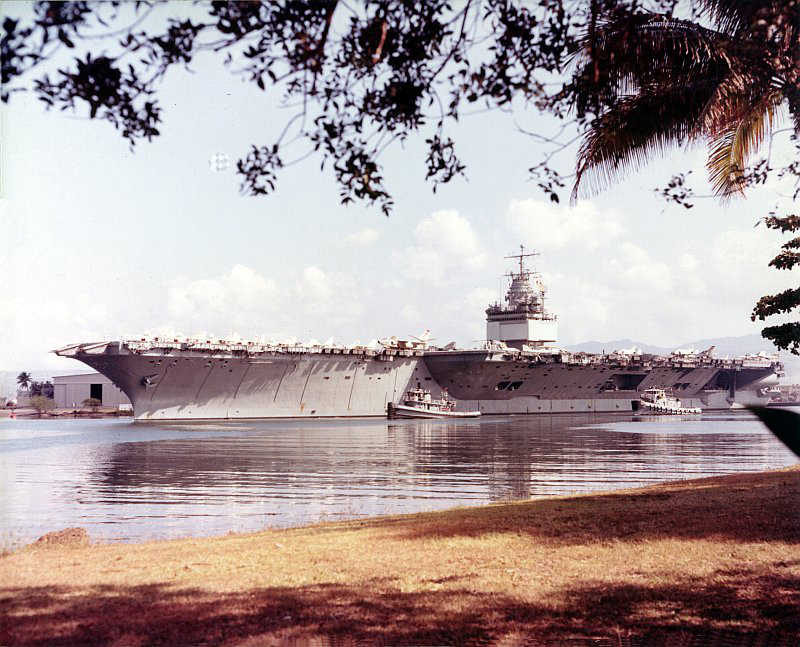
The USS Enterprise is the nuclear-powered aircraft carrier on which Juneau author Paul Kristian Berg was stationed during the Vietnam War.
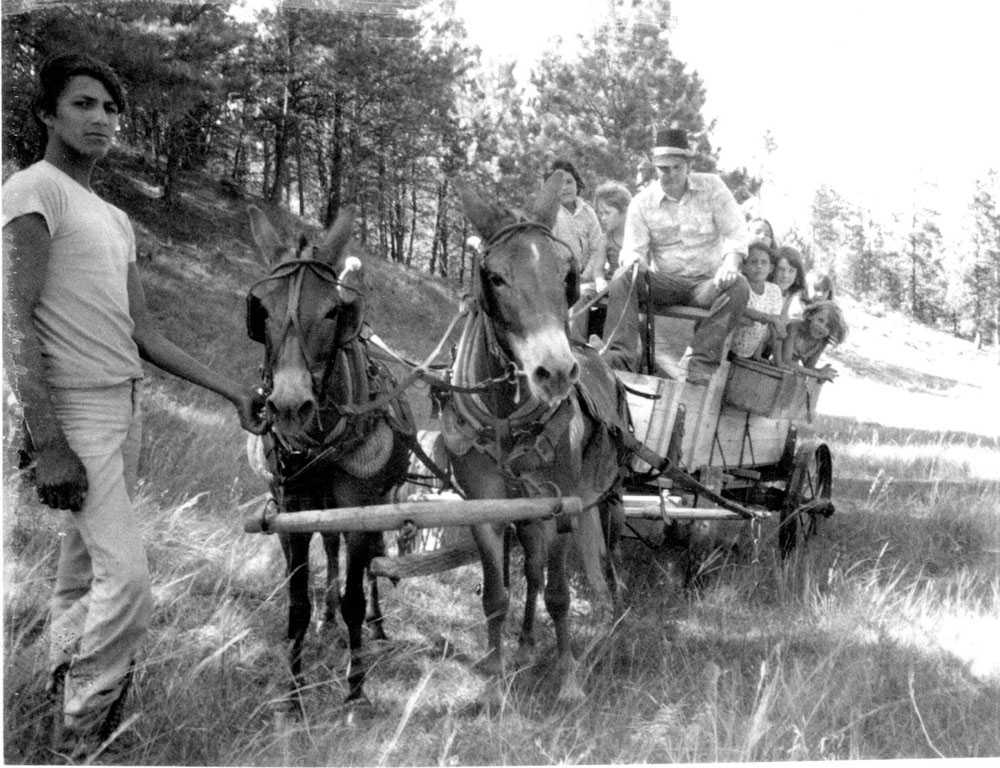
The chuck wagon which Berg and others took on camping trips with students – and “the two crazed mules,” Hee and Haw. On the left is Sanford Woundedfoot, the brother of Sandra Woundedfoot. Sandra is the girl for whom Berg named “Sandra’s Hands.”
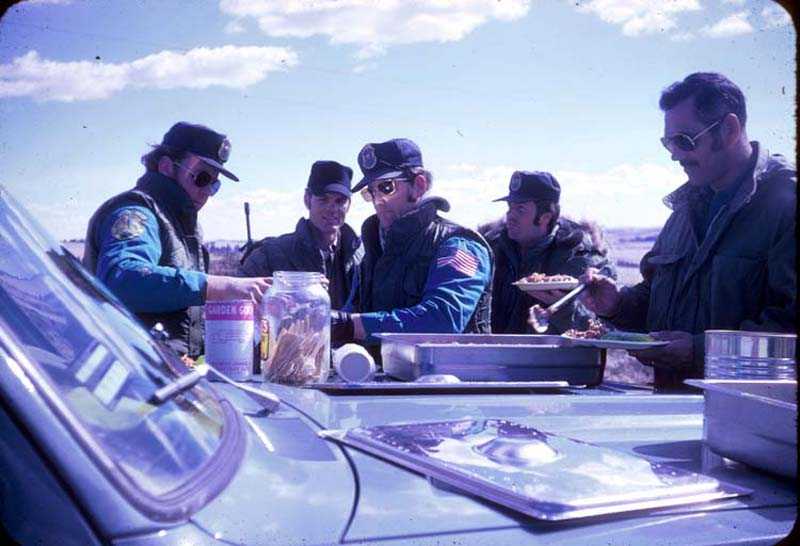
Federal marshals eat in the field during the first week of the siege at Wounded Knee. Paul and Virginia Berg, later along with others, cooked and brought food for the FBI and the marshals.
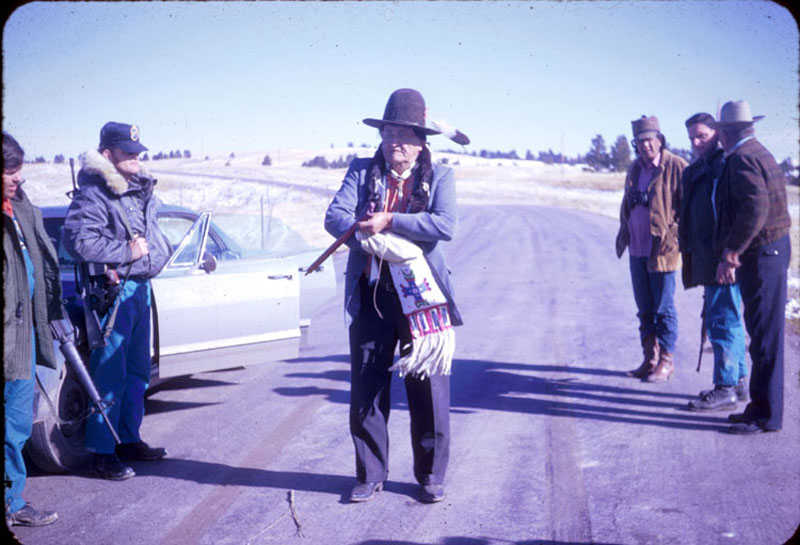
Frank Fools Crow, a Lakota medicine man and elder, was let through federal lines to speak with the occupiers of Wounded Knee.
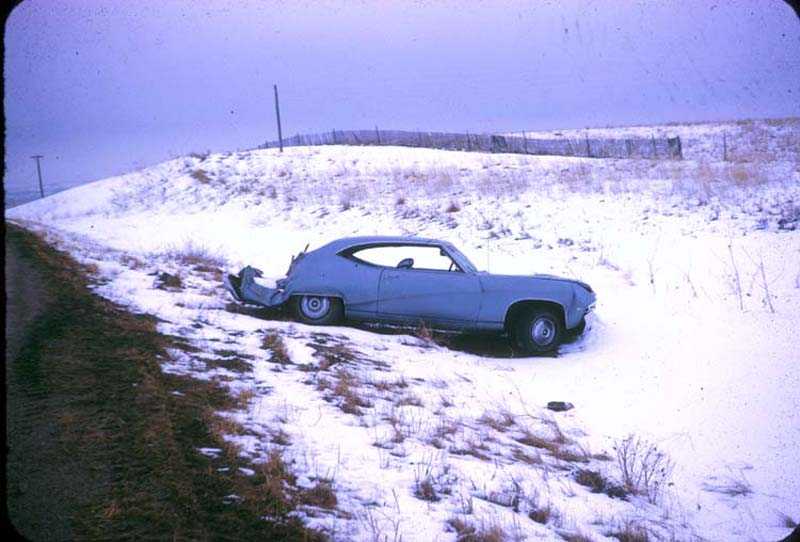
Federal marshals and the FBI identified this car as belonging to a person in Wounded Knee. They then destroyed it with gunfire, and by running over it with an armored personnel carrier, according to Berg.
