

HOW TO GILL A GIRL:
SALMON FISHING IN HYDABURG
Like a salmon, I grew up running wild. As a toddler, I chased my brother through the trees behind our childhood home. Later (braver), with dirt beneath my nails and calloused feet, I trailed new boys through those same woodlands. And when I discovered that all the land I knew and loved was slated to become rows of cookie-cutter colonial houses, I ran away, right out of Massachusetts. I chased ambitions across the globe before finally falling face-first in love with the rich and plentiful waters and rainforest of Southeast Alaska.
Southeast is now my home, and I’m lucky enough to travel and explore the region for work, shadowing locals and documenting their ways of life. In each community I’ve found teachers who have helped me establish my gait in this new backyard. Teachers like my friends in Hydaburg, who have taught me how to stop running through a landscape. To instead take root. This is a story of beach seining with the Haida, of finding my footing. This is a story of how you gill a girl.
BEACH SEINING WITH THE HAIDA
Hydaburg is one of only two Haida villages in Southeast Alaska. Located on Prince of Wales Island, this community of 400 pulses with energy. Colorful salt-worn homes border streets alive with laughing children. Gangs of all ages look out for one another, dropping fishing lines into cold clean waters and sneaking thimbleberries from neighbor’s yards. Yells, hollers and revving engines fill the evening as people return triumphantly with deer strapped to their ATVS. Haida dancers practice songs before scrimmaging basketball in open gym. Uncles tease and chase their nieces for hugs with the lingering stink of a successful salmon fishing day.
I head out on the water with Sam Mooney, Edward Peele and Toni Rae Sanderson to beach seine sockeye at Eek Inlet. Sam runs the show and I know he’s testing my character from the moment I step onboard. Who is this peculiar lanky white chick with the camera anyways? Ed sits on board with a grin like a Cheshire cat. He dips his hands into a giant bag of taffy before burning one of Sam’s cigarettes and whispering a prayer as we cut through the water and head out to fish.
We arrive at our spot and the fish rodeo begins. Scanning the horizon for jumping fish and disturbed water, we hunt for our target. Sam explains to me the significance of salmon, of harvesting rich nutrition from the landscape as being the crux and backbone of being Haida. His lesson is quickly brought to life.
“There!” Sam points and rams the boat into gear. Toni, watching from the dingy attached to our skiff, gets poised and ready. “Go!” screams Sam. She drops the bucket attached to the net into the water. Sam speeds the skiff in a circle, lassoing the school of sockeye. The loop is completed and the dingy reaches the skiff. Ed jumps on board with Toni and starts beating the metal plunger into the water. He is trying to startle the salmon into the net and also prevent the fish from sneaking through the open end. Toni slowly pulls the net in, tightening the circle, smaller and smaller. No fish this round. We try again and again, each time a little more successful than the last.
It’s getting late and we plan for one last rodeo. Sam looks at me with his testing expression and a mischievous smile. He doesn’t need to ask twice. I hop on the dingy and he sets off in pursuit of our glittery friends. “Go!” We let the bucket loose and hold tight. I plunge as hard as I can to the yaps and demands of my mentor. “Faster! Deeper! You won’t scare the salmon like that,” he shrieks. As we pull in the fish he reminds me to take over for Ed, that you don’t ask to help an elder, you simply do it. I take note.
Sam howls. He points his finger at me from the skiff, my tired arms collapsed pathetically at my sides. “Now, you’ve gone beach seining with the Haidas!” he hoots. “This is what we call a deck-load,” he says, gesturing to the salmon overflowing the cooler resting on deck. The sun is starting its slow summer descent toward the horizon. Toni collapses at the nose of the skiff in exhaustion. The golden light trims the water and illuminates the proud beaming grin of Ed resting content beside our deck-load of salmon. We turn our tired faces toward town.
A successful day on the water means celebration. But first, it means work. When we pull up to the dock, exhausted and weary, I hop into the truck bed with Toni. They slow at my door and I feel the gaze of my teachers land upon me as I leap out with my things.
“So where are we going to process these?” I ask.
A warm dark night settles over Hydaburg as we head down the dock. We battle bugs for hours as our assembly line carefully heads and guts our bounty. We work until we can barely keep our eyelids from collapsing. Washing the blood and guts off our hands, we finally itch the bites that speckle our faces necks and backs. I’m not sure if the blood on my body came from me, the mosquitoes, my comrades or the salmon and I’m far too tired to care. Sam’s heart-melting smile spreads across his sleepy face. “You can be a little Haida now,” he says. He points to the very itty bitty tiny tip of his pinky finger, “That much!” he laughs.
Well, it’s a start anyways.
Their stoic expressions crack and Sam lets out a guffaw and slaps his door. “Haha! You pass the final test. Drop your things and I’ll be back in fifteen to get you.” Salmon fishing is a means for testing each other’s character. It is also an opportunity for testing and building your own.
The next day I process salmon with Toni and her sisters Mary and Jennifer. Neighbors stop by to offer advice, recipes and secrets. We float a potato in our brine to test its salinity and kids poke in to see the fish, learn the process and help. The sisters teach each other how to clean the sockeye and filet properly so the salmon straddle and hang in the smoke house. They take turns brining, hanging and using berry bushes to swat bugs from our bounty. The fire is set and the girls trickle off to their families. Toni will check on the fire through the night.
Trails of alder smoke chug out the chimney and through cracks in the wooden smokehouse. Streams of this potent heat sneak through my open window as my head hits the pillow. My drained mind slowly wanders and processes the days as it heads full speed to sleep.
I think about salmon fishing and my new friends. While we are united in our exhaustion and contentment, our perceptions of fishing are unique. For Ed, salmon fishing is a tradition as familiar as the sunrise. He explained how when he grew up in Hydaburg, there was no road that connected his village to the outside world. Your grocery store was the alpine or river mouth.
For me, this seasonal tradition is still fresh. With each passing year, I feel more tuned to the way of life here, but I still have a lot to learn.
I roll over and hide a grin with my pillowcase, thinking about salmon and all that they mean to this region. I visualize the fish as they tie together our forest and ocean, our economy and families, our health and our hopes, Hydaburg to Kodiak, age-old Alaskans to newcomers. They tie all these things into a complex web, a big ol’ net. This is the net that finally gilled my wandering body, the net that caught me and roots me to this land. A net where many Alaskans place their futures and tonight, the net where I curl up and graciously succumb to a hard-earned sleep.
A version of this story also appeared on The Salmon Life, a blog hosted by The Salmon Project, a 501(c)(3) charitable organization. The group’s stated mission is to “give voice to Alaskans’ deep relationships with salmon to ensure that Alaskans’ lives will always be salmon lives.”
Visit http://salmonlife.org and http://www.salmonproject.org/ for more.
• Bethany Goodrich is a freelance storyteller and the Communications Director for the Sustainable Southeast Partnership. SSP is a diverse group of partners dedicated to the cultural, ecological and economic prosperity of Alaska’s rural communities. Visit www.SustainableSoutheast.net.
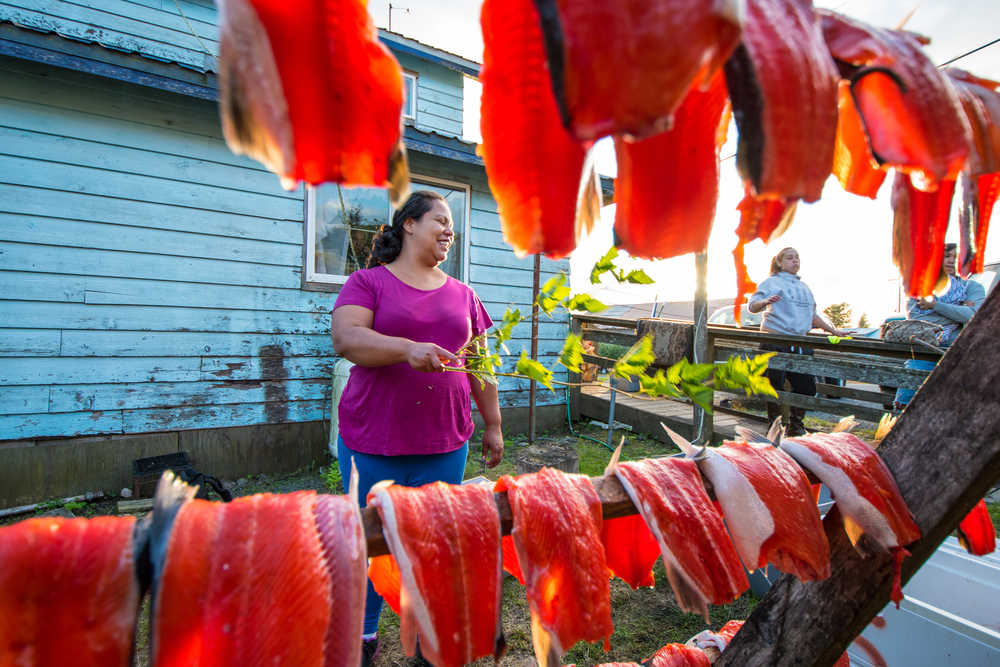
Jennifer Mooney keeps bugs off sockeye filets as they dry before being moved into the smokehouse. Photo by Bethany Goodrich.
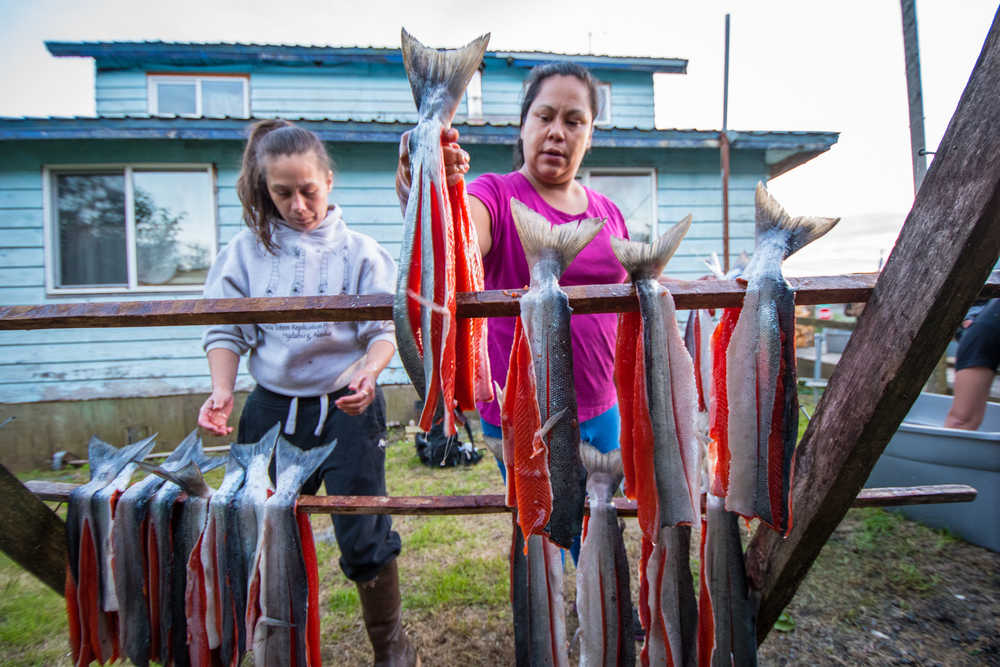
Jen Mooney hangs a carefully processed and brined sockeye salmon to dry before moving the fish into the smokehouse. Photo by Bethany Goodrich.
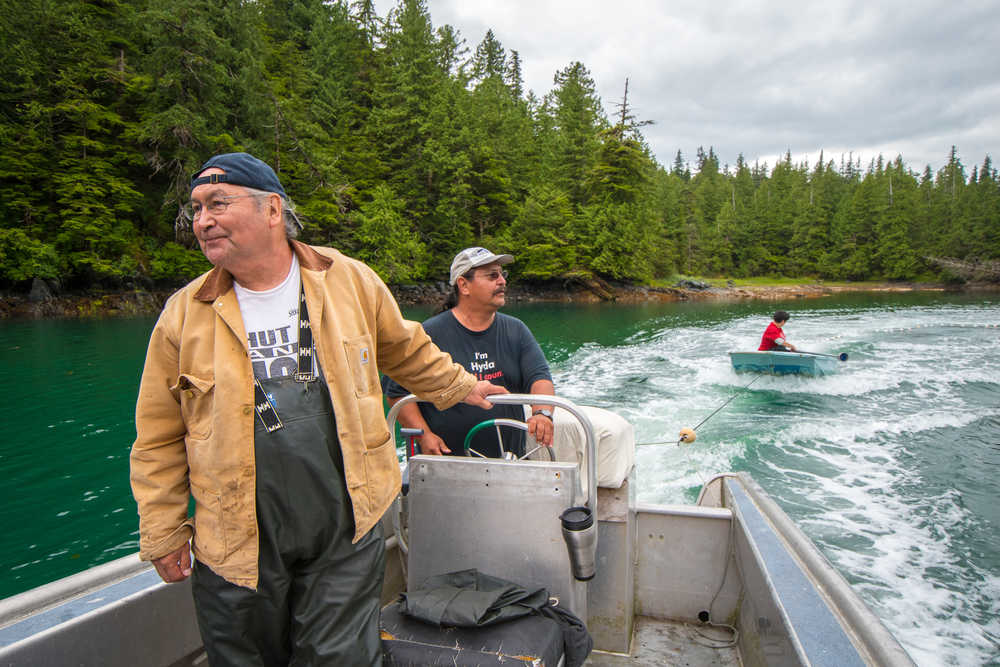
Sam Mooney speeds the skiff around a school of sockeye, hoping to trap salmon in the beach seine attached to the blue dingy. Photo by Bethany Goodrich.
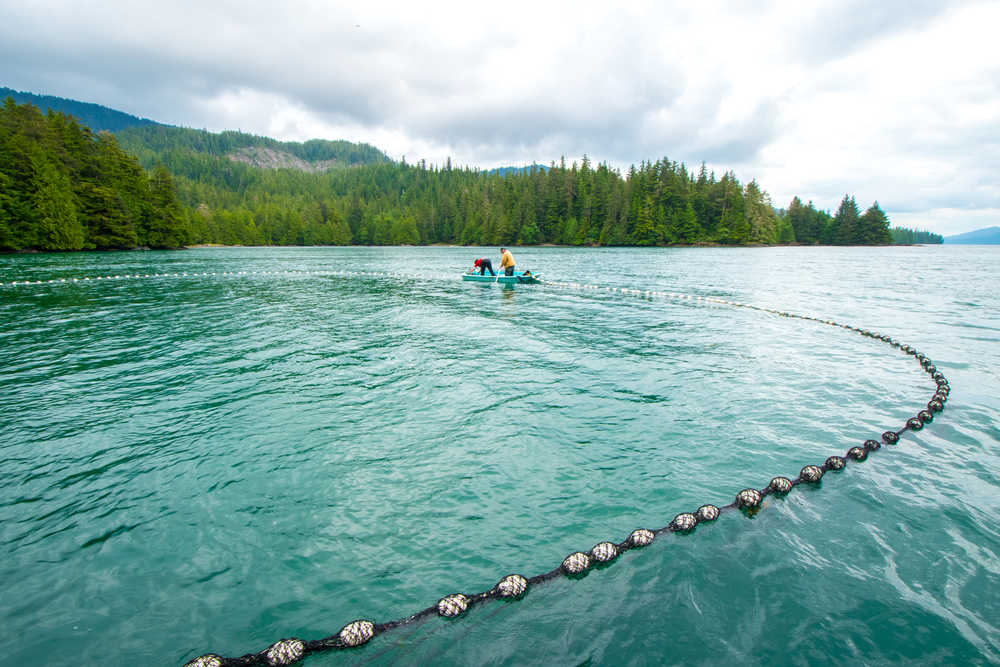
Edward Peele and Toni Rae Sanderson start to pull in the beach seine in front of Eek Inlet. Like many rural communities across Southeast Alaska, Hydaburg residents depend on healthy salmon runs to feed their families and fuel a vibrant culture. Photo by Bethany Goodrich.
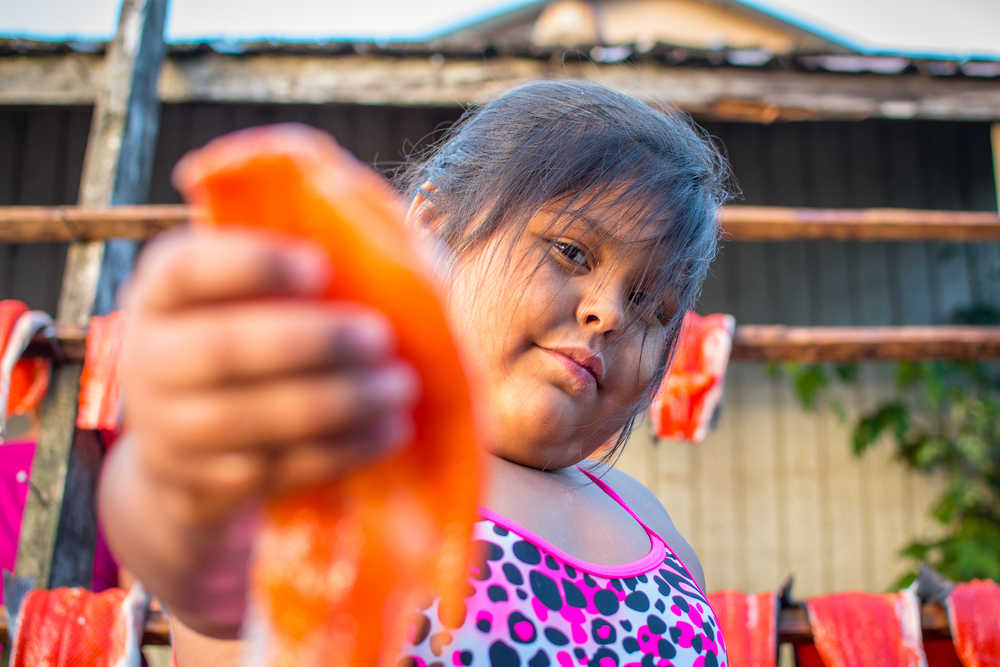
Ella Mooney holds up a small sockeye filet while learning from her aunts how to smoke salmon on a warm summer afternoon in Hydaburg. Photo by Bethany Goodrich.
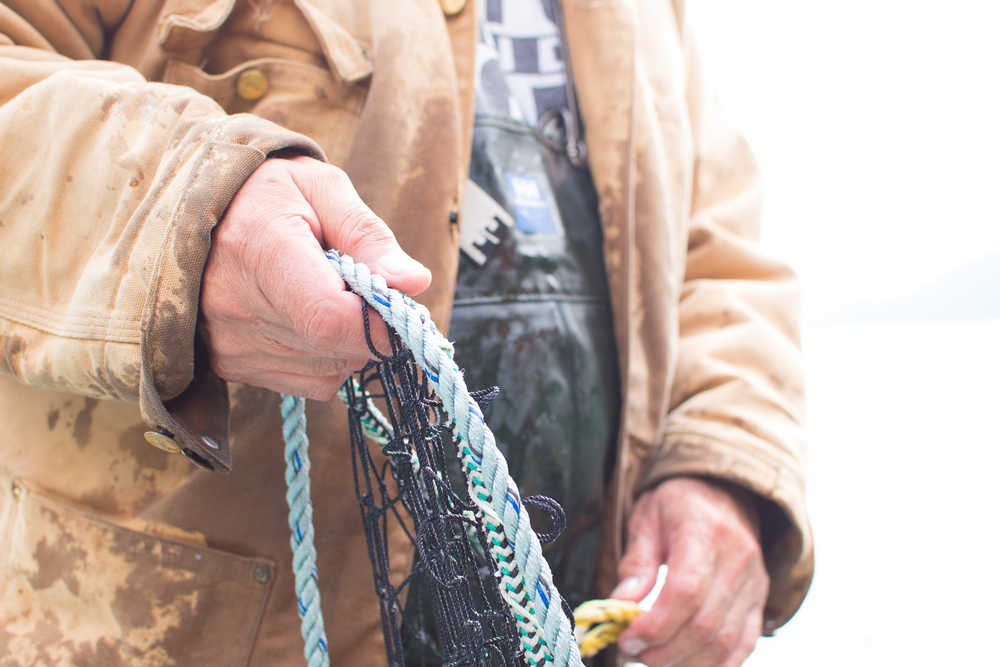
Edward Peele carefully untangles the beach seine at Eek Inlet. Photo by Bethany Goodrich.
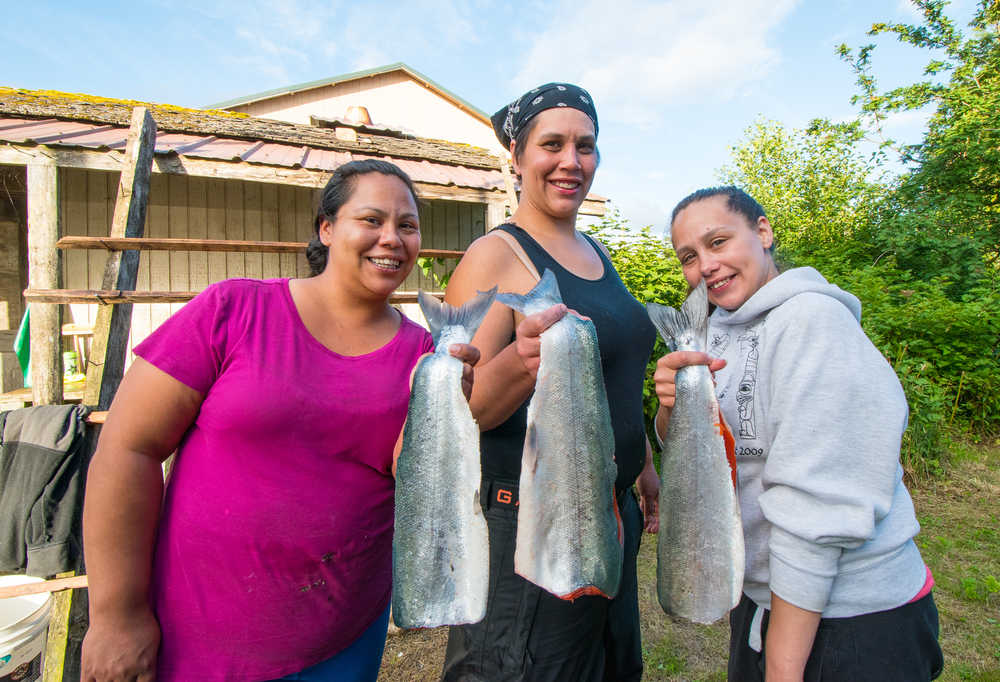
Sisters (from left to right) Jennifer Mooney, Toni Rae Sanderson and Mary Anna Shay hold up salmon they are about to smoke in Hydaburg. Photo by Bethany Goodrich.
