
With Folkfest happening this week, Southeast Alaskans will be swinging, dancing and celebrating the changing seasons. If you are lucky enough to attend, keep your ears on the mandolins, acoustic guitars and other stringed instruments. The woods for many of these instruments begin their lives as the ancient giants of our beloved forest.
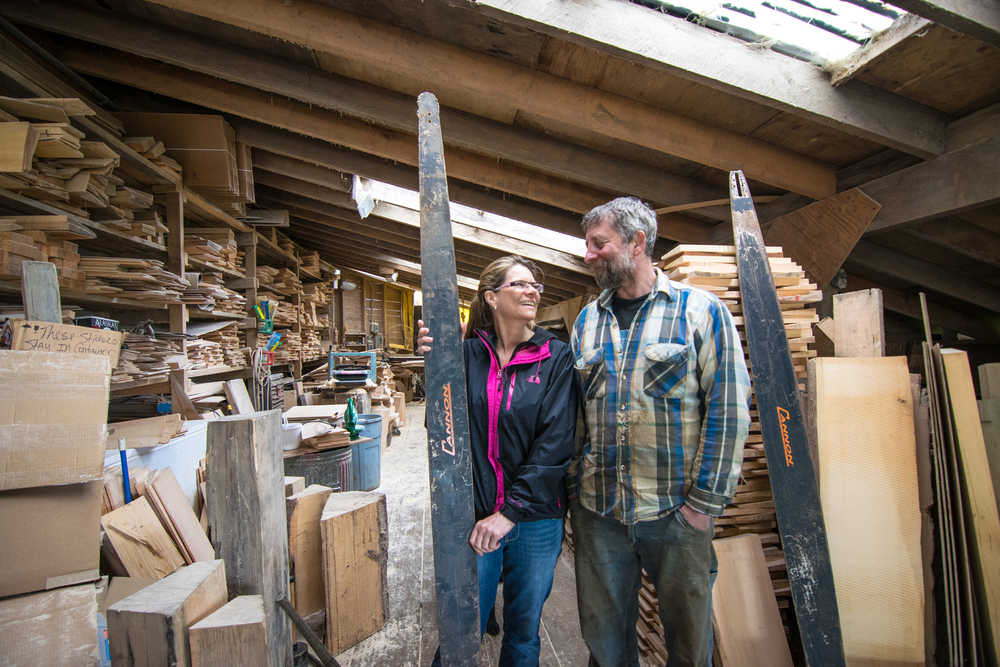
Alaska Specialty Woods (ASW), co-owned by Brent and Annette Cole, is the largest producer of soundboards in the state. Soundboards are the wood responsible for producing the iconic sounds of many music instruments. In 2014, I visited with Brent and Annette Cole and toured their operation near Craig on Prince of Wales Island. In the spirit of Folkfest, I called up the couple to hear about business and learn more about the soundboards they produce from tonewood on the Tongass National Forest.
Brent founded ASW in 1995 as a family-operated business with a single saw in hand. Annette emphasized the business’ humble and family oriented beginnings.
“The kids were really young and they would go out with backpacks with Brent and pack a wood block, whatever they could handle in their backpack, to take home,” she said.
When I visited in 2014, the family was churning out soundboards from a series of bucolic wood sheds caked in sawdust and jam-packed with wood in all directions. As of May last year, Alaska Specialty Woods grew to include a shiny new facility where processing, drying and storing can all happen under one roof. If they were operating at 100 percent, Brent estimates the family business could produce close to ten thousand soundboards a month. Currently, they are operating at about 20 percent due to a slump in demand for mid-range guitars.
“We produce for all guitar types, all pianos, and then things like double basses, bouzoukis, ouds, harps, mandolins and others,” he said. Sales of guitar tops may be down from previous years, but other instrument sales are on the upswing. “We have seen things pick up with custom builders of ukuleles lately. Traditionally, ukuleles have used back, sides and top wood made of the same wood, and now they migrated more to using hard woods for the back and sides, like guitars, but have gone to a softwood for the soundboard, and people are liking the sound an awful lot, and they are selling,” he said.
So what makes a good sound board? Sitka spruce is the Adonis of tonewood, which is why Brent’s products are coveted by everyone from big names like Gibson to independent instrument crafters from New Zealand, the United Kingdom, and other places as well.
“The whole music world comes here for our spruce. Because of our geography, this is heaven for Sitka spruce, which is the premier tonewood in the world right now because of its availability and because of its tight rings, stiffness, weight ratio and its fine texture due to it being old-growth. There is nowhere else in the world that produces this type of timber anymore, and when the old growth is gone, we won’t have it either,” Brent said.
Brent and Annette are proud stewards for the sustainable management of our old-growth forests. The family salvages 100 percent of the wood it uses to produce soundboards from existing dead trees. The Coles search the forest for appropriate timber and apply for the necessary sale with the US Forest Service. The Forest Service then refers to a long list of requirements before administering the sale. Brent and Annette sometimes even source wood from logs used on abandoned float houses or old logging bridges. This mantra of salvage, reuse and waste reduction is pivotal to Brent in both his business and personal life.
“All through my life as a young adult and an adult, I have focused on utilization and not letting stuff go to waste — not our resources, not our groceries, not leaving the lights on — as best as I can. As far as the timber acquisitions and how it relates, it goes back to conserving and responsible use. I know this timber resource, though it is renewable, the particular materials necessary for producing soundboards is not renewable in that it takes an old-growth habitat to produce what we have for the fine texture. This salvage that we do, is it wasteful if it is part of the environment? I don’t know that that wood is going to ‘waste’ if left in the forest. But, I like to see it get used and if it’s used to put groceries on a family’s table then, I think that’s a good thing.”
Once an ancient spruce is adopted by the Coles, very little goes to waste. Every possible space on their property is crammed with boards and the small offcuts are used to make deer calls or even jewelry. One tree in particular is being coveted by Alaska Specialty Woods, with not a single inch unused: when excavating their property to build the new facility, Brent stumbled on an old spruce buried twenty feet under the earth during a landslide.
“We thought this was waste wood at first. But once exposed to the air, the blonde wood began to change to a brilliant blue gray,” he said. Intrigued, they sent a sample off to be carbon dated. “It’s 2800 years old, plus or minus thirty years,” Annette said. The tonewood is sold on their website under the “Ancient Sitka Line.” “There’s a lot of history recorded in our boards. Every one of those growth lines is a year, and we aren’t going to use anything less than a 300-year-old tree to get a sound board out of,” Brent said.
So how likely is it that the guitars you hear during Folkfest have a bit of Southeast in their structure? I asked Brent to estimate what percentage of string instruments use Sitka Spruce from the Southeast.
“For the world market of instruments, boy, when we start getting into bowed instruments then it’s a different story because violins and viola and cellos use European spruce from Italy and Switzerland and Germany. But, in the acoustic market I would say the Sitka Spruce makes up at least 70 or 80 percent of the world market of acoustic soundboard production, including pianos. Maybe even 90 percent; it’s just huge.”
To learn more about Alaska Specialty Woods check out http://alaskawoods.com.
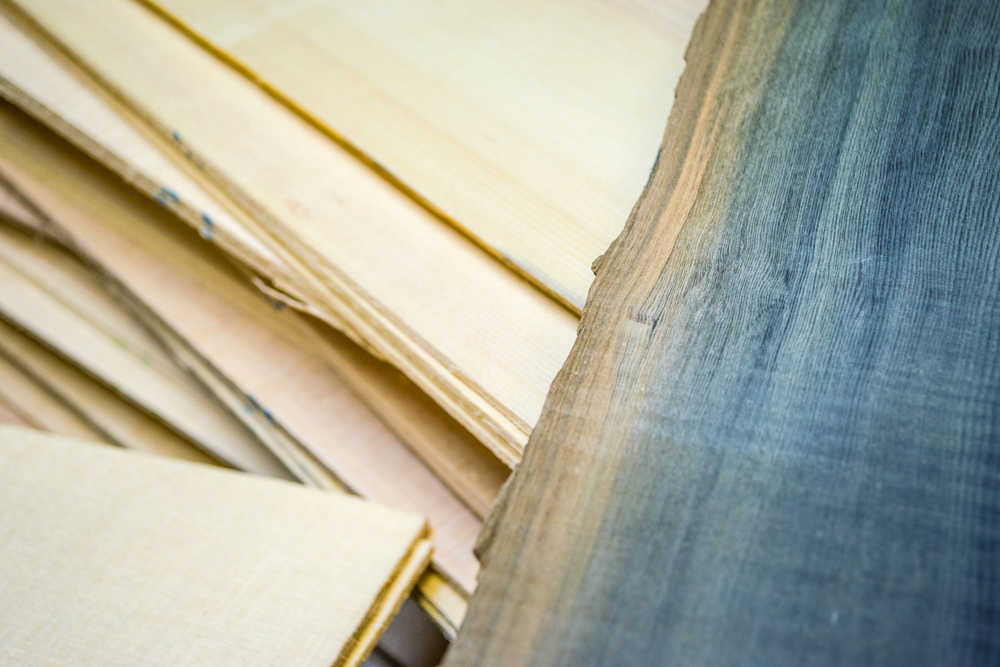
Brent and Annette Cole unearthed a spruce while building a new facility for their company. Once exposed to the air the blonde wood began to turn a brilliant blue. They sent a sample off to be carbon dated, and it turns out the tree is about 2800 years old. Alaska Specialty Woods sells this wood in their “Ancient Sitka Line.” Photo Bethany Goodrich, 2014.
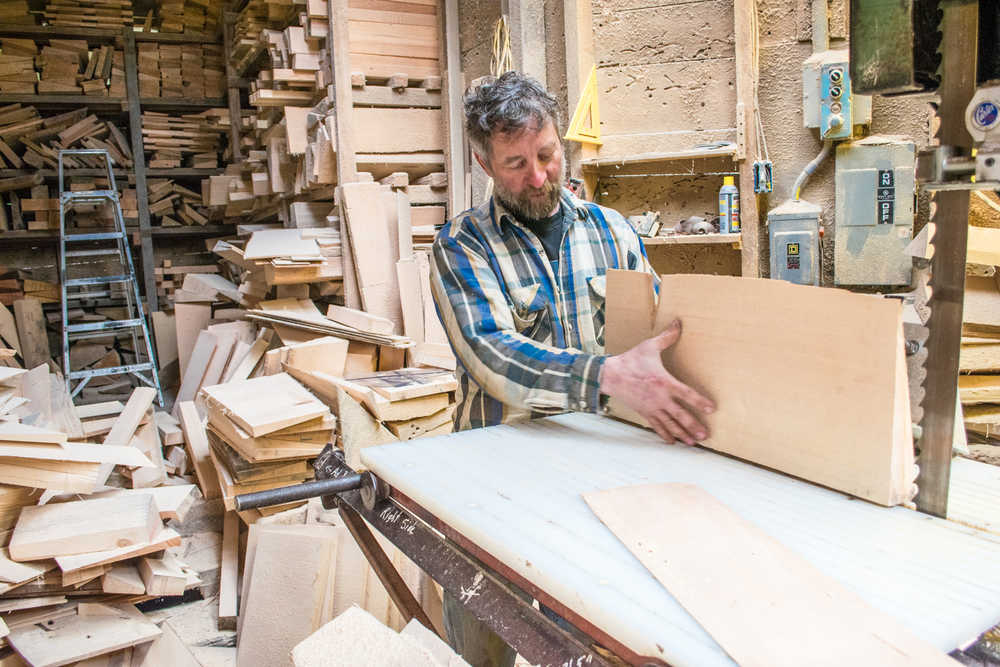
Brent Cole demonstrates soundboard production in his wood shop. Photo Bethany Goodrich, 2014.
