
Years ago, I was talking with an old Elfin Cove bachelor about places we wanted to visit before we died.
It was May and a few boats were busy catching their halibut quota, but the tiny community was pretty sleepy otherwise. We stood on the boardwalk overlooking the gut, the narrow passage between the outer and inner harbor, as the old man stared dreamily off toward the rainforest.
“I’d like to go to Las Vegas someday. Can you imagine that?” he said, shaking his head as if making the journey would be as crazy as flying to the moon. I had zero desire to visit Vegas but agreed it sure would be something to see. After all, it’s reputed to be the most visible city from space.
A few years later, through a series of strange events that involved my girlfriend MC enrolling in a Master of Fine Arts (MFA) program at the University of Las Vegas, I did visit the city. And I hated it. I’m a backcountry sort of guy. I tend to get weird and sweaty in frontcountry. Surround me with more than a few people I don’t know and I either clam up or make mournful barnyard animal sounds.
Over time, Vegas changed me. I began wearing gold chains and leather pants, and I frosted the tips of my hair. I developed a bad birding habit, lifted weights a couple times and got swept away in a few conspiracy theories. I tried to blame my behavior and the sexy green tan I had developed on the nearly thousand test nukes exploded just north of the city since 1955, but I think it might have had something more to do with becoming addicted to Taco Bell Volcano Burritos. Something was up with those burritos. How else can you explain Taco Bell taking something so delicious off its menu?
There were aspects of Vegas that intrigued me, though. For one, the city — Hunter S. Thompson called it the heart of the American Dream — was surrounded by a daunting expanse of desert on all sides. Its lights and infrastructure, performances and celebrations, fantasies and despairs all felt fragile in relation. I enjoyed wandering off into the desert and experiencing deep solitude while feeling the shudder of bombs being detonated underground and watching F-10 fighter jets fly maneuvers. Nonetheless, when MC finished school, I swore I was done with city. I even yelled “I’m done with you, sucker!” over and over again on the Alaska Airlines plane, much to the terror of my seatmates, while I was en route back to Juneau.
Vegas had other plans, though. The first time I returned was to bicycle around Area 51 for a little vacation and to write a piece for Desert Companion Magazine.
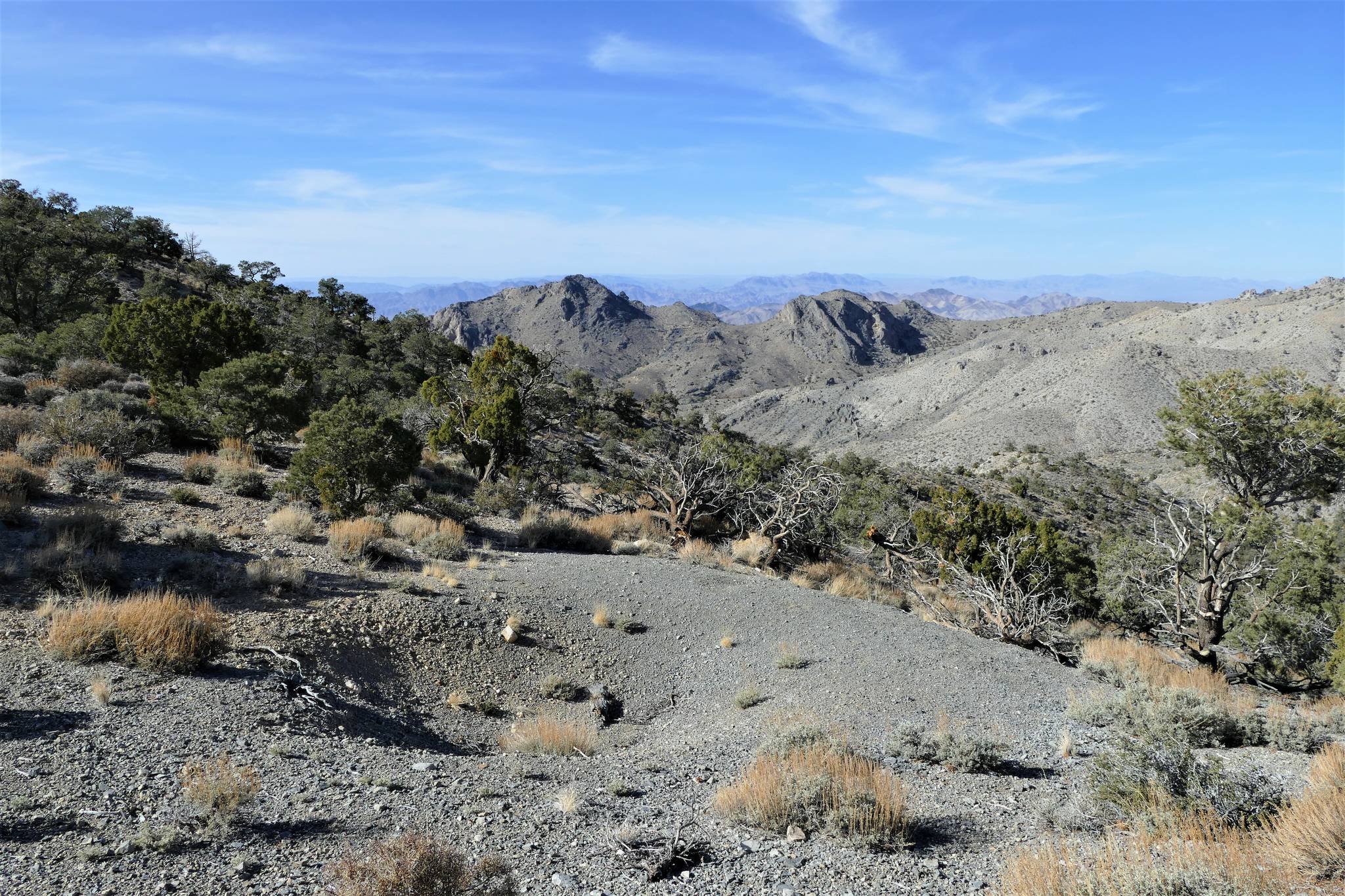
The second time was just the other week, when I met up with my friend Glen Aronson to explore the Desert National Wildlife Range. The refuge — the largest outside of Alaska — is a mere half hour drive from the city. The Air Force was in the process of trying to annex a large portion of it for more room to blow stuff up. I was visiting partly to research a story about the loss of public lands and wild places.
Glen and I spent a few hours on Fremont Street for a little contrast before heading out into the desert.
Fremont was wilder than normal: imagine controlled chaos, chemicals, posturing, flesh rituals and manufactured celebrations with thousands of people, all whom, like me, were reduced to a zombie-like state. The juxtaposition of Fremont Street to DNWR was fascinating. In the five days of traveling backroads and hiking, we saw five or six other trucks and two hikers.
By our last night in the refuge I was not sure what the worth of the story I wanted to write was anymore. If only a few people care passionately about wild places, does that justify trying to save them? We were camped beneath Sheep Peak. In the morning we planned to climb it and look for bighorn sheep. The glow of Vegas shone in the distance – I could just barely make out the light from the Luxor piercing the heavens. The old Elfin Cove fisherman had probably passed onto calmer seas, but I imagined him wandering amidst the masses, maybe starring up in awe at the gigantic well-formed butt of a showgirl on an electronic billboard.
My fantasy was interrupted when Glen yelled and gestured above. What follows is entirely true. A UFO in the shape of an hourglass, giving off a whitish blue light, slowly flew over from the direction of Area 51. I laughed and cracked open another beer — which, I admit, given the circumstances, was a very strange way to act. A minute or so before it exploded in a cloud of light, Glen thought to snap a couple pictures. (A couple are posted on my Facebook page.) Afterward, we sat in the starry darkness.
“That was the weirdest and most inexplicable thing I’ve ever seen,” Glen said. I shrugged. He hadn’t spent nearly as much time in Vegas as I had.
You can read about my Area 51 bicycle trip here: https://knpr.org/desert-companion/2015- 11/truth-out- where
• Bjorn Dihle is a Juneau writer and pens this column, “Off the Beaten Path”. His first book is “Haunted Inside Passage: Ghosts, Legends and Mysteries of Southeast Alaska.” Contact or follow him at www.facebook.com/BjornDihleauthor.
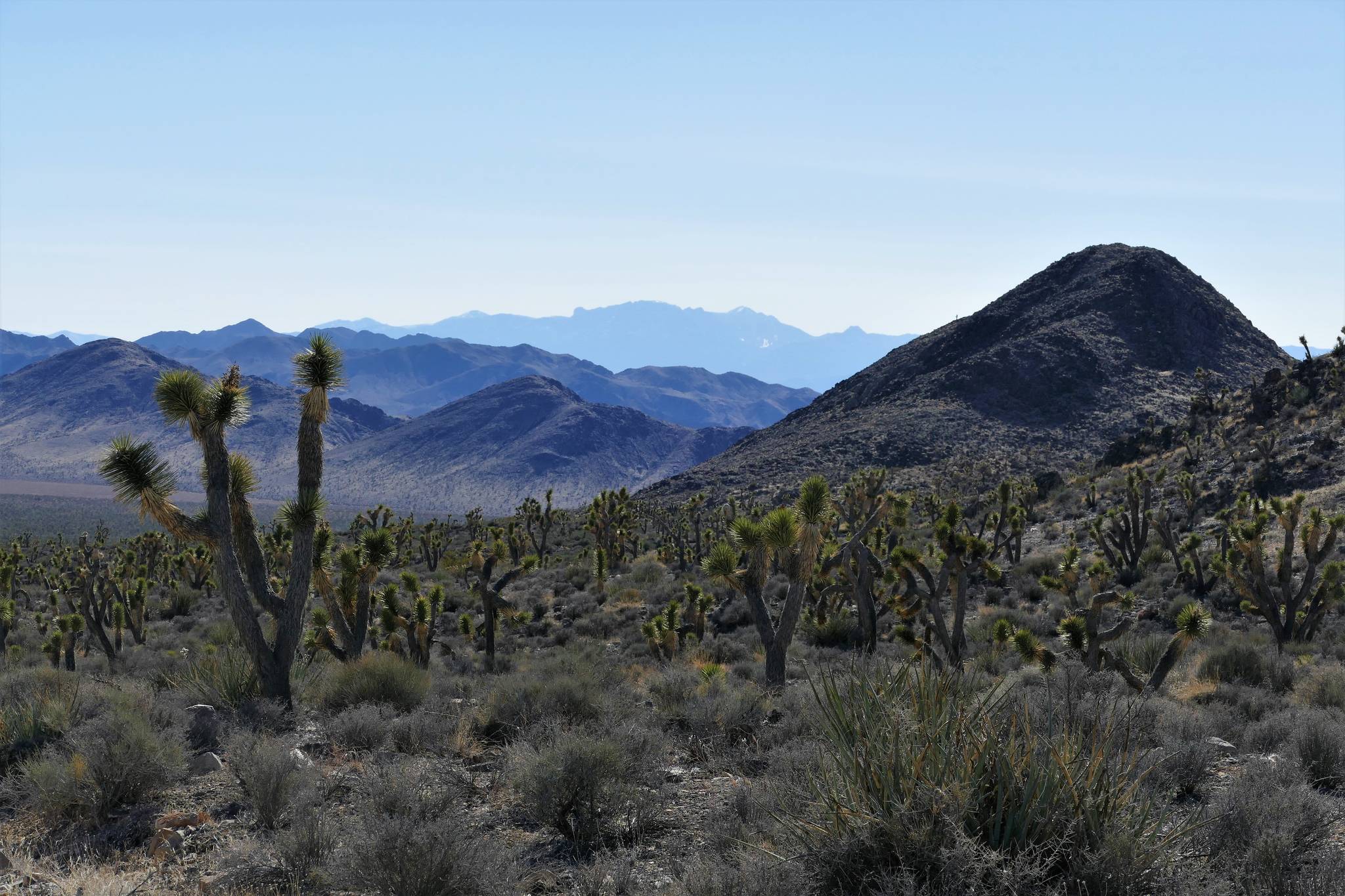
A view of part of the Desert National Wildlife Refuge the Air Force wants to take over for weapons testing. (Photo Bjorn Dihle)
