
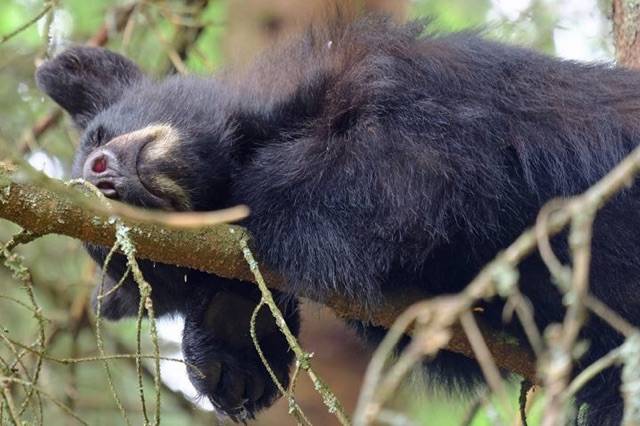
It’s normal for mother black bears to “kick their cubs loose” in June — typically cubs that are about a year-and-a-half old. For Alaskans living in prime black bear habitat, like Juneau, that can mean we witness our young black bear neighbors making their transition to independence. Sometimes it’s a bit painful to watch.
“The phone has been ringing off the hook with people worried about cubs,” said state wildlife biologist Carl Koch, who is based in Douglas. He said callers were heart-broken, concerned that the yearlings were starving orphans. He guessed he’d received 15 calls the week of the summer solstice.
“It’s like the switch was flipped,” he said, with mother bears in the area emancipating their young.
ADFG staff noted that in 2017 there were a significant number of cubs of the year; the recent uptick in reports of young bears isn’t necessarily surprising and affirms the high quality black bear habitat around Juneau.
It’s mating season, and the mother bears are becoming interested in adult male bears. A mother black bear with cubs of the year, born this winter during hibernation, is not interested in mating this year. But a mother black bear with yearling cubs is generally ready to turn her attention away from her cubs. Brown bears, known elsewhere as grizzly bears, tend to keep their cubs for two or even three years, but once that mother is ready to mate again, the process is similar. Sometimes the mother bear will actively drive her cub or cubs away, and sometimes the intimidating presence of an adult male bear contributes to the breaking of the family bond.
“The cubs have this shock, mom chased them away and she’s no longer around to back them up,” Koch said. “Now they have to figure out what to eat and what to do when they run into other bears, even mom, who might just run them off again. It can sometimes take a while to get the message.”
During this period it isn’t uncommon to see sibling yearlings together. Remaining together likely provides some comfort for siblings that have been separated from their mother and it can mean people may encounter more than one yearling bear at a time.
Last year these mother bears taught their cubs what to eat, how and where to forage, and the general life skills they need to survive on their own. The young bears are doing the best they can.
“During this period, if they learn that trash or chickens is an easy meal, we’re going to have problems down the road,” Koch said. “We put up a loaner electric fence on Monday where a yearling bear was going after chickens. Everyone with chickens should have an electric fence.”
Electric fences can easily be ordered online, and the Fish and Game website provides suggestions. Juneau hardware, gardening and building supply stores often have them in stock.
The Fish and Game office in Douglas has a limited supply of electric fences to temporarily loan, and the Wildlife Conservation desk can be contacted at 465-4265. Koch said that people are sometimes intimidated by electric fences, but they are actually pretty straightforward once you learn how to set one up.
“We have videos online that show how to do it, and we can help people if they tell us they have a fence and it’s not working. We have a tester we can bring over or loan so people can be sure the fence is working.”
It’s understandable that people are concerned about the young bears wandering around or hanging out up in trees.
“Yearlings have these long legs, big ears, and often they’re shedding this time of year so they look like they’re in poor health, but they’re not,” Koch said. “Black bears are good climbers and being in trees is normal. It’s how they escape from danger, so it’s very common for them to climb a tree when they feel threatened. That’s also why they can easily climb over fences. People say, ‘My garbage is in the back yard so it’s okay.’ It might keep a coyote out, but a chain link fence is not going to stop a black bear.”
Fish and Game and Juneau police received at least 100 calls in the month of June about bears. Often garbage is the issue — unsecured garbage is the number one attractant that keeps bears coming around, Koch said.
“I live in such good bear habitat, I have a bear resistant container and I don’t put it out until right before it’s picked up.”
Freezing food scraps, especially fish scraps, minimizes the smell, then put them in the can right before pick up. Bird feeders are also a significant attractant.
“We’ve had several calls about yearlings in bird feeders — I responded to a yearling in a bird feeder last night,” Koch said. “Birds do not need to be fed in the summer. There is plenty of natural food out there. Bird seed is a very high-calorie food; bears have excellent noses and they’re going to go after it. And unfortunately, then they’re going to stick around. This is a critical time in their lives to not learn bad habits.”
Koch said that many of the yearlings in the Juneau area have been seen eating wild foods like green vegetation. They’ll eat dandelions, grasses and sedges, dig the roots of groundcone and chocolate lily, and they eat insects. It won’t be long before berries are available, and then salmon. As with any bears, please give these yearlings plenty of room, and secure attractants. With a little time and the arrival of berries and fish, these bears will learn how to live and survive on their own and to avoid people.
For additional information, questions and wildlife concerns in the Juneau area, please contact the Douglas Area Wildlife office at 465-4265.
• Riley Woodford is an information officer with the Division of Wildlife Conservation. He produces the online magazine Alaska Fish and Wildlife News and the Alaska nature radio program, Sounds Wild! He can be contacted at riley.woodford@alaska.gov.
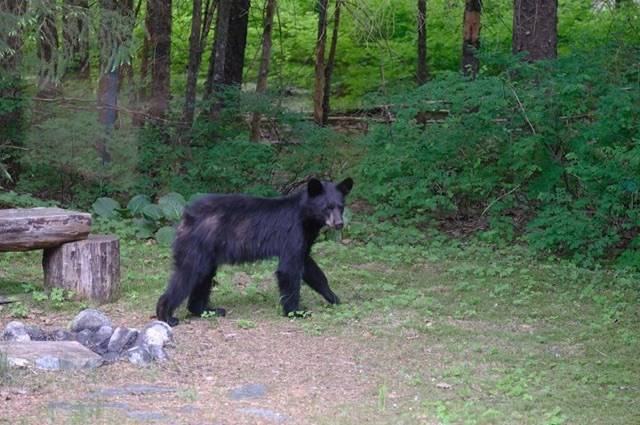
A yearling bear in Juneau in late June 2018. (Courtesy Photo | Jennelle Jenniges via Alaska Department of Fish and Game)
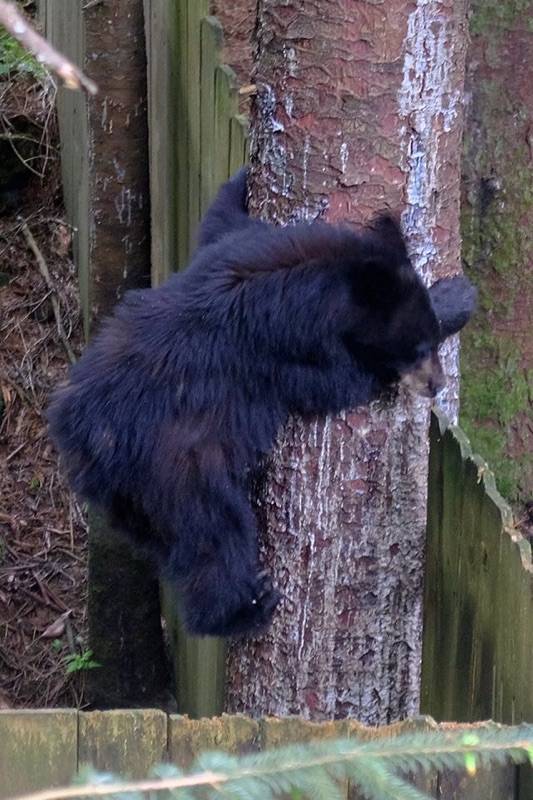
A yearling bear, one of a pair of siblings, in Juneau in late June 2018. (Courtesy Photo | Jennelle Jenniges via Alaska Department of Fish and Game)
