
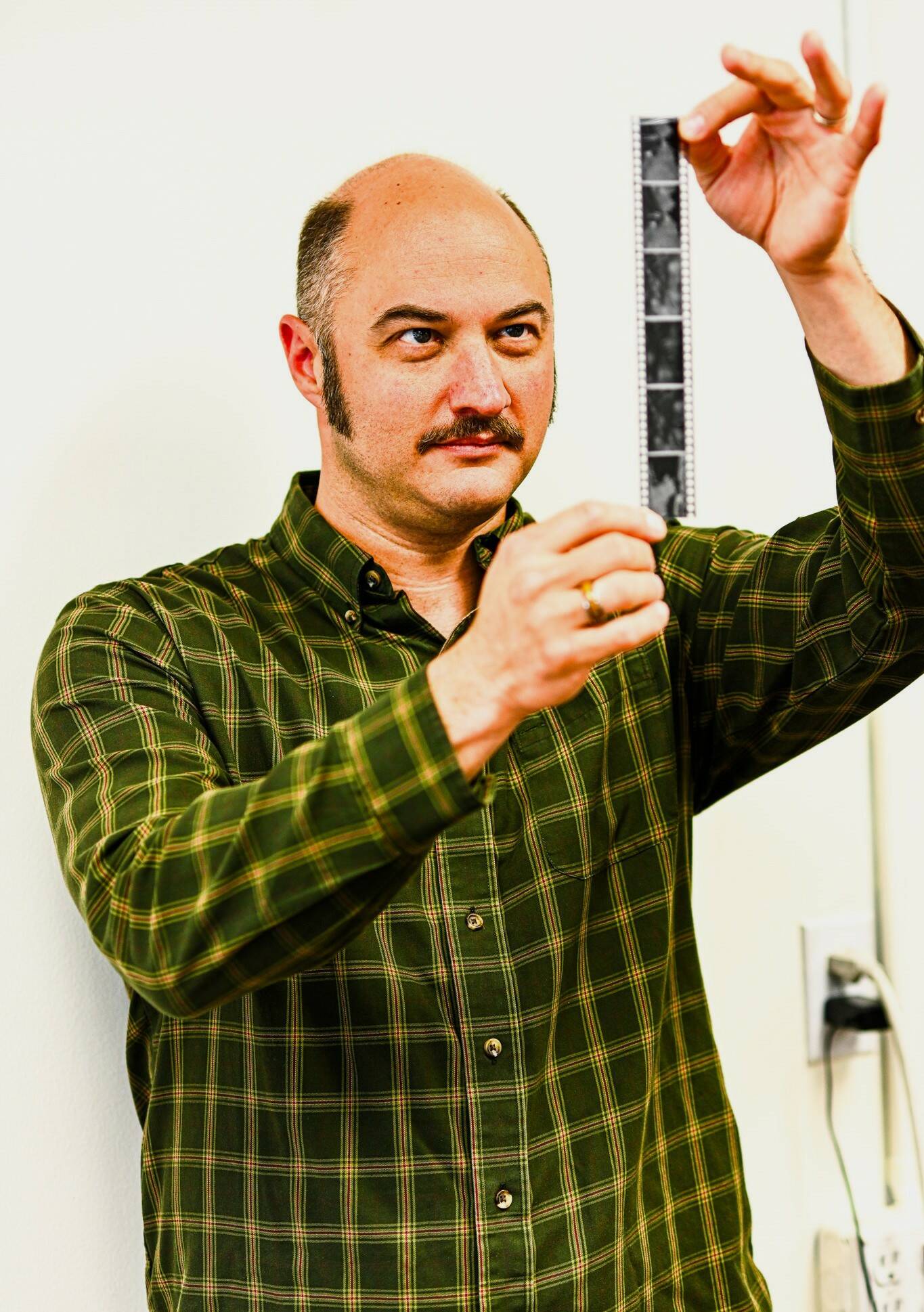
Film photography is experiencing a revival among young people seeking tangible experiences in an increasingly digital world.
For photographers like James Edens, film photography never lost its allure.
He has begun teaching his son and other people how to develop film at home.
“I just develop it at home, with home development kits,” Edens explained.
While he always loved film photography, Edens said he got lost in digital photography for a while.
“I had a film camera — I believe it was a Canon T60 — that was stolen from me in 2002. And after that, I bought a digital Canon Rebel, and kind of went from there,” he said. “But I started getting back into film two years ago. I’ve got so many photos and negatives at my home. It seems like developing chemicals are easier to get now. Everything you need can be ordered online.”
Edens said he enjoys helping others learn the development process.
“All of that old technology has a real elegance to me,” he said. “The old cameras are elegant in their simplicity. For me, the cameras are just as exciting as the photographs.”
Father passes on passion
Ander Edens, 18, has inherited his father’s passion for film photography.
“My dad has always been a prolific film shooter, so I was always around it in one way or another,” Ander said. “He put together multiple photo albums and I grew up with experiencing photography in a tangible way.”
Other young people share Ander’s interest in film photography, he said.
“I think that, just as millennials were the first generation to have immediate exposure to cellphones and the internet, Generation Z kids are the first generation to have access to advanced technology that gives them what they want when they want it,” Ander explained.
“With film, you have to wait and you have to work for the result. I know that, technically, digital photography is a more sharp and clear product; but that’s kind of the point. Film is its own thing. And digital can’t really replace that.”
It’s all about the experience, Ander said.
“When you shoot a picture, you can’t know if you nailed it until you develop the whole roll. The anticipation and the expectation are part of that,” he said. “Then there’s the process of preparing the film and developing it, and going through those steps. It’s just very rewarding and fulfilling.”
Ander said he enjoys the process so much that he decided to take matters into his own hands when one of his cameras started giving him problems.
“I have a Mamiya 645 camera and the mirror started to get stuck, and I couldn’t fix it,” he said. “So I got some files online that show how to 3D print camera parts. I printed a body and attached the lens and back from a Mamiya Press to it, and that’s my medium format camera currently.”
“I thought like everyone else, 15 years ago, that film was dead,” James Edens said. “I didn’t think it was ever coming back. So, to see this resurgence in interest. A few people have already shown interest in learning, and I would be happy to show more people how to deal with film.”
