Bringing a century-old Chilkat robe back to life
Published 8:02 am Wednesday, October 5, 2016
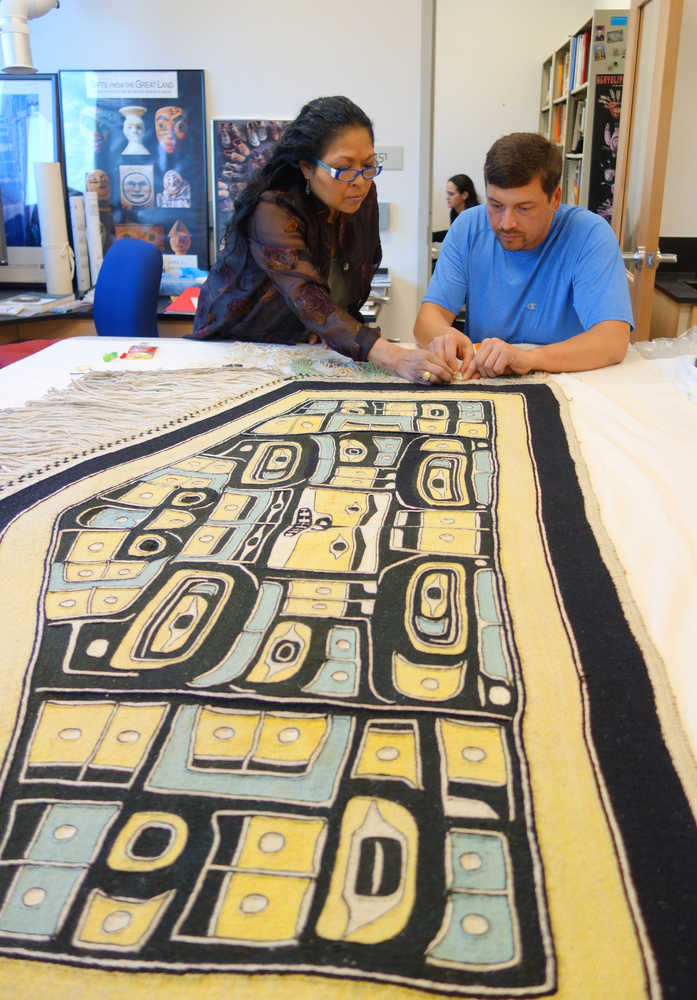
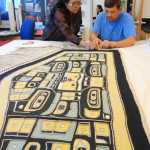
The Alaska State Museum broke new ground this year — not on the new building, but inside it, where Chilkat weaver Anna Brown Ehlers has been restoring a 100-year-old diving whale dancing blanket in the museum’s conservation lab.
“Museums are working on what it means to share the power and authority of what happens to objects,” said museum conservator Ellen Carrlee. “So to have a weaver come in and say, ‘I think this is what should happen with this robe’ is something of a departure from museums in the past just having, you know, museum people say what should happen.”
The museum had brought in Ehlers to look at three Chilkat robes in their collection to get her opinion on their condition as well as “some of the details of their construction and those kinds of things that museum doesn’t understand anywhere near as well as (Ehlers) does,” Carrlee said.
Ehlers has been doing Chilkat weaving since 1980. She has demonstrated and taught the technique all over the nation, from the Smithsonian to the University of Alaska Southeast, and received multiple awards for her work, including the Governor’s Award for the Arts and United States Artist Award. She’s received grants from the Rasmuson Foundation and First Peoples Fund. Ehlers, who is Raven Wormwood from Klukwan’s Whale House, learned weaving from Jenny Thlunaut.
The blanket was given to the museum by a collector who got it in Sitka around 1900. Its true age and source community are unknown. As Ehlers explained, diving whale blankets were popular trade items because they could be worn by both Ravens and Eagles.
“There are diving whale blankets in probably every museum around the nation,” Ehlers said. “You see them all over the place.”
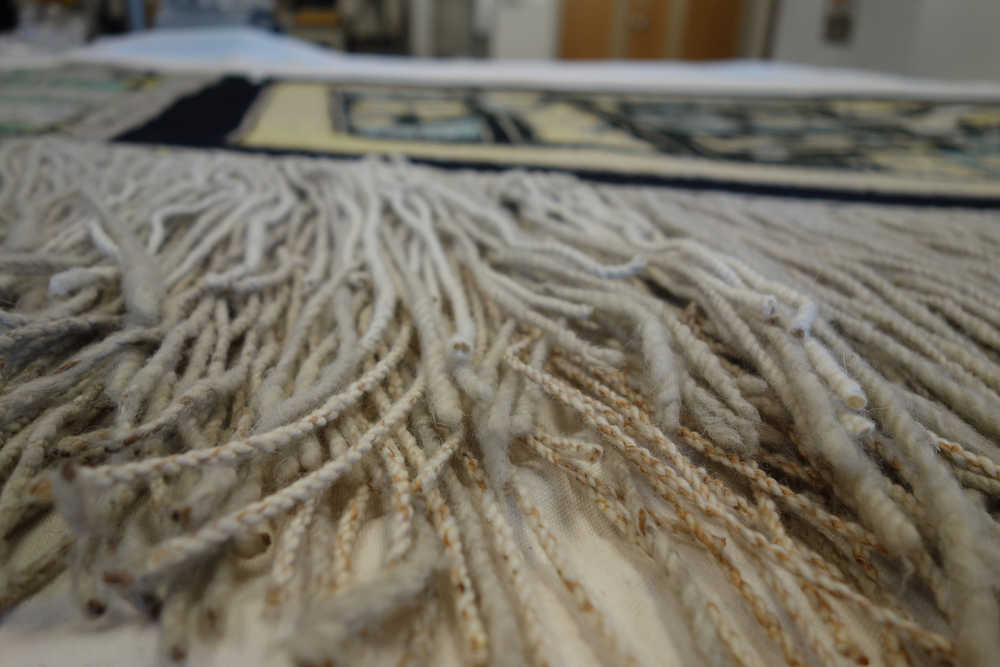
The state museum’s was in bad shape, with fringe missing along the bottom and sides.
“It looked damaged, looked incomplete,” Carrlee said.
Before it was to be put on display in the museum’s new clan house — part of larger display that would have it hanging from a replica loom near a pattern board and weaving materials to give visitors a better appreciation of Chilkat weaving — Ehlers recommended repairs.
“That level of intervention goes beyond the ethics of the conservation profession, what I feel like I can do,” Carrlee said. “My job involves stabilizing things but not creating something where something is missing.”
By bringing in a cultural expert like Ehlers to make the repairs, “instead of being something that a museum person is doing to mess with the historic artifact, it’s something that adds to the life and the biography of the object in an authentic way,” she said.
And it adds something to the museum, as they found out when Ehlers brought her daughters and granddaughters to help prepare the materials, and her apprentice to work on the blanket.
“To have this kind of work happen (here) is also to perpetuate a living tradition and help facilitate the learning from old robes,” said Carlee.
“We’ll be bringing the blanket back to life,” said Ehlers.
But it was a long road from the decision to the end-of-September day Ehlers and her apprentice Darrell Harmon were working one of the final stretches of new fringe. Chilkat weaving takes months of preparation, four or five in Ehlers estimation.
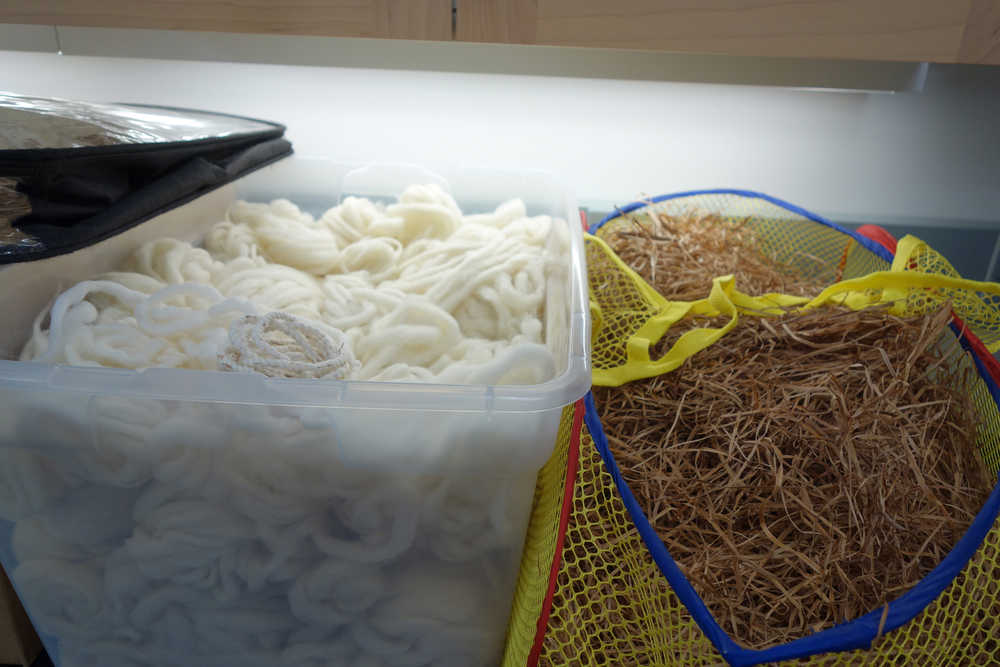
It starts in the spring, when yellow cedar bark is collected. After finding a tree with a straight grain and not too many branches, “we make a cut on the south side of the tree with the knife as low as you can go,” Ehlers said. “And you pull and pull and pull and pull and then you run with it. And when you run, it’ll rip off at the top.”
Then the barked is boiled until cured, dried and split down until it’s as thin as paper and narrow as string.
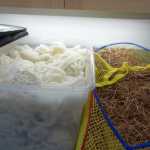
Mountain goat fur also has to be processed into wool for the blanket. “This is another big, long process,” said Ehlers, taking the soft, downy underside of the hide, carding it and teasing it until it’s not only fluffy but strong enough to stay together when it’s spun.
Spinning involves taking two pieces of wool and two pieces of cedar bark while wet, stretching them across your thigh, spinning them together by hand. and tightening until they’re ready to be woven.
“You do this for thousands and thousands and thousands of yards, months upon months upon months,” said Ehlers. And that’s all before touching the loom.
“When I do a Chilkat blanket, a great big one like the one I did for my dad’s potlatch, four months of working on cedar bark and wool and then when I put it on the loom, it’s time to party because it took so long just to get there,” she said. “It’s like a gift once you finally get to start weaving.”
It is a little different with this restoration, where Ehlers is working not on a loom but a table in the conservation lab. The blanket is kept covered when she’s not there, and all her materials had to go into the museum’s freezer at negative 41 degrees fahrenheit for five days to ensure there were no insects that could ruin the original blanket.
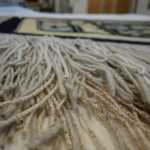
It’s easy to tell the new fringe from the old; the wool is lighter and the bark fresher.
“It’s new, so it’s never going to be the same,” Ehlers said.
But now the blanket tells a different story — not just the story of its common design or unknown maker. It now shares a past with Ehlers and her daughters Marie and Alexis; with her granddaughters Serena Harrell, 14, and Kyrie Harrell, 12, who came up from Virginia for ten weeks this summer to help process the wool; and with her cousin Harmon, who became involved to “get outdoors” collecting the bark and wool. He is now Ehlers’ apprentice.
“Eventually, I’ll have made a robe,” he said.
The blanket now also shares a story with the Alaska State Museum as they move to take a new role in perpetuating and sharing Alaska’s history and culture.
“This kind of interaction I think is where the real exciting future of museums is,” Carrlee said.
• Contact staff writer and design wizard Randi Spray at randi.spray@capweek.com.