
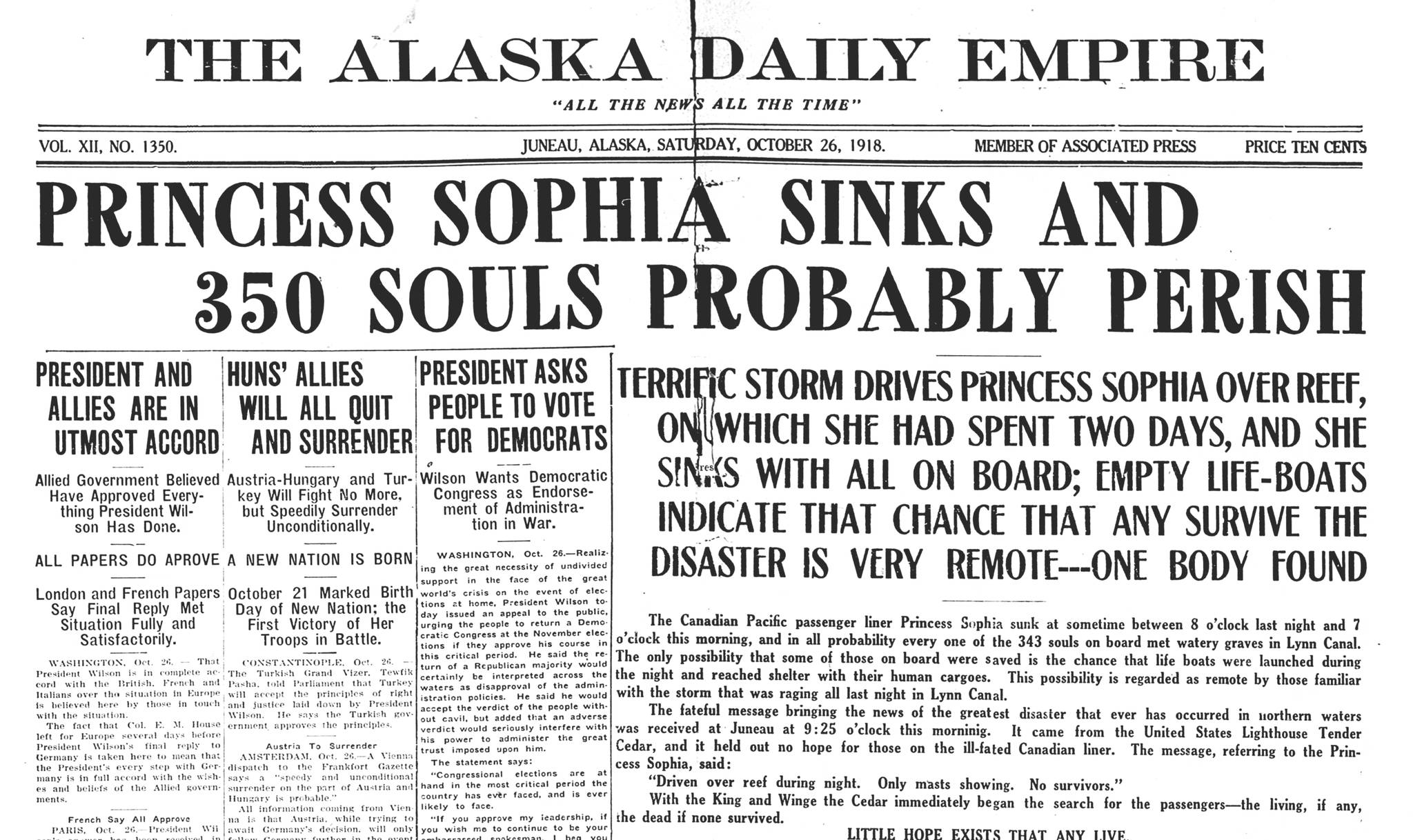
It’s been a year since Alaska’s new State Library, Archives and Museum opened. Every time I stop by, I see throngs of tourists and Alaska residents walking through the new exhibits, gawking at the new Eagle Tree and leaving with smartphones and cameras packed with photos.
For researchers, things haven’t changed all that much.
If you’re researching genealogy or exploring local history, you still have to physically go to the museum, climb to the library level, get a reel of microfilm from a filing cabinet that rumbles as you open it, then spin through that reel, page after page, in hopes of finding what you’re after.
It’s panning for gold, except more frustrating.
Thankfully, for the past few months, the staff of the Alaska State Library have been working to fix that. A new state library deserves a new way to find historic newspapers, and librarians are delivering.
With a grant from the National Endowment for the Humanities, in partnership with the Library of Congress, the state library is scanning 100,000 pages of Alaska’s pioneer newspapers and putting them online for free.
The first batch of 10,000 pages went up on the Library of Congress’s Chronicling America website last week.
If you’ve ever tried to research your family tree or dig up old records, you know how big a deal this is. If you don’t know how big a deal it is, go up to the third floor of the SLAM. Each day, the librarians at the state library record a tally sheet of how many people walk through the doors and what they ask for.
The free internet access is an attraction, but so are those old newspapers. If you’re interested in Alaska, they’re a record unmatched by anything else in the world. Researchers from across the country and around the planet come to Juneau to investigate the history of Alaska and the far north. This digitization effort makes it easier to explore that history.
The new archive is searchable by date and word, or you can simply flip through the pages of issues more than a century old. You can do this from your home or office: You no longer need to trek to the library.
Each month for 10 months starting in October, a new batch of 10,000 pages will be added to the archive, and the state librarians are seeking more grants to keep the project going beyond next year.
I was fortunate to serve on the committee selecting the first newspapers to be digitized. In a series of meetings, we tried to balance our coverage across the state.
The Empire is among the first papers, as are the Douglas Island News and the Thlinget. The Skagway Daily Alaskan will be in the next batch, and papers from Nome, Valdez, Iditarod, Cordova, Seward and Fairbanks will follow.
The digitization project’s coordinator, Leah Geibel, has done a fantastic job of keeping things running ahead of schedule, and project director Anastasia Tarmann has guided the whole effort.
I’m personally excited for what comes next.
If paging through microfilm was like panning for gold, this is like picking gold nuggets from a riverbank. The raw material is at hand: I can’t wait to see what historians (and you!) do with this raw material.
To see what’s been digitized so far, visit http://chroniclingamerica.loc.gov/newspapers/?state=Alaska
• James Brooks is the state reporter for the Juneau Empire and served on the advisory committee for Alaska’s branch of the National Digital Newspaper Program.
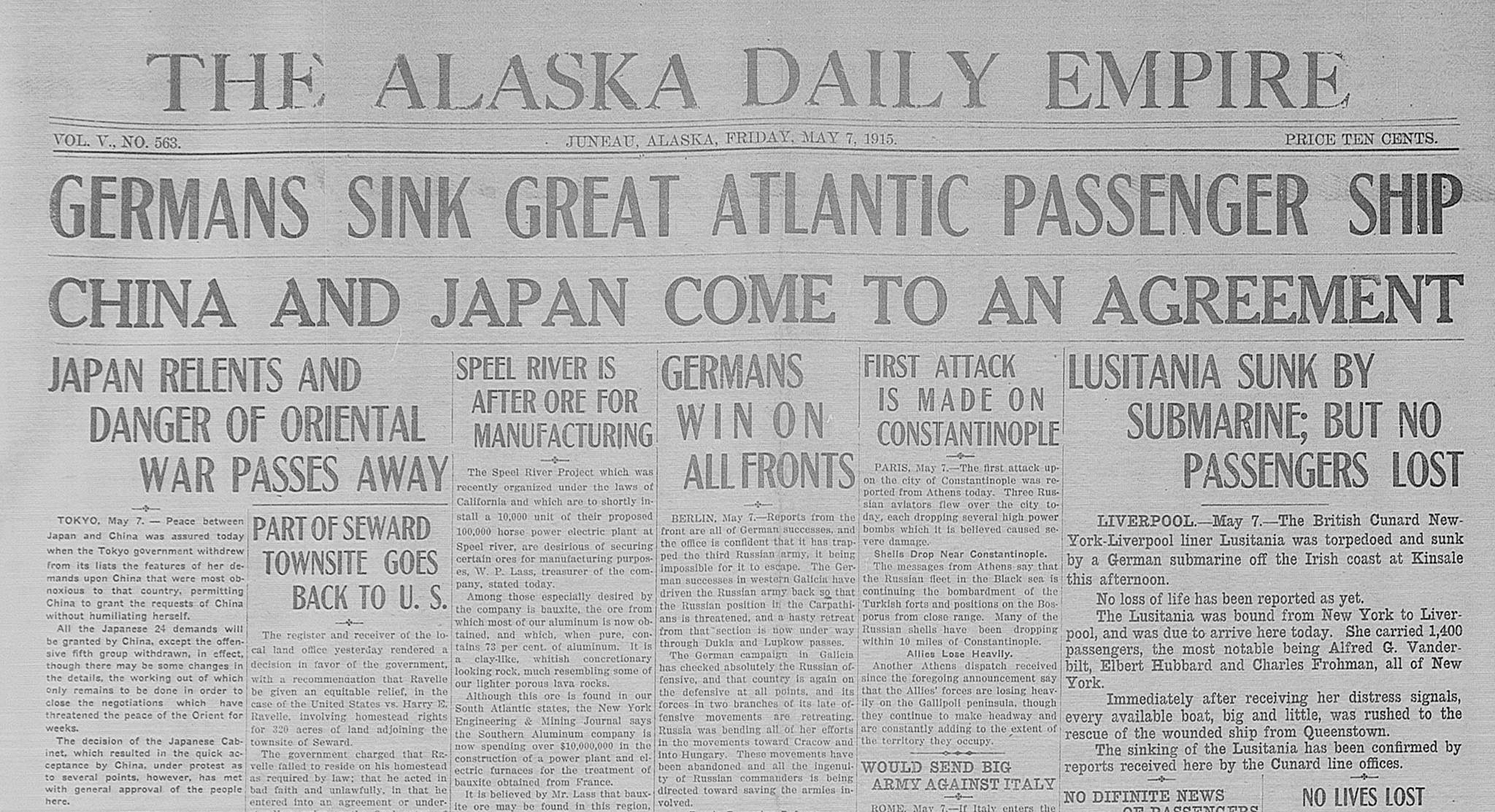
The masthead of the Alaska Daily Empire, predecessor to the Juneau Empire, is seen on May 7, 1915, t he day the steamship Lustitania was sunk by a German U-boat during World War I. (Chronicling America)
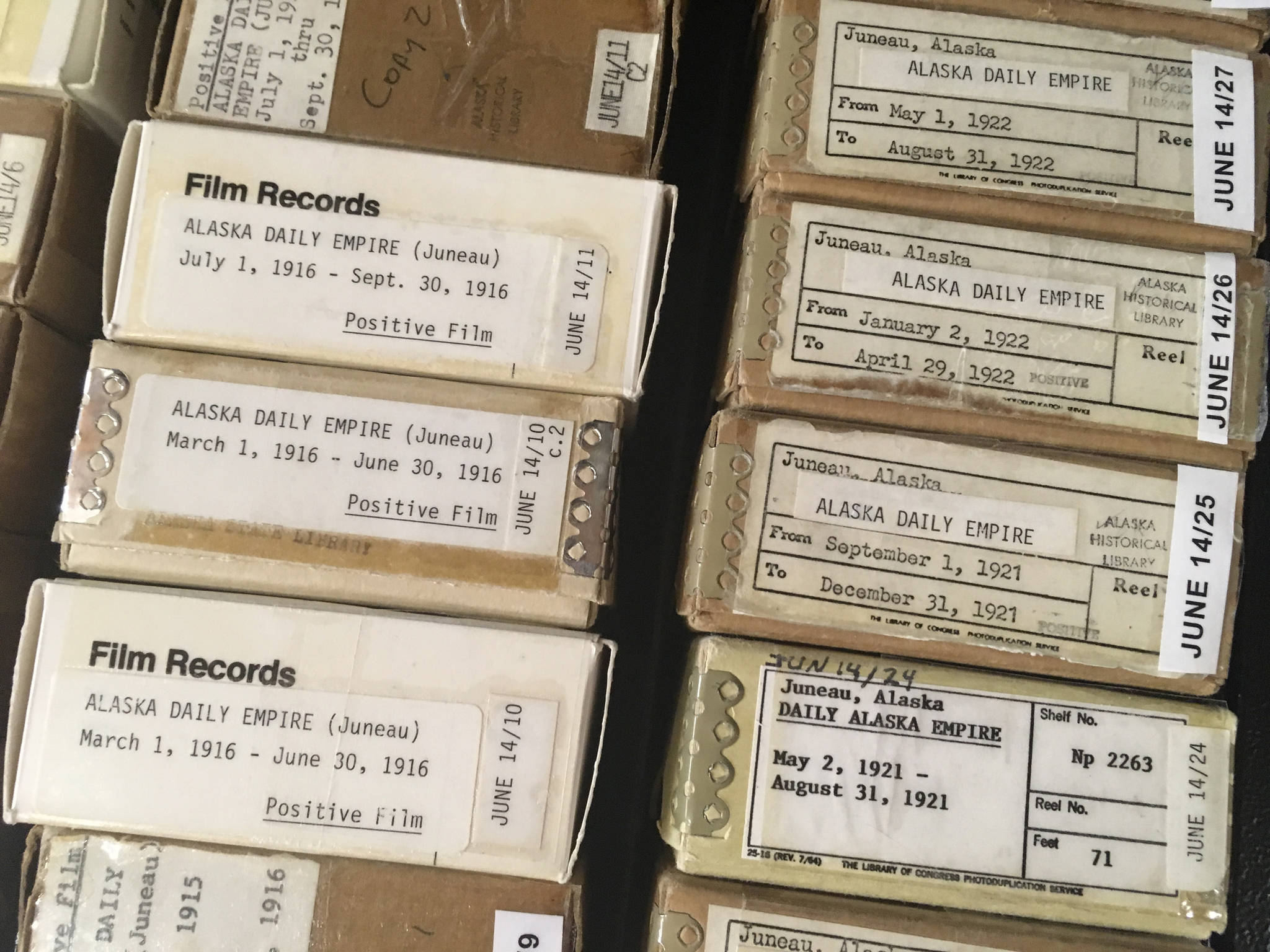
Boxes of microfilm containing back issues of the Alaska Daily Empire, predecessor to the Juneau Empire, are seen in a cabinet Friday, Aug. 25, 2017 at the Alaska State Library. The library, with funding from the National Endowment for the Humanities and the Library of Congress, is digitizing the Empire’s predecessors through the end of 1922, alongside several other pioneering Alaska newspapers. (James Brooks | Juneau Empire)
