
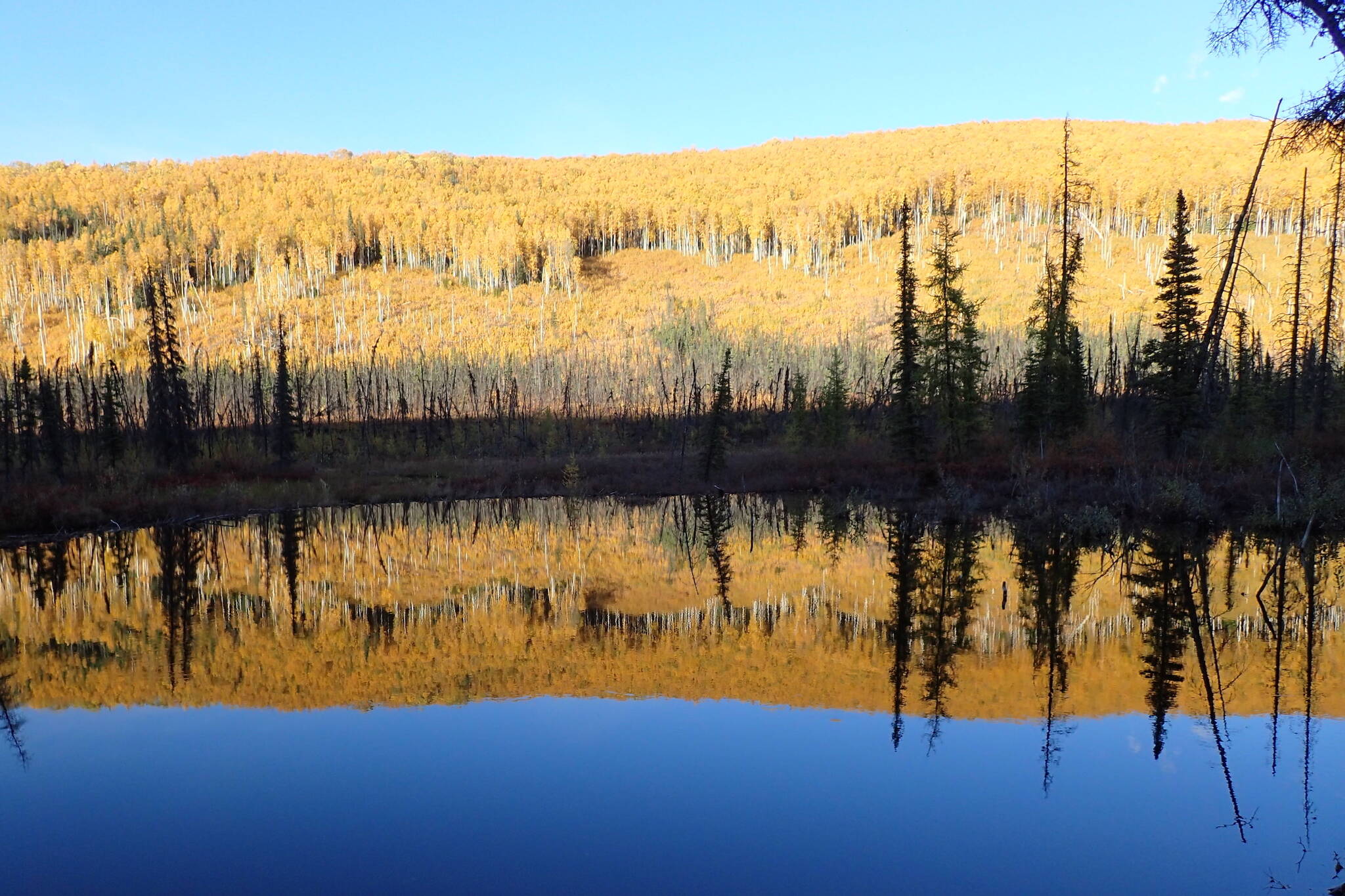
We are at fall equinox, a day of great equality: All the residents of the entire world — from Tierra Del Fuego to Rome to Coldfoot — will live their lives amid 12 hours of daylight, 12 of darkness on Sept. 22, 2023.
A very noticeable fall equinox feature in these parts is when deciduous tree leaves turn from green to yellow or orange or sometimes red, then fade and waft to the ground.
Middle Alaska doesn’t have many species of deciduous trees: paper birch, aspen, willows and balsam poplar are all part of the dominant boreal forest here. These trees are now responding to fewer hours of sunlight by ceasing to flood their leaves with chlorophyll. The sudden lack of that green, energy-converting chemical allows the leaves to show red, orange and yellow pigments that were within the leaves all summer.
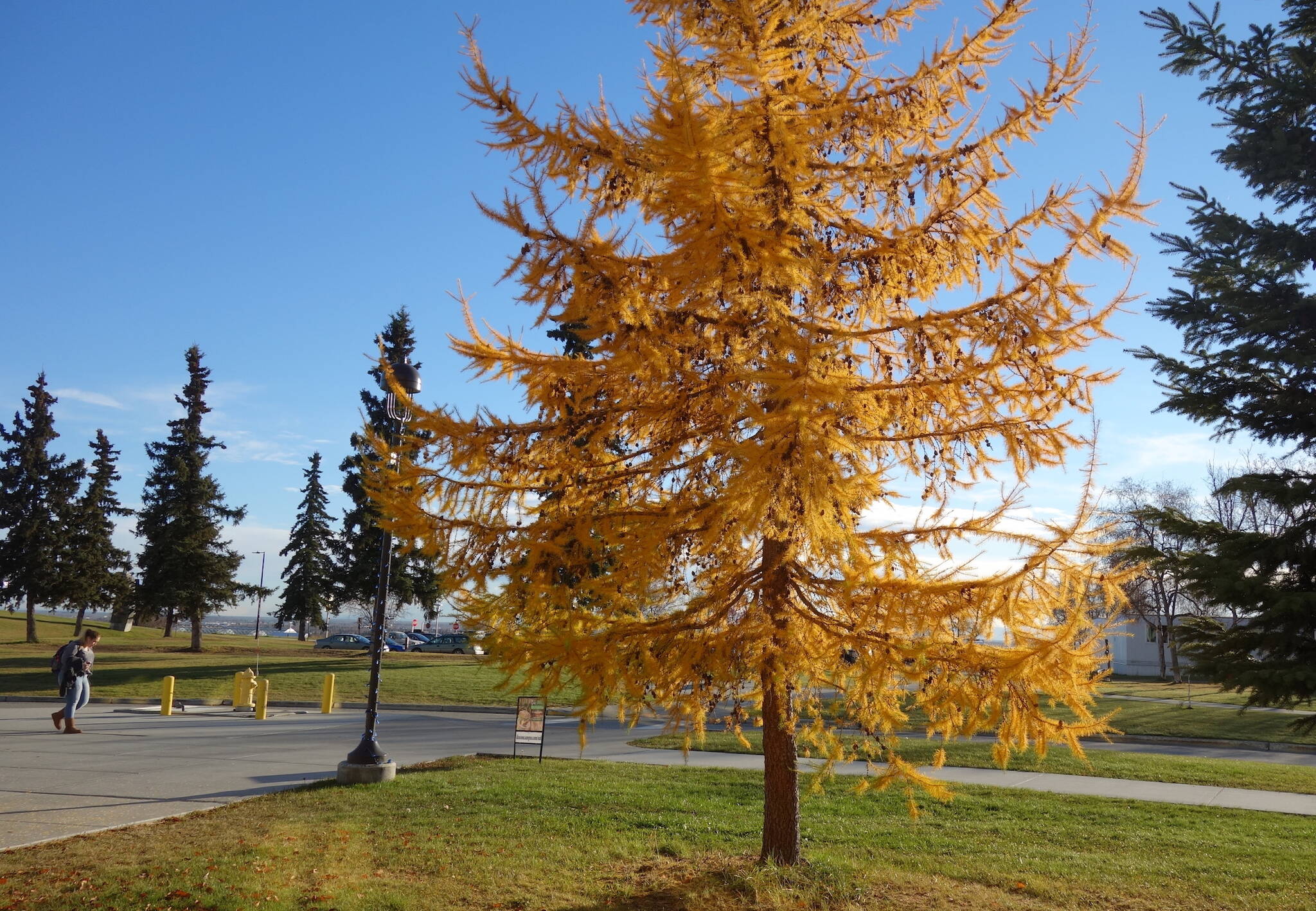
A Siberian larch on the University of Alaska Fairbanks campus beams on Oct. 18, 2018, long after most other deciduous trees have dropped their leaves. (Photo by Ned Rozell)
When those solar panels are no longer useful to the trees, they are shed for the winter and the trees enter a near-dormant state.
All our trees don’t change color at the same time. Why?
Sometimes a group of native trees like aspens act like one organism because they are joined at the root system as clones. They tend to turn golden at an identical time, in one hillside wave of mutual agreement.
Other trees ignore local customs because they aren’t from these parts. Their seeds may have come from somewhere farther north or south.
Foresters call a tree’s origin its “provenance.” Researchers sometimes perform trials to see how trees of the same species — but from different latitudes and climates — take to being planted in a new place.
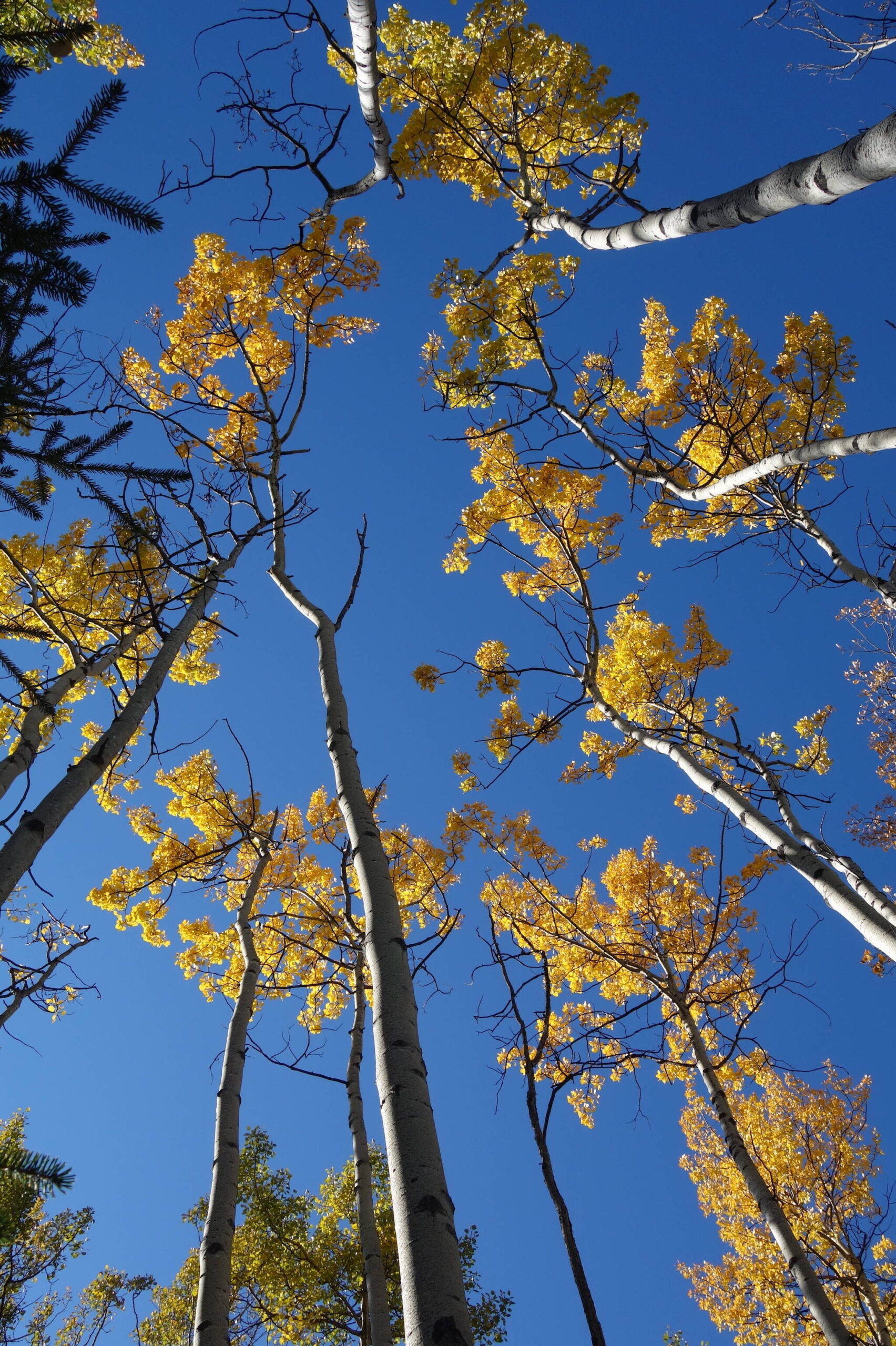
Native aspen trees show their colors on the UAF campus during a recent September. (Photo by Ned Rozell)
There’s such a plantation of visiting balsam poplar and birch within a fence on the University of Alaska Fairbanks campus. It takes years to see results, but some of those balsam poplars from seed stock in southern Alberta may be showing that they like what Fairbanks summers and winters have thrown at them, by not only surviving but thriving. Others may not respond to the subarctic as well.
Some trees, especially in peopled areas, are very late to turn golden and to shed their leaves. Here on the Fairbanks university campus, for example, a row of Siberian elms now sports dark green leaves. They won’t turn yellow until mid-to-late October. Those elms are rolling the dice, keeping their solar panels active later in the season than native trees. Perhaps because their seeds are from farther south, where their parent trees were adapted to a much-longer, milder fall where it wasn’t necessary to shut down so early.
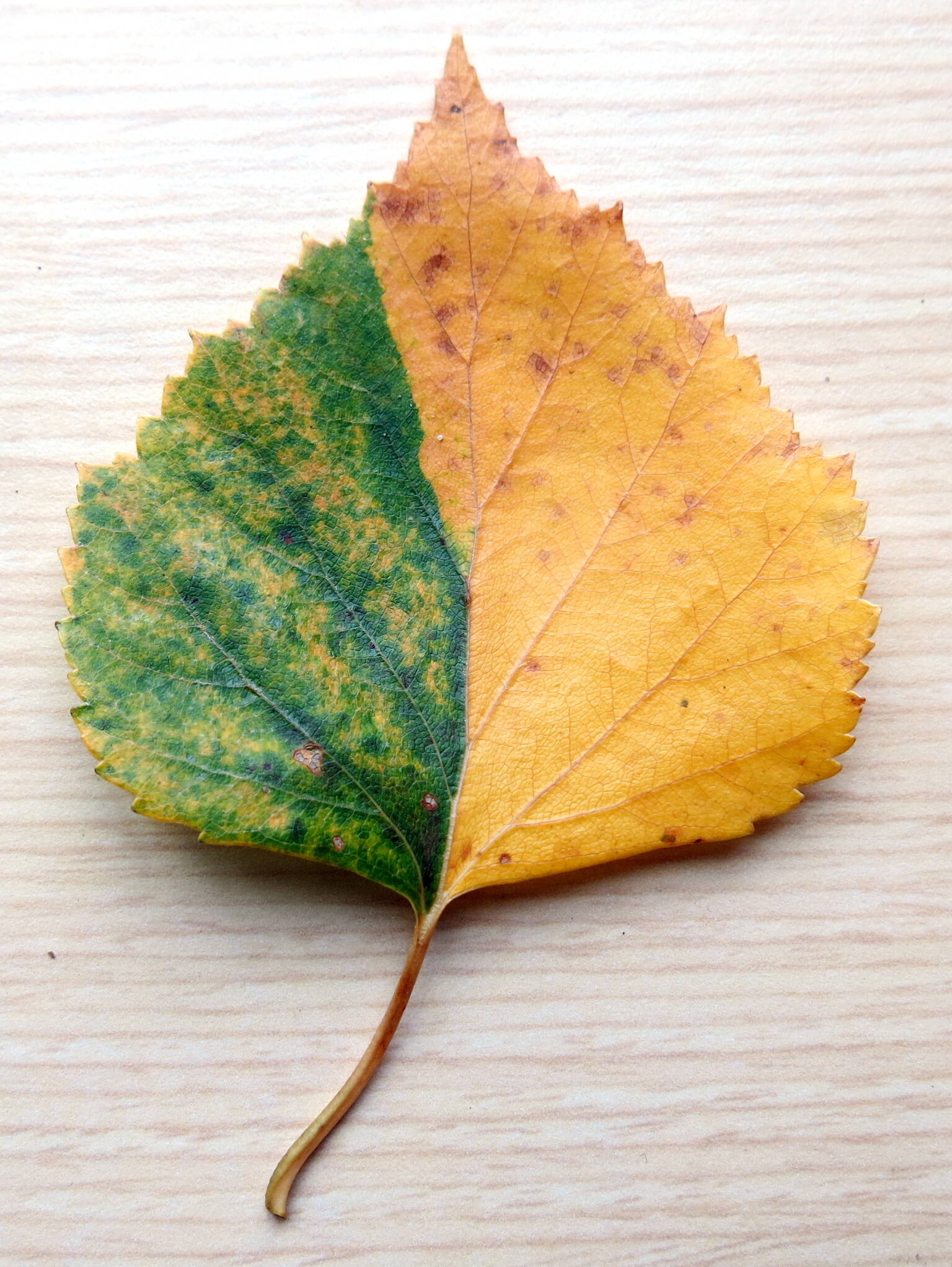
A birch leaf from the UAF campus shows a unique pattern of senescence, where the parent tree stopped flooding the leaves with chlorophyll. (Photo by Ned Rozell)
Another tree that gives us a late blast of rusty gold is the Siberian larch, which is not native like the boreal forest’s tamarack but is similar in that its green needles turn that rusty gold before falling off in fall. Siberian larches on good sites around Fairbanks are gaudy in their size and often retain their needles until after the first enduring snowfall.
With climate warming, trees invited here from farther south like the Siberian elm and Siberian larch may have a jump on the locals as the growing season gets longer and they convert more sunlight to sugars used for tree growth.
• Since the late 1970s, the University of Alaska Fairbanks’ Geophysical Institute has provided this column free in cooperation with the UAF research community. Ned Rozell is a science writer for the Geophysical Institute.
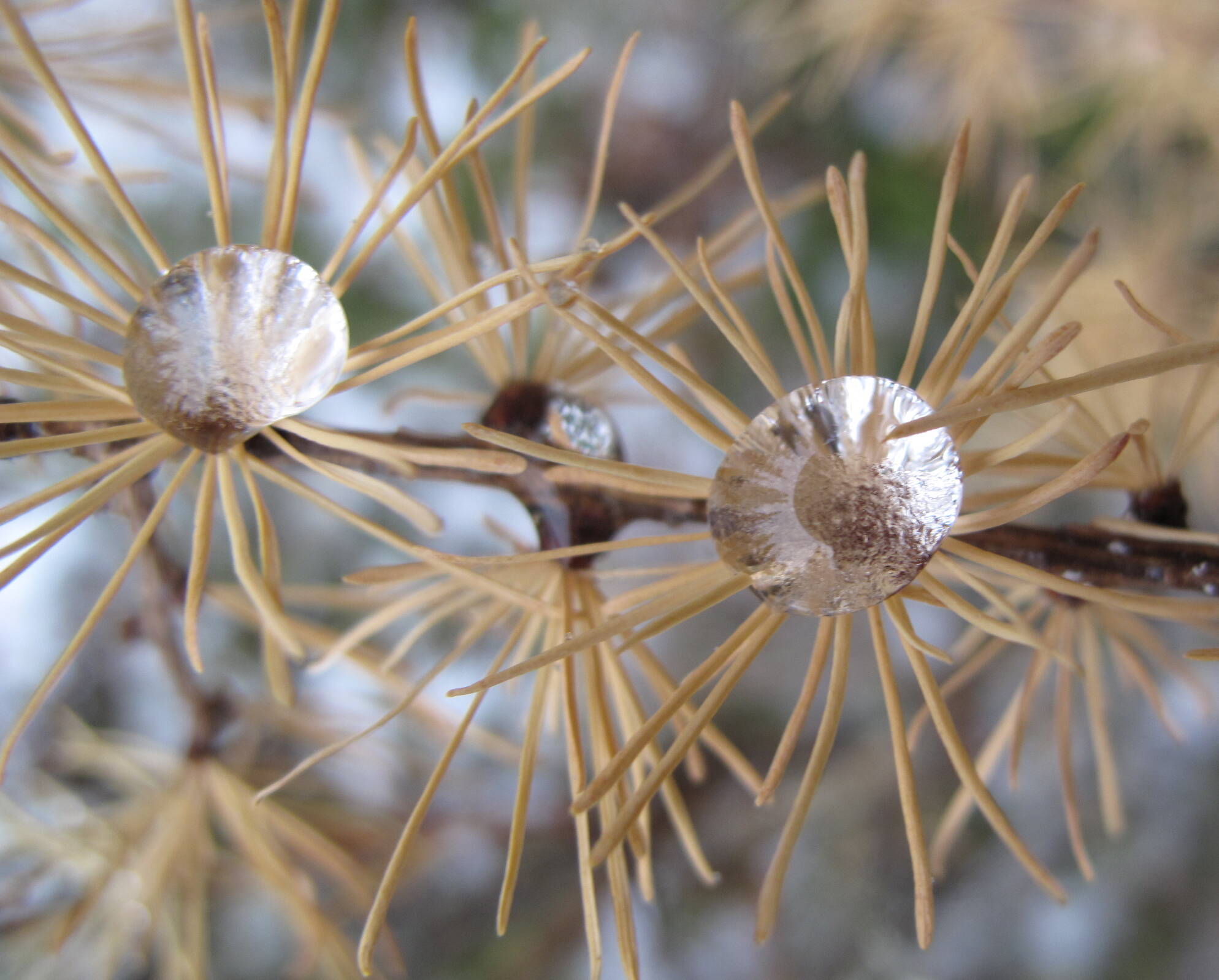
Water droplets form on the needle-like leaves of a tamarack tree on the UAF campus. (Photo by Ned Rozell)
