
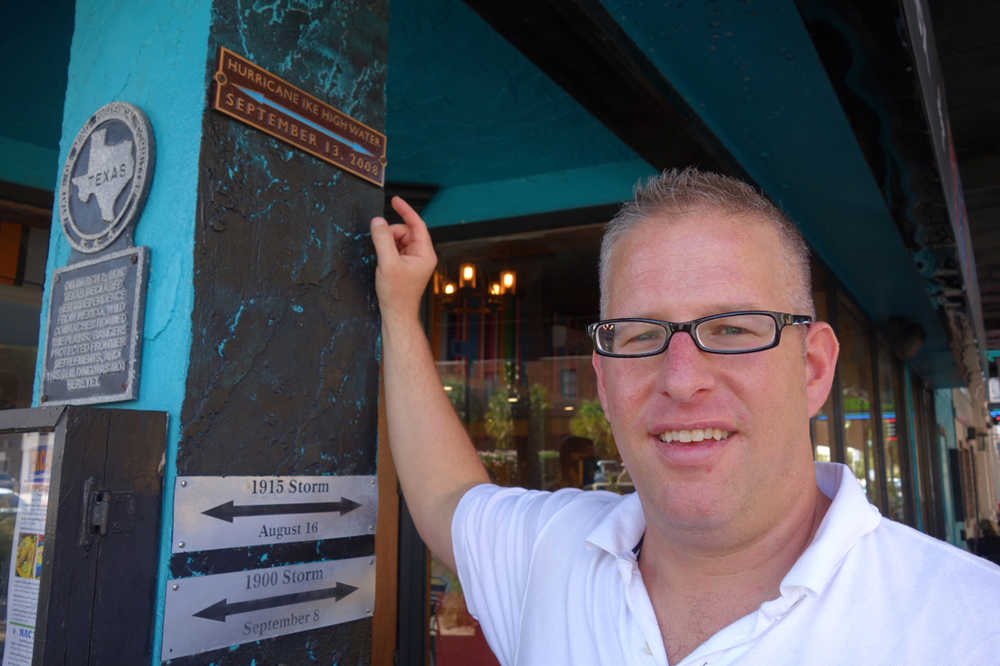
After Hurricane Ike in 2008 shoved six feet of water into downtown Galveston, Texas, people there had the attention of all America. But two days later, lawyers for Lehman Brothers filed the largest bankruptcy in America’s history. The Federal Reserve bailed out insurance giant A.I.C. with an $85 billion payment, and Americans were paying attention to other things.
That was too bad for the people of Galveston and for the giant petrochemical complex in the Houston Ship Channel, where refineries receive tankers at all hours and produce, among other products, more than half the jet fuel used in America. Those hurricane-threatened people on Gulf of Mexico did not get what they now call the “Ike Dike.”
That mammoth engineering project — a 55-mile wall and floodgate at the mouth of Galveston Bay — was typical of the ideas great and small for storm-ravaged communities of the Lower 48. Engineering projects like the Ike Dike, which will cost at least $6 billion if it is built, are the main plan of adaptation to rising seas for those vulnerable to rising waters.
That’s what I gathered as an Alaskan sitting in a conference featuring speakers from coastal areas with big populations and big problems. Like the 40 days each year Annapolis, Maryland, residents find their carpets soggy with salt water.
The problem is not only rising sea level, Annapolis engineer Don Bain said. Tide gauges in Annapolis show twice the sea level rise as the global average.
“That’s because the ground’s subsiding,” said Bain, who noticed that Galveston showed four times global sea level rise, possibly due to the sinking of its sandy foundation.
Places like Annapolis, New Orleans and Galveston are home to millions of people. Unlike the 350 people of Newtok who have decided to move what homes they can to a dryer spot, those in the Lower 48 look at floodproofing and other manmade solutions as a first option.
Urban planner Ann Horowitz of Alexandria, Virginia, showed plans for promenade seawalls that offer attractive, hidden protection from the sea. She also recommended using polished concrete and corrugated metals as building materials. They are easy to clean after soaking in salt water.
Residents of Galveston do not store anything of great value on their ground floors and wire new electrical outlets at head height. In New Orleans, new and restored houses are elevated 10 feet, with nothing on the first floor. Nicole Hobson-Morris of the Louisiana Office of Cultural Development showed several methods of installing stairways that help preserve the charm of the structures.
From fortress walls to houses standing on concrete legs, all of the methods discussed were expensive. Dale Morris pointed out New Orleans’ $14 billion pumping system that rids the city of water after every significant rainfall. Without the pumps, the city would not be a feasible place to live.
Creating a new town is not an option for people elsewhere as it is in Alaska. And people don’t really want to move from New Orleans, or Shaktoolik, a conference speaker noted.
Home is home, and there’s something in human nature that will make people resist the big change of moving unless the water in their houses never drains, said Kinder Baumgardner, a landscape architect and urban designer based in Houston.
We humans are focused on the immediate, like Mardi Gras or football season, he said. Most of us will choose to stay put, until forced out of an unlivable situation.
• Since the late 1970s, the University of Alaska Fairbanks’ Geophysical Institute has provided this column free in cooperation with the UAF research community. Ned Rozell is a science writer for the Geophysical Institute.
