
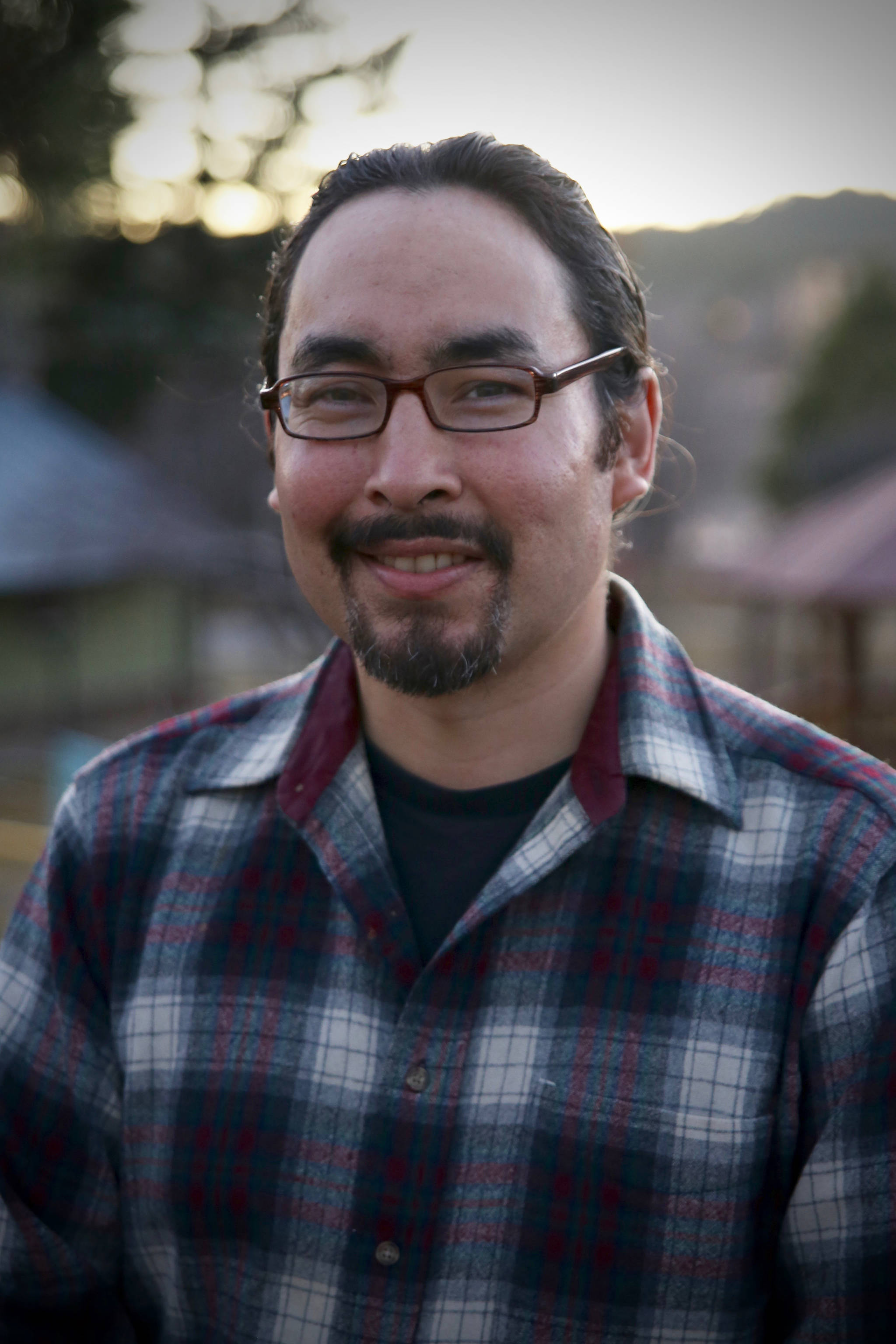
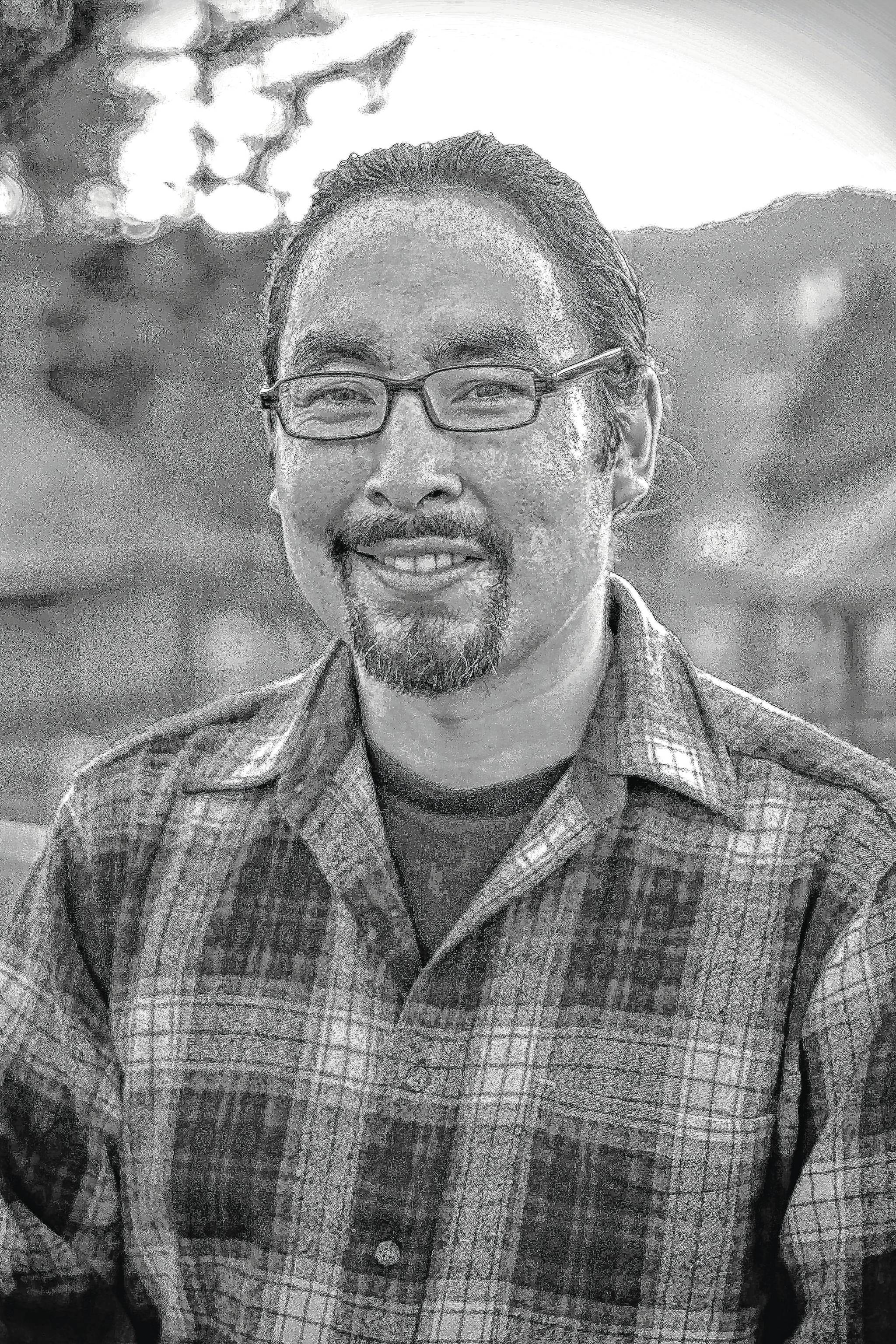
As a Tlingit and Inupiaq poet in Juneau, Ishmael Hope’s goal for his second book of poetry “Rock Piles Along the Eddy” was “to just be himself and to be unapologetically Native.”
Aak’taatseen, the name of the boy who lived among the salmon people in a Tlingit story, roughly translates to ‘alive in the eddy,’ Hope said. He came up with the title from listening to Steve Langdon, an anthropologist who teaches at the University of Alaska Anchorage, who spent time talking to Tlingit elders like Walter Soboleff.
“There’s something about an eddy in a river, that has more oxygen and is a little bit colder than the rest of the river … Langdon spoke in a lecture that humans live in deep relation with other creatures in the world, salmon in this case. Tlingit people knew that (eddies) made for rich grounds when the salmon were making their way upriver, so people would pile rocks on the river to make that eddy and that slight whirlpool nook for salmon.”
His first book, “Courtesans of Flounder Hill,” published in 2014, took him six years to write. He read book after book and spent a lot of time listening to his elders as he honed his craft. With his first book, he discovered his heart, he said, and while “Rock Piles Along the Eddy” continues from where the first left off, the focus shifts to indigenous thought.
“The kind of poetry I like, or the direction that I at least start from, is poetry that is really unapologetically of itself, and for me I am a Native man, I’m indigenous, I’m a Tlingit man, I’m Inupiaq,” Hope said. “Within that, there’s all these areas of exploration. This collection’s starting point is indigenous thought, exploring it, trying to feel it and understand it, even allow its energy to emit from the work.”
In poems like “Indigenous Thoughts” and “The Spirit in Everything,” Hope ruminates on this. He takes a contemporary political turn in pieces like “Children’s Cries” and “Canoe Launching into the Gaslit Sea,” before delving into his home life with “Home Life on Douglas” and “Carrying Louis at Bedtime.”
A lot of his poetry, Hope said, is his attempt to reach out to other people and the rest of the natural world. He challenges Western ways of thought with the indigenous perspective like ‘there’s a spirit in everything,’ an idea he dedicates an entire poem to. He said he’d like people to give indigenous perspectives as much credence as they do the Western ones. It is his hope they see the subtleties, nuances and even similarities.
“I want my children to know, my descendants to know that I tried, that I was looking for ways to reach out to people in real genuine ways,” he said. “That’s where the poetry comes from. A lot of the work that I do is what is the poem that is there and would still be there even if there was no language.”
Hope’s view is that his poems are something that already exists within the world. He only writes words around that true poem in an attempt to get at the beating heart of it.
“I’m trying to write from the space that everything is alive. The words are alive,” he said, even the language, he hopes. He knows one of his poems are ready to be read by others when he is out walking and the poem feels alive to him and no longer feels like his creation.
“Sometimes, all a poet can do is point and say ‘Look at that. That’s alive. That’s real,’” Hope said.
“Rock Piles Along the Eddy” will be released on March 21. Hope will do a reading at 7 p.m. on Thursday, April 27 at the Kindred Post with Alaska State Laureate Ernestine Hayes. The book will also be carried at Hearthside Books and Rainy Retreat Books.
Contact Capital City Weekly staff writer Clara Miller at clara.miller@capweek.com.
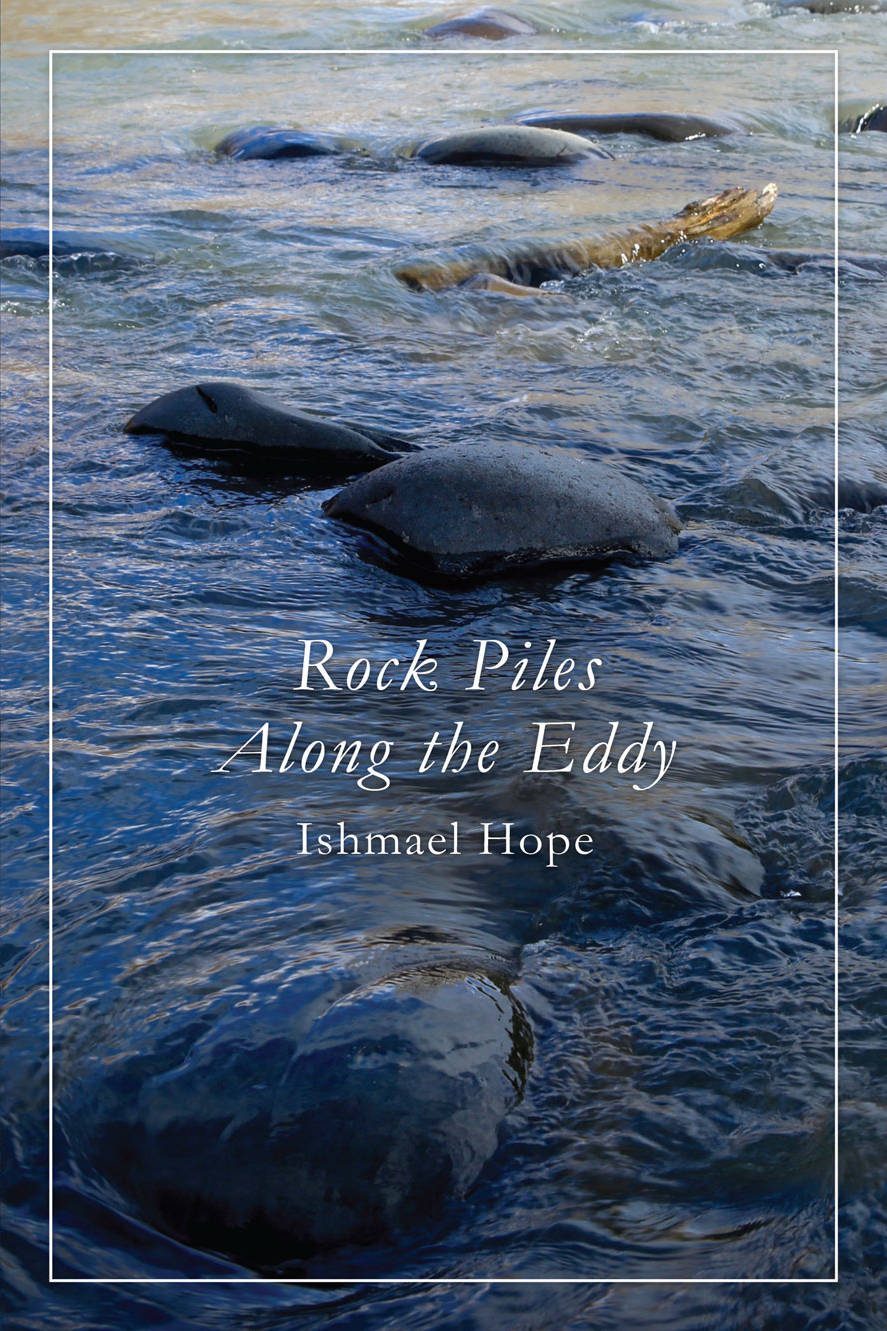
Cover of Ishmael Hope’s second book of poetry. Courtesy photo.
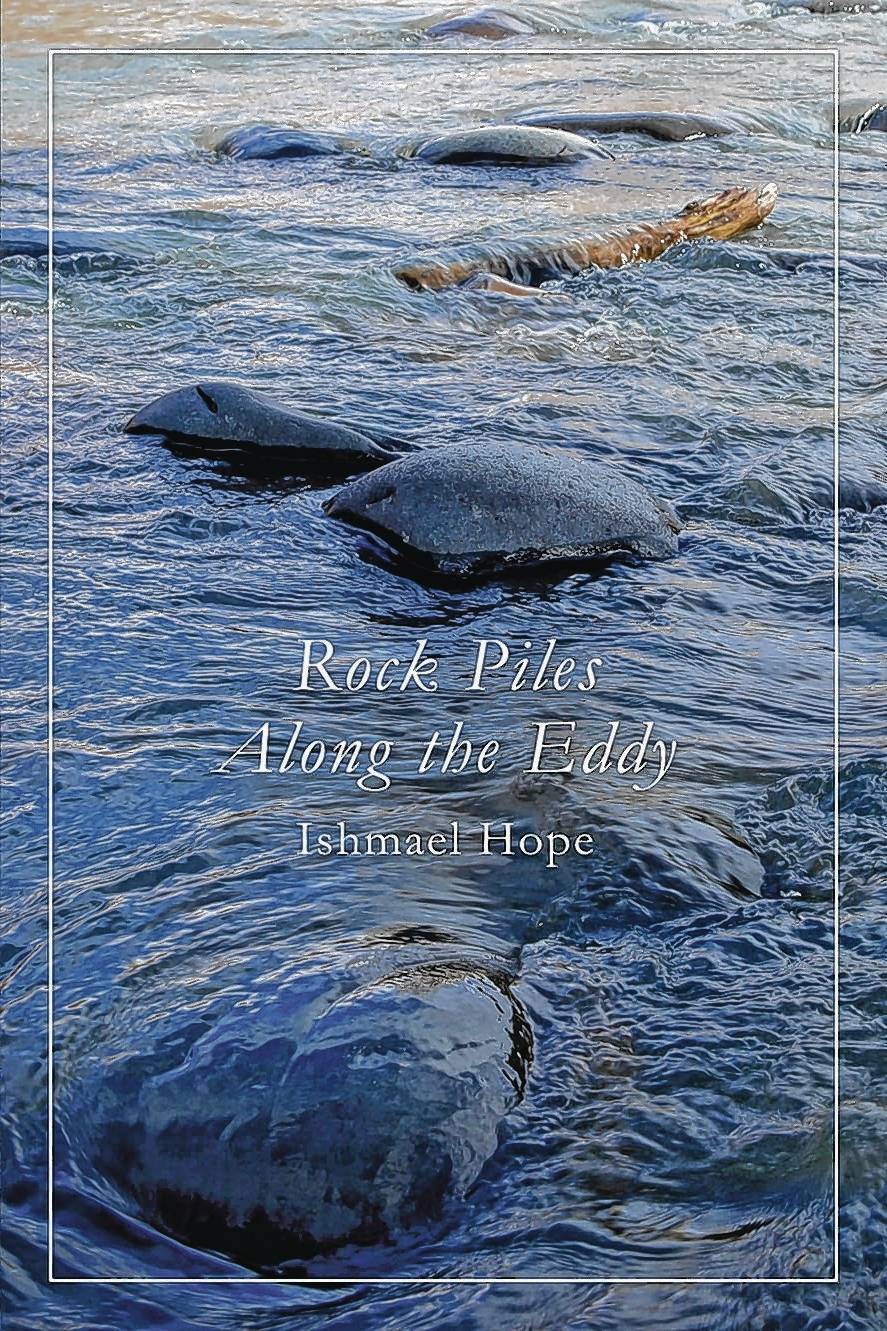
Cover of Ishmael Hope’s second book of poetry. Courtesy photo.
Cover of Ishmael Hope’s second book of poetry. Courtesy photo.
