
FAIRBANKS — I left my home here to begin a hike along the Trans-Alaska pipeline in late April. Returning in June, I am stunned by the green of it all. It’s like winter to summer in one day.
I’ve been in Alaska’s second-largest city for a few days now, resupplying for the trip north as I hike with my dog on the path of the Trans-Alaska pipeline. Three hundred fifty miles down, 450 to go.
Walking with my friend Bob Gillis, we left the gravel road that parallels the pipeline in the hamlet of Moose Creek, just north of Eielson Air Force Base. In a driving rain that didn’t let up all day, Bob and I reached his car after seven miles of hiking. We happily got in and cranked up the heater. After lunch in North Pole, he drove me home.
Because I did not get permission from the many people whose land the pipeline right-of-way crosses in North Pole and Fairbanks, I will resume my hike at the pipeline tourist viewpoint in Fox. Since my many detours from the pipe to the highway in the past month have my official walking distance at 356 miles compared to the pipeline’s 350 miles from Valdez, I feel OK about skipping the 20 miles of private land.
Stopping at one’s home with its comfy bed and sunny deck is a hazard during a trip like this. My last hiking day with Bob was wet and quite buggy. While in town, I’ve played softball in the evening heat with my Northern Shrikes, sat in the sunny bleachers for a Alaska Goldpanners game and watched mom and dad nuthatch feed their chicks in a birdhouse visible from the deck.
I’ve also purchased a ton of food and arranged it in 11 cardboard boxes. Friends will deliver those boxes via the Elliott and Dalton highways in the days and weeks to come.
In conversations here, friends have asked me the differences I’ve noticed since I walked the line 20 years ago. Here are some obvious ones:
Spruce bark beetles, creatures about the size of a grain of rice, killed a good number of white spruce in the upper Copper River Valley in the late 1990s. Their larvae girdled the trees from within, beneath the bark. Walking through there in 1997 was like walking through a graveyard of gray trees. The beetles only attacked mature spruce, though. The trees no taller than me at the time survived the beetles. They are now healthy and 40 feet tall.
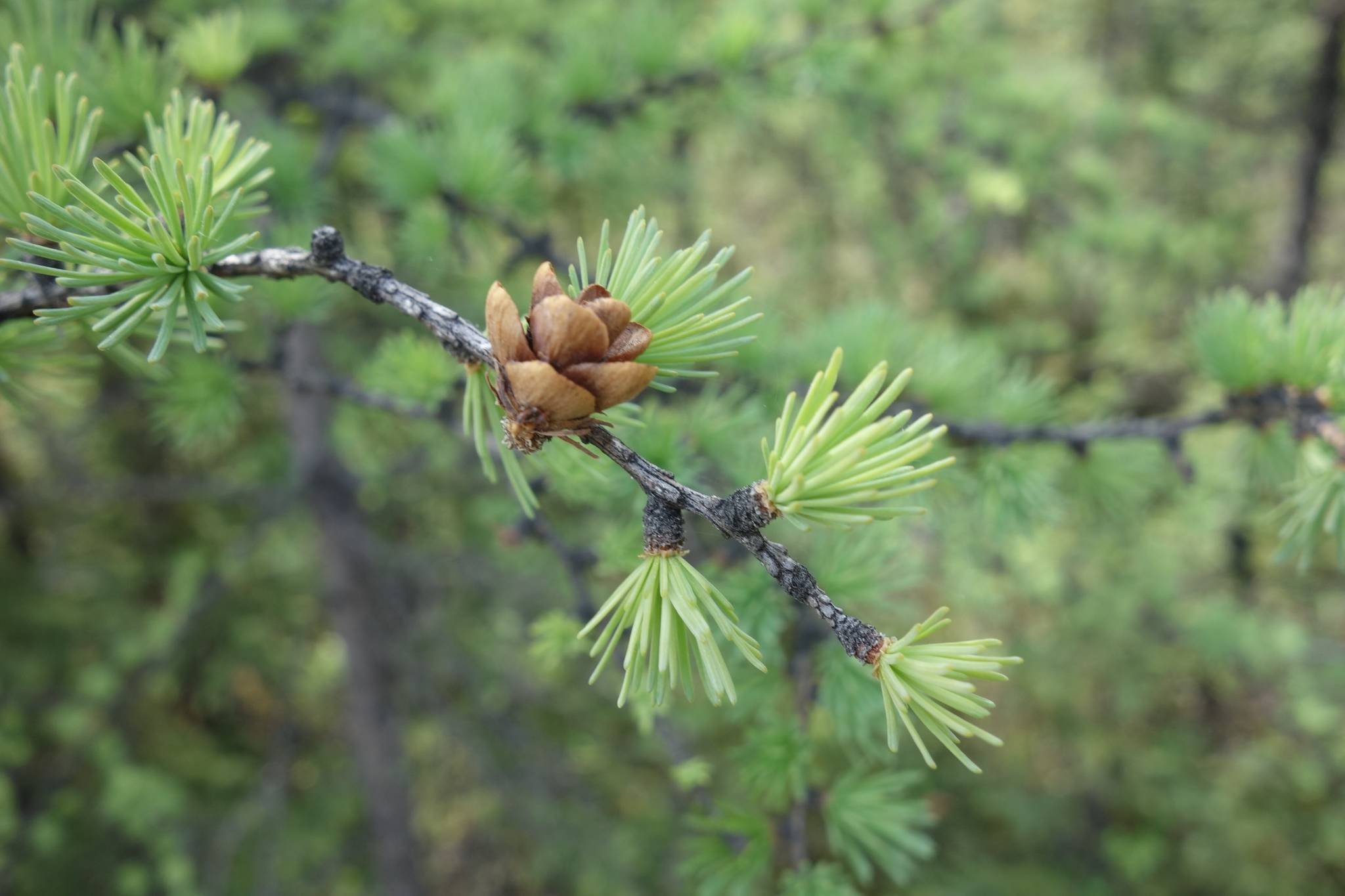
Tamaracks, delicate-looking conifers with needles that turn orange and fall off in autumn, were in a similar troubled state in 1997. The wormlike larvae of the larch sawfly stripped almost all the adult trees of their needles in the mid to late 1990s. Deprived of their solar panels for several summers, most of the adult trees died. Like the spruce, tamaracks have come back in a big way, with healthy young trees now lining the border of the pipeline road through swampy sections of the Interior.
And, as researchers have found in permafrost areas all over Alaska, the ground surface is subsiding. This is a hard thing for me to visualize, but a pipeline security officer who has a homestead near Glennallen stopped me one day and pointed it out.
He said he remembered the gravel road next to the pipeline was a seven-foot hill he needed to climb 30 years ago. Now the road is level with the surrounding terrain. The frozen ground beneath it has probably thawed over the 40 years since the road’s construction, which is consistent with most permafrost areas in Alaska that are reacting to warmer air temperatures.
• Since the late 1970s, the University of Alaska Fairbanks’ Geophysical Institute has provided this column free in cooperation with the UAF research community. Ned Rozell is a science writer for the Geophysical Institute. This summer, he is hiking the path of the Trans-Alaska Pipeline from Valdez to Prudhoe Bay. He also did the trip 20 years ago.
