
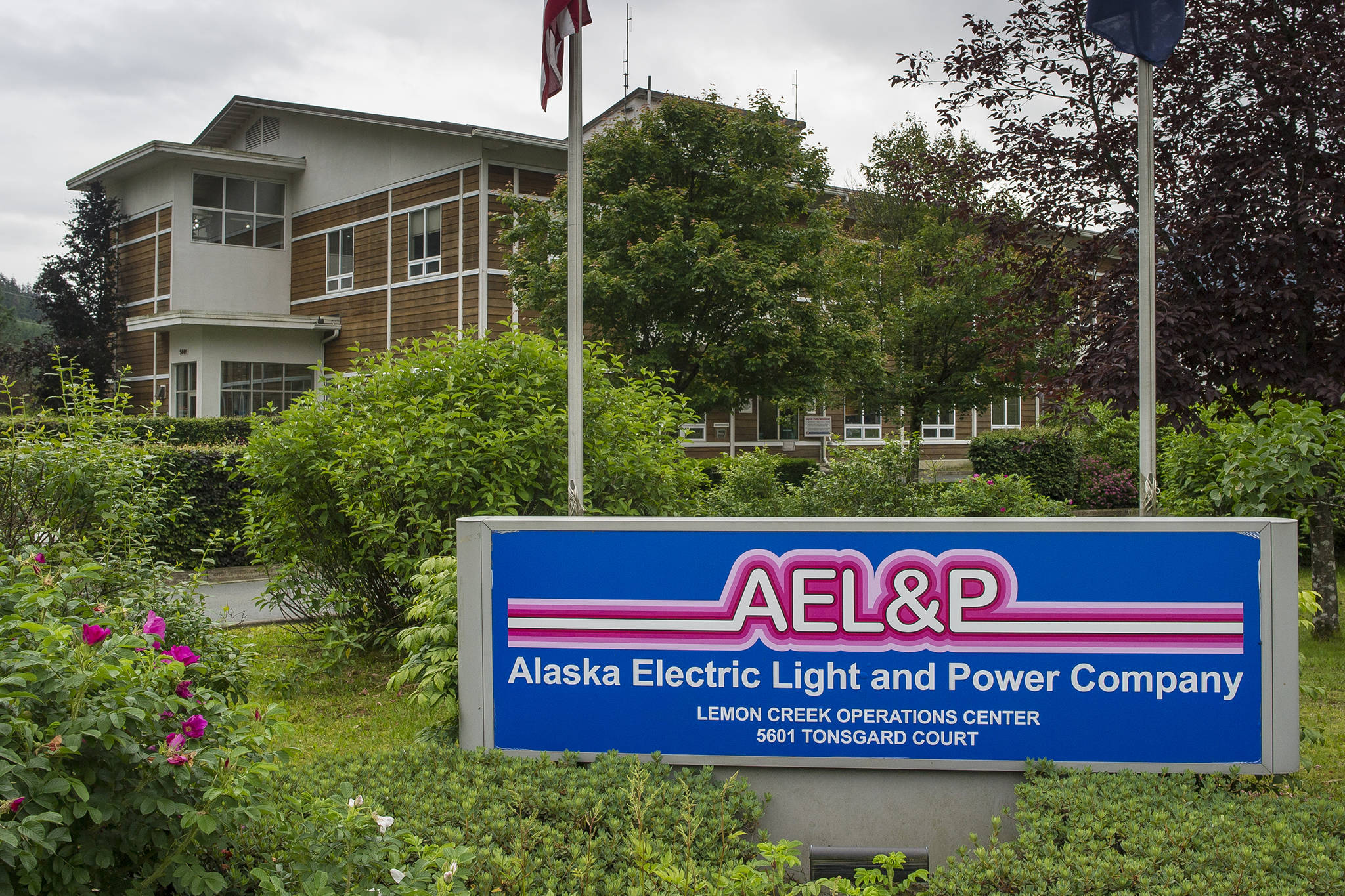
Juneau’s electric utility won’t end up having Canadian owners after all.
Last July, Ontario power company Hydro One announced that it was planning to buy Washington-based Avista Corporation, the owner of Juneau power company Alaska Electric Light & Power (AEL&P). On Wednesday this week, the Washington Utilities and Transportation Commission (UTC) rejected Hydro One’s application, writing in its decision that the sale “fails to provide a net benefit to Avista’s customers.”
The main reason the three-member UTC gave for denying the purchase was the political influence that’s present in Hydro One’s leadership. The Province of Ontario owns 47 percent of the utility (making it the largest shareholder), according to the UTC decision, and as a result, there was a huge upheaval in the utility’s leadership this summer.
As detailed in the UTC decision, Hydro One was a key factor in the provincial elections this June. Members of the Progressive Conservative Party promised in their campaigns that if they took control of the province’s Legislative Assembly, they would oust the Hydro One CEO and replace the entire Board of Directors.
The PCP did indeed gain the majority in the Assembly, and members of the party followed through on their promise. An announcement from Canadian Premier Doug Ford on July 11 stated that CEO Mayo Schmidt was retiring and the Board of Directors were all all going to be replaced. By Aug. 15, they were all gone, according to the UTC decision.
This clear influence from the government showed that Hydro One wasn’t as autonomous as it had previously claimed, the UTC wrote.
“It became clear on and after July 11, 2018, that Hydro One’s directors cannot be considered independent and the province’s role is not limited to that a minority shareholder in a publicly traded corporation,” the UTC decision read.
The news left AEL&P leaders disappointed, AEL&P Vice President and Director of Consumer Affairs Debbie Driscoll said in a statement.
“AEL&P, like Avista, is disappointed by the Washington commission’s order denying approval of Hydro One’s acquisition of Avista,” Driscoll’s statement read. “However, the decision does not affect our operations; it will continue to be business as usual for AEL&P.”
A joint statement from Avista and Hydro One also said the companies were “extremely disappointed” by the news. The statement also said the companies are “reviewing the order in detail and will determine the appropriate next steps.” Avista Communications Manager Casey Fielder declined comment beyond what was in the statement.
It’s unclear what those next steps will be, but Avista CEO Scott Morris told the Empire in January that he’s seen the market trending toward mergers and consolidations.
“We certainly could have waited,” Morris said at the time. “There’s no reason why we had to find a partner, but I think with the trends happening with the industry, it was a matter of time.”
Many in Juneau and around the state will likely not be disappointed by the news.
Since the news of the sale was announced in July 2017, numerous Juneau locals and people around the state have been skeptical of the sale. Dozens of Juneau residents filed comments as the Regulatory Commission of Alaska (RCA) considered Hydro One’s application to purchase Avista.
Even U.S. Rep. Don Young, R-Alaska, and Rep. Tammie Wilson, R-North Pole filed comments expressing concern that Juneau’s assets would fall into the hands of the Canadian government. Even as Hydro One leaders claimed they were “not a governmental entity,” opponents of the sale remained staunch in their views. Even the City and Borough of Juneau Assembly members agreed to get involved in the negotiations, as the city became an “intervener” in the process to ensure city officials had a seat at the table.
The focus of many of the concerns was the Snettisham hydroelectric project, which is currently owned by the federal government but could transfer to AEL&P in 2034. Many opponents wanted Snettisham to remain in local hands, and were afraid of the valuable project ending up in outside control.
AEL&P President and General Manager Connie Hulbert said multiple times during the RCA’s review process that there were numerous protections on Snettisham. She also said the sale wouldn’t affect rates, as the RCA sets rates.
Still, the UTC decision said the political meddling from the Ontario government doesn’t put customers in a very secure place.
“The Commission determines that the proposed transaction fails to protect adequately against the risks inherent in the proposed change in Avista’s ownership, fails to provide a net benefit to Avista’s customers, and fails to protect and further the broader public interest,” the UTC decision reads.
Randy Sutak, a 22-year Juneau resident and one of the most vocal opponents of the purchase, said in an interview Friday that the news after this summer’s elections wasn’t surprising to him. He said that when he read the UTC’s decision, he noticed many familiar concerns in there that he and other Juneau residents had raised. Sutak said that ideally, Juneau’s electricity would be locally owned.
“What would be a good thing is to have some type of local control,” Sutak said. “The money we’re paying right now is still leaving the state.”
• Contact reporter Alex McCarthy at 523-2271 or amccarthy@juneauempire.com. Follow him on Twitter at @akmccarthy.
