
“Next toss up question for both teams: Bioluminescence is used for all of the following except:
W. Self-Defense
X. Maintaining Body Temperature
Y. Attracting Prey
Z. Species Recognition”
This is how judges read questions during the annual National Ocean Sciences Bowl (NOSB), a high school oceanography competition. Participating students study and prepare during the fall and winter for regional competitions in February, in Alaska’s Tsunami Bowl held in Seward. The event consists of multiple choice questions, like the one above, short answer questions, and team challenge questions. The competition began as part of a national effort to increase public awareness of ocean sciences in 1998.
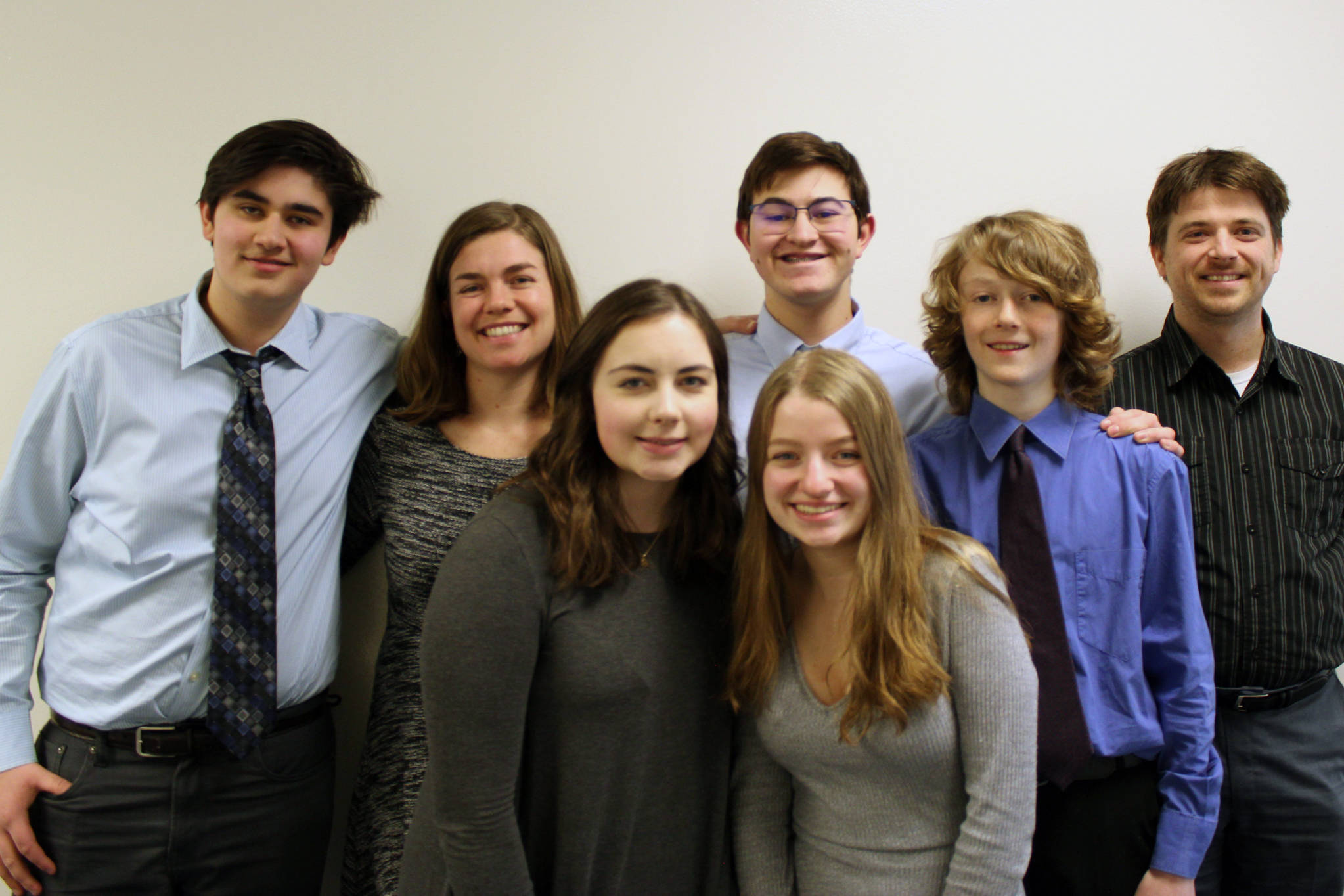
While NOSB is not the most well-known extra-curricular activity, it requires every bit as much teamwork and dedication as an athletic team might. Watching a team in a tense competition moment, one can sense the closeness of the team in the looks they give each other. They are on a different level of communication. They have to be, or they’ll miss the chance at a decisive scoring opportunity.
I asked a few past participants what they remembered and gained from their time on an NOSB team. It was clear by their responses that they learned more than just facts about the ocean. What stood out to me was their deepened appreciation for academia, the scientific community and teamwork skills. Johnny Elliot, JDHS class of 2015, said, “NOSB was the activity that got me the most excited about academics.” Another former participant, Adrianna Northcutt (class of 2001) said, “NOSB played a major role in guiding me towards attending college. I hadn’t really considered college but my experience working with researchers, [the coach] and my team made me fall in love with the research and presentation component of science and was a huge reason I decided to go to UAS the following year.” She’s now a science teacher at Thunder Mountain High School.
Students in Alaska participate in a component unique to the state’s regional competition: a Research Project. Each team writes a 15-page research paper and then presents it in front of their peers and science judges at the competition. Defending their research to their peers is intended to be much like how the scientific community actually works and can be one of the most intimidating aspects of the competition. Teams are encouraged to focus on issues that are unique to their region in Alaska and are relevant at the time of writing. Past topics have ranged from fisheries management to the impact of cruise ship tourism or climate change. Listening to each others’ presentations, the students a deeper understanding of what’s happening in communities around the state.
Drake Skaggs (class of 2008) said “while we had the support of our coaches, ownership of the project was ours and motivation was largely internal. To build something together created a strong team bond that made us stronger during the quiz portion also and taught me the importance of trusting teammates.” He went on to study political science and attributes NOSB to making him a strong contributor to the debate team.
As a coach last year, I witnessed first-hand the hard work and team effort put forth on the research project. The way they split up the work of researching, interviewing local scientists and professionals, and writing the different parts of the paper — helping each other throughout — was exemplary. That experience will help set their expectations for future group work in school and in their future careers.
What makes students join a club like NOSB? A variety of reasons: interest in ocean science, a friend invited them, a teacher encouraged them, some teachers offer extra credit for participating, or maybe to look good on college applications. What they gain is a window into the world they will enter after high school. Whether they go into academia or to a job, the discipline, teamwork and understanding of the ocean and our connection to it will serve them well.
And for those of you still wondering about the bioluminescence question at the outset. The correct answer is X.
• Bess Crandall is the program coordinator for Discovery Southeast, occasional “guest coach” for this year’s National Ocean Sciences Bowl club and Juneau STEM Coalition member. STEM Corner is a monthly column about Science, Technology, Engineering and Math in Juneau, written by a rotating group of Juneau STEM Coalition members.
STEM Activity
Test your own Marine Science knowledge with these questions written by this year’s NOSB participants:
1. How far above the water would an iceberg with a height of 350 meters be?
W. 30 meters X. 10 Meters Y. 45 meters Z. 35 meters
2. At what depth in the ocean is 99 percent of the light absorbed?
W. 150 meters X. 65 Meters Y. 100 meters Z. 40 meters
3. Which of the following describes an organism able to tolerate a wide range of temperatures?
W. Eurythermal X. Euryhaline Y. Stenothermal Z. Stenohaline
Not into trivia? Try wave watching:
What can you notice about wave patterns and prevailing winds in the Juneau area?
Or tidepooling:
We get some pretty low tides in Juneau, check the tides for the next low tides and see what you can discover for yourself.
Correct answers: 1) z- We only see the top 10 percent of icebergs above the water’s surface 2) y- 3) w- It’s helpful to know prefix meanings: Eury- (wide) Steno- (short or narrow). Combine that with suffixes: -Thermal (heat/temperature) and -haline (salty/saline)
• Bess Crandall is the program coordinator for Discovery Southeast, occasional “guest coach” for this year’s National Ocean Sciences Bowl club and Juneau STEM Coalition member. STEM Corner is a monthly column about Science, Technology, Engineering and Math in Juneau, written by a rotating group of Juneau STEM Coalition members.
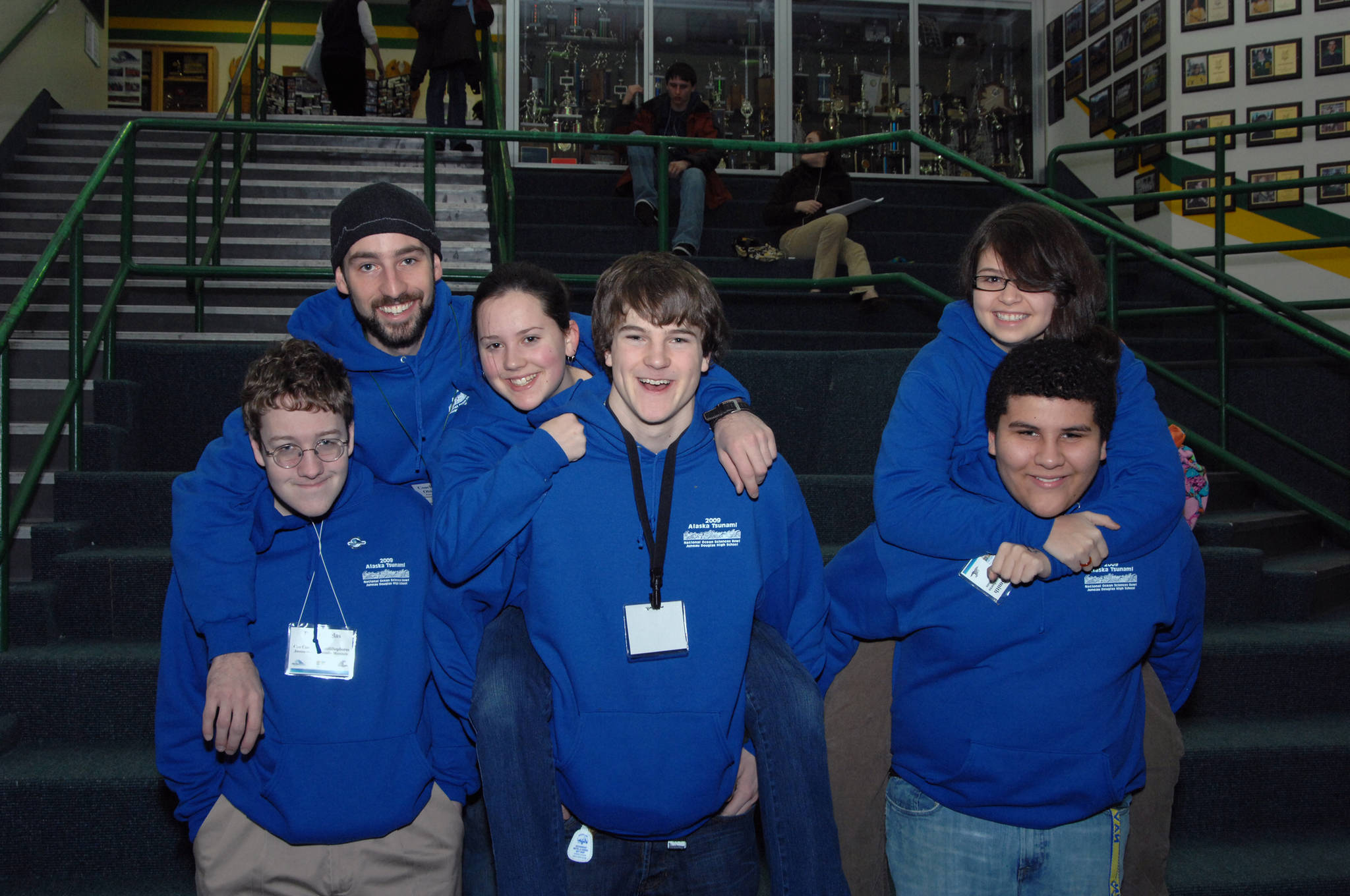
From 2009, left to right: Ross Douglas, Jake Jacoby (coach), Laurel Stark (captain), Tyler Emmerson, Carley Casipit and Seth Bricky-Smith. (Courtesy Photo)
