
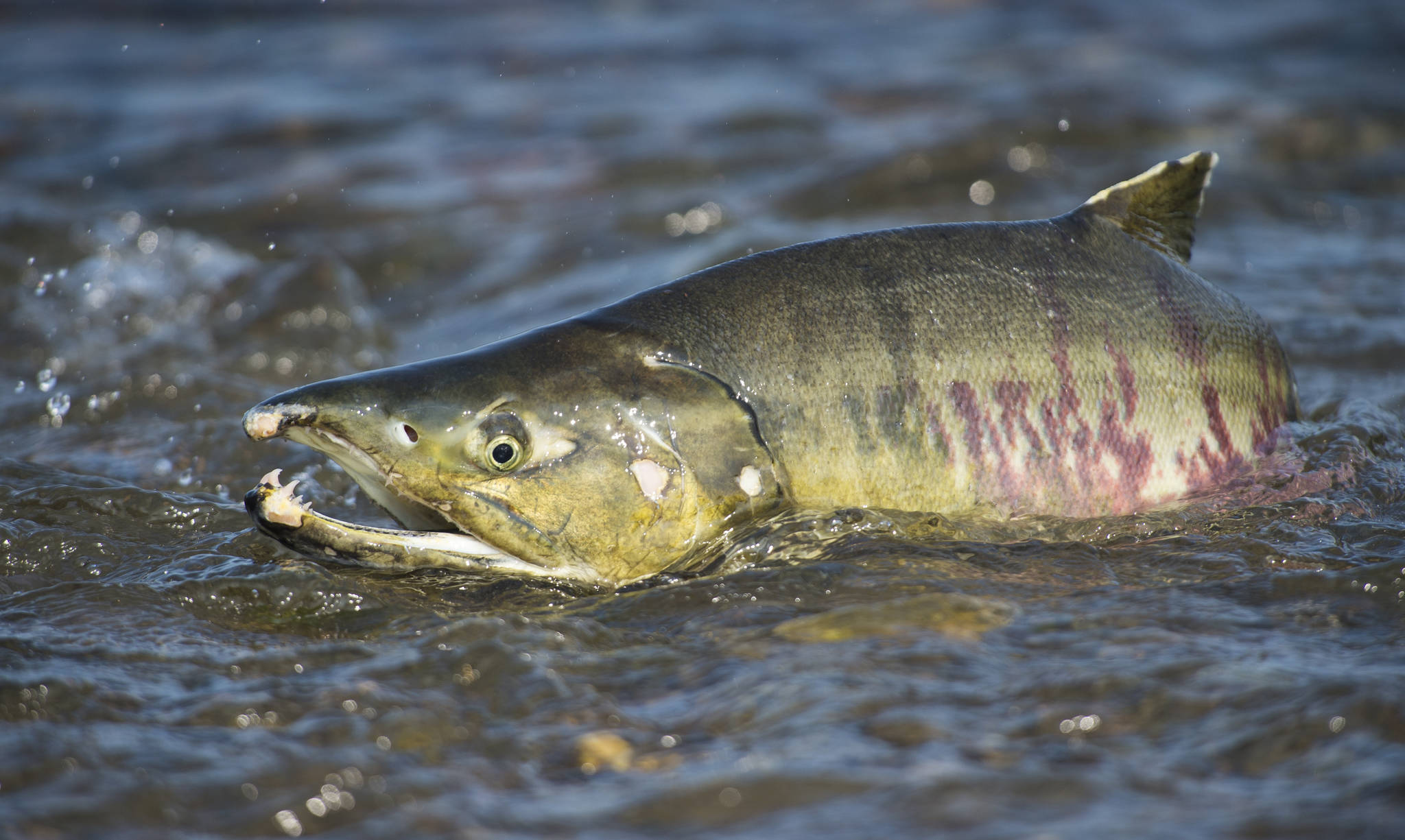
The Alaska Supreme Court on Wednesday approved the Stand for Salmon ballot initiative for November’s statewide election, but not before deleting some provisions that violate the Alaska Constitution.
The decision marks only the second time in state history that the Supreme Court has used its power to delete portions of a ballot initiative in order to certify the rest.
“We conclude that the initiative would encroach on the discretion over allocation decisions delegated to the Alaska Department of Fish and Game by the legislature, and that the initiative as written therefore effects an unconstitutional appropriation,” the judges wrote in their ruling, “But we conclude that the problematic sections may be severed from the remainder of the initiative.”
Supreme Court judge Daniel Winfree offered a partial dissent, disagreeing with how much should have been deleted by the court.
The ruling is the latest success for ballot measure proponents, who have been consistently opposed by the State of Alaska and a multimillion-dollar ‘vote no’ effort. The Alaska Department of Law, which had been opposing the measure, also declared victory, since the court agreed that the original text was unconstitutional.
Since the measure was suggested in May 2017, state attorneys have raised objections to its scope, which they view as overly broad and a violation of the Alaska Constitution. The Constitution allows ballot measures, but it prohibits those measures from making appropriations of money or resources. After an abortive first attempt, backers withdrew their measure and rewrote it. Despite that, the Alaska Department of Law said it was unconstitutional, and Lt. Gov. Byron Mallott refused to certify it for the ballot.
The state argued that the initiative’s eight pages of dense text create legislation that effectively allocates state waters for fisheries, excluding other development that might affect rivers, streams and lakes.
Proponents challenged that ruling in Alaska Superior Court, and in October 2017, Judge Mark Rindner ruled against the state, saying the measure did not amount to an appropriation.
The state appealed to the Supreme Court, which heard oral arguments in April. At the time, the judges didn’t give any indication how they might rule, but they did indicate they might approve an edited version of the measure.
That came to pass on Wednesday.
The court deleted two separate sections of the measure, each of which state that the Alaska Department of Fish and Game cannot permit a project under specific circumstances.
“They are problematic,” the court wrote, “because — however they are interpreted — they bar the commissioner from granting a permit to a project that would ‘cause substantial damage’ or have one of the listed effects, even if in the commissioner’s — or the legislature’s — considered judgement the public benefits of that particular project outweigh its effects on fish habitat.”
In the court’s determination, a ballot measure may place restrictions on permitted projects, but it cannot expressly forbid those projects. That kind of decision is up to the Legislature alone.
In making that decision, the Supreme Court reversed a prior decision that had permitted a 2008 ballot measure known as the Alaska Clean Water Initiative. That measure would have blocked construction of large mines if they affected salmon or state waters. (Voters rejected the measure.)
For those for and against the ballot measure, Wednesday’s decision changes little. Campaigns will continue in the 90 days remaining until the November vote.
“We’re a little bit disappointed … but overall, the heart and soul of the initiative remains intact,” said Ryan Schryver, campaign director of Yes for Salmon, which is supporting the measure. “We’re excited that we’re going to have a chance to get to vote on some much-needed improvements to the law.”
Stand for Alaska, which is opposing the measure, issued a prepared statement by email.
“Today’s court decision to remove sections of Ballot Measure 1 validates just how flawed and poorly crafted the measure is,” the statement said. “Stand for Alaska remains confident that Alaska voters will make the right decision for our future by voting no on November 6.”
• Contact reporter James Brooks at jbrooks@juneauempire.com or 523-2258.
