
Legislative and governor candidates have vowed across the state to further cut Alaska’s budget, but many state departments drafting their budget requests for the coming fiscal year are going in a different direction.
On Friday, the Alaska Seafood Marketing Institute became the latest state-supported agency to warn that budget cuts have reached their limit and in some places have gone too far.
In an unusual statement, the public-private partnership said it will be requesting $3.75 million more from the state in the coming year.
“There’s only so much you can do to squeeze down on the role and responsibilities of state government, and as far as others, there’s some departments looking at increments … I guess mostly in programs that will pay long-term benefits,” said Mike Navarre, commissioner of the Alaska Department of Commerce, which controls ASMI’s budget.
An “increment,” in the jargon of the state, is a budget increase.
“We used to invest in seafood marketing. We’re looking to do it again,” Navarre said.
For the current fiscal year, the state budget is $11.277 billion, according to figures from the nonpartisan Legislative Finance Division. That includes $1 billion for Permanent Fund Dividends, $1.45 billion for construction and renovation projects in the capital budget, and $9.77 billion for operations.
In an analysis released in August, the Legislative Finance Division warned that keeping the budget flat will cost $200 million more in revenue, partially because the Legislature used so many one-time accounts to make ends meet.
With the money in those accounts (about $77.5 million) gone, the state will need to find new sources of cash.
In addition, the Legislature deliberately underfunded Medicaid services by $50 million and pledged to put more money toward K-12 education and the retirement system for state employees.
Lawmakers will need to pay for all of that if they want to keep the budget flat. Many state departments aren’t asking for flat funding, however. They’re like ASMI: They’re asking for more, hoping that the fiscal climate is right.
Oil prices have risen since the Alaska Legislature approved the state budget this spring, and — barring another dip in prices or production — the price may be high enough to erase a projected budget deficit. The state could even run a small surplus.
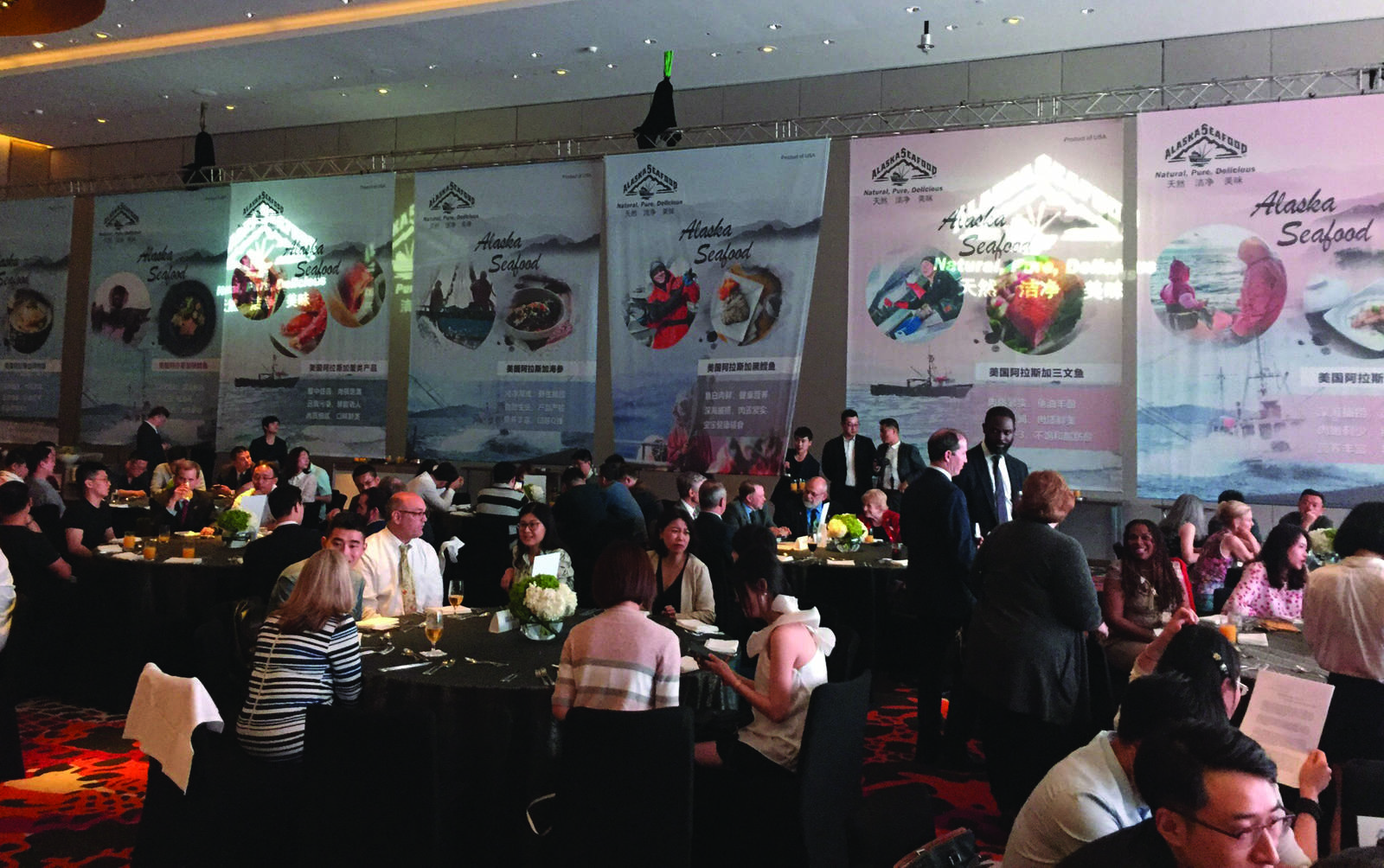
Since 1981, the state has levied a small tax on seafood landings in Alaska in order to pay for a cooperative marketing program. When Outside restaurants promote “wild Alaska salmon” or king crab, they’re buying into a reputation for quality and purity that ASMI has helped establish.
“We as Alaskans, we know that we have the best fish in the world, and it comes from the purest environments,” said ASMI spokesman Jeremy Woodrow. “What’s often forgotten is that there is a similar or identical competing species.”
ASMI’s mission is to preserve the reputation of Alaska seafood, but it is warning that budget cuts have endangered that mission. The ongoing trade war with China and international competition is making Alaska seafood less competitive on price. That means it needs to compete on quality, and that takes marketing.
In the past five years, the state’s support for ASMI (above and beyond the fish tax) has declined from $7.8 million to zero.
Those cuts have side effects as well. Without state funding, ASMI cannot match federal grants available for marketing. Those grants account for $4.5 million of ASMI’s remaining $20.6 million budget.
“We’re circling back and realizing that if it’s going to be a public-private partnership, there needs to be some public funds in this partnership,” Woodrow said.
ASMI’s requests for additional funding are believed to be typical of what is happening behind the scenes as state bureaucrats draft their budget plans. The Empire submitted a public records request for each department’s budget requests but was rejected by the governor’s office, which said those documents are protected under an aspect of the state records laws that locks up work in progress.
The first draft of state budget requests will not be published until December, but some departments, like ASMI, have made their preferences known. In regard to public safety, the requests are expected to include more funding for troopers, prosecutors and drug treatment programs.
The University of Alaska board of regents is finalizing its budget request at a meeting early next month. That request is expected to ask for more state funding as well.
None of these requests are final: The budget must be approved by the Legislature and signed by the governor before becoming effective. In this case, who that governor will be is unknown.
In the case of ASMI, Navarre said he believes it’s worth it to ask.
“In terms of the Alaska brand, ASMI has done — it’s a great example of a public-private partnership,” he said. “This is one that makes good sense.”
• Contact reporter James Brooks at jbrooks@juneauempire.com or 523-2258.
