
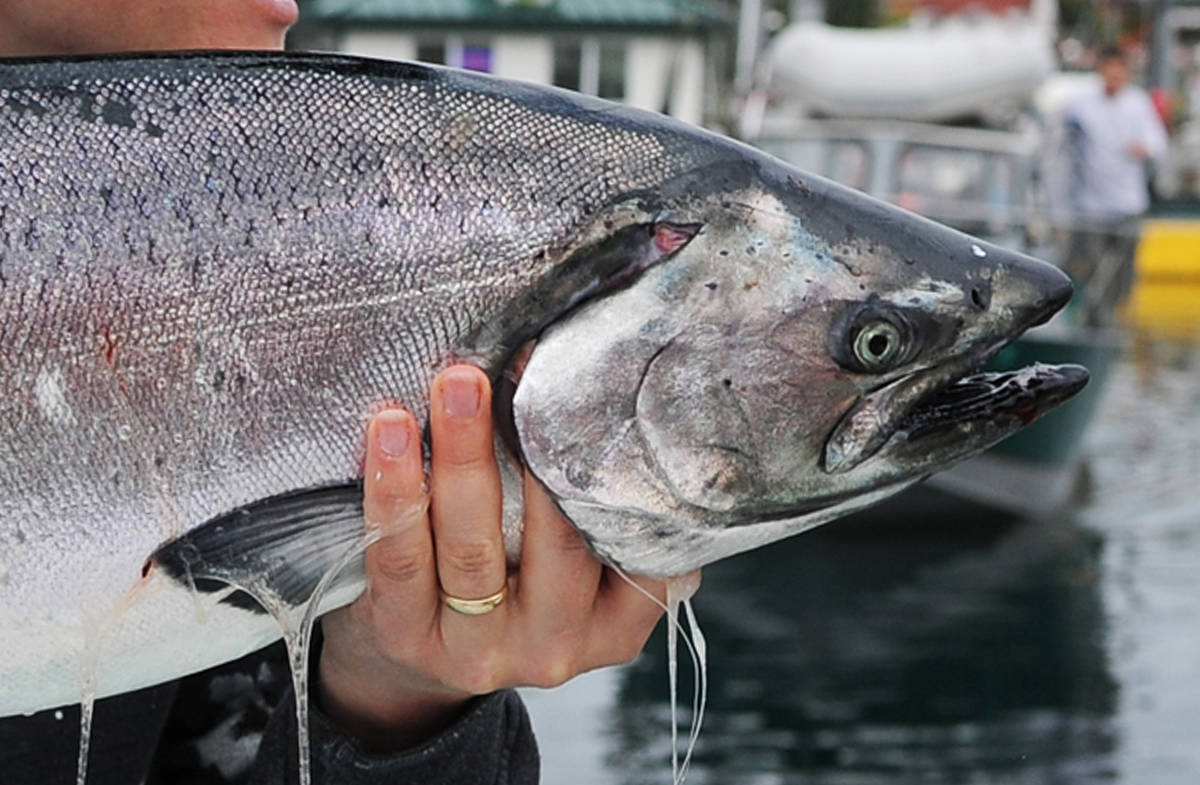
Alaska, Washington and Oregon representatives settled negotiation Monday with Canada on how to share dwindling Chinook salmon harvests through a 10-year international treaty.
The agreement, called the Pacific Salmon Treaty, will affect the number of Chinook salmon commercial and sport fishermen can catch in a given year in Alaska for the next 10 years, starting in 2019.
The result: Alaska will take a 7.5-percent reduction when salmon numbers fall into the lowest tier of abundance. That compares to a 12.5-percent reduction for Canada and reductions ranging from 5-15 percent for Oregon and Washington. The Commission also agreed to change the way coast wide abundance is measured. There’s more empirical data in the new method, including data taken from winter troll fisheries in Alaska.
On Tuesday, two treaty negotiators shared their reactions to how the three-and-a-half-year process played out.
Charles Swanton is Alaska Department of Fish and Game Deputy Commissioner and lead Alaska negotiator for what’s called the Pacific Salmon Commission. He said he wasn’t necessarily happy with the outcome, but it was the best Alaska could do.
“I wouldn’t characterize myself as happy. I think realistically we did what we could,” Swanton said, adding, “We all took restrictions in one form or another.”
Alaska’s harvest cuts will be graduated, Swanton said, based on the abundance of Chinook coast wide. If there are more Chinook salmon coast wide, Alaska won’t have to cut as much of its harvest.
That 7.5-percent cut to Alaska’s harvest share will be triggered when predictions fall into the lowest abundance tier. That number can drop to 3 percent and sometimes 1 percent if more Chinook are available.
“The basic premise is that as abundance goes up, our harvest restrictions go down,” Swanton said.
The variable percentage in cuts should help Alaska keep more fish, said Dennis Longstreth, a Sitka commerical troller who represtented troll fishermen in negotiations. Unlike past Treaty agreements, Alaska won’t be locked into its cuts if Chinook abundance improves.
Alaska agreed to 15-percent reductions to its harvest share when the last Treaty was negotiated 10 years ago, Longstreth said, but kept those reductions even when coast wide abundance improved. A reevaluation should have been done about five years into the previous agreement, around 2013, he said, which should have dropped that reduction percentage. But that didn’t happen.
“That was pretty upsetting, and it gives Alaska a lot heartburn,” Longstreth said.
The percentage of Alaska’s catch reduction has received careful scrutiny from salmon trollers, who have taken issue with Alaska’s share of Chinook harvest reductions in past Treaty agreements.
Troll fishermen have had their wallets thinned by abysmal Chinook returns in recent years, which earlier this year led to fishery reductions at a March meeting of the Board of Fisheries. Trollers protested Treaty negotiations at that meeting, and have taken protests to Sitka streets this year.
The three U.S. states went into negotiations with Canada determined not to accept further cuts to Chinook harvest shares, Longstreth said.
But once negotiators sat down with Canada, they realized an agreement without further cuts would be impossible, Longstreth said. Canada insisted that both sides share harvest reductions and that they’d leave the negotiations if some reductions weren’t accepted by both sides.
Nobody wanted to take cuts, Lonstreth said but “there came a point at which, if there was going to be an agreement, there were going to be some cuts taken.”
“It was a bloody battle all the way,” Longstreth said.
• Contact reporter Kevin Gullufsen at 523-2228 and kgullufsen@juneauempire.com. Follow him on Twitter at @KevinGullufsen.
