
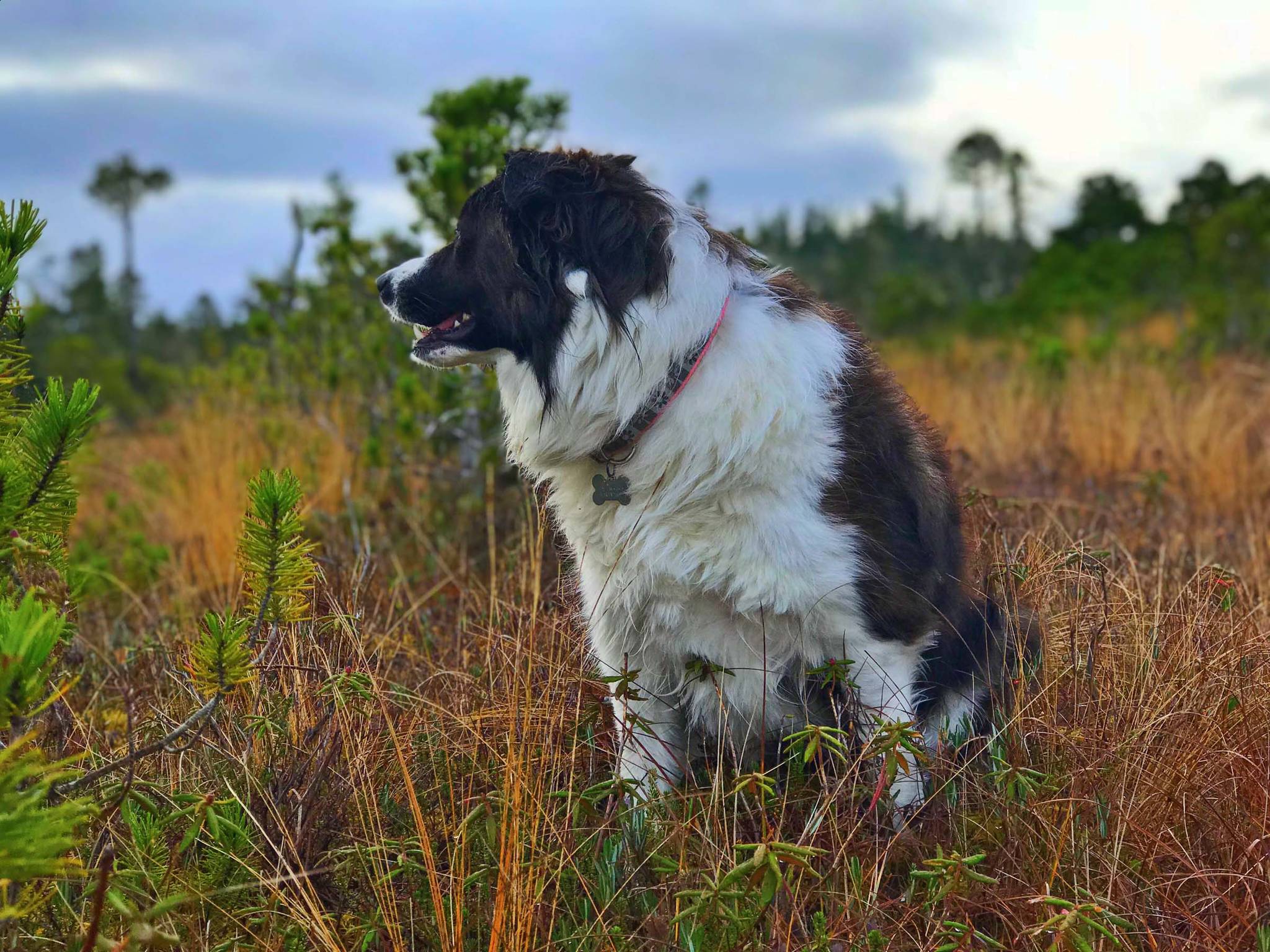
“Let’s go listen to the forest,” I tell my dad. We drive out on our logging roads, taking a couple of berry buckets with us. It’s cranberry and Labrador tea picking season. Kéet, my border collie, is with us. She leans out the truck window, sniffing the chill air. My dad pulls his truck off to the side of the dirt road. Near a muskeg with easy access, we step out of the truck. Every sound has a sense of newness to him, sounds he hasn’t heard in 30 to 40 years. My dad was nearly deaf, and now with the help of his new hearing aids he can hear.
The first day he wore his new hearing aids he said, “I can hear my footsteps. I can hear myself breathing.” The audiologist said returning to the hearing world would not be easy. He complains that I’m clanking dishes when I cook. He tells me not to yell at him while we’re driving to town to do errands. But it’s not always irritating. He can hear bald eagles in the nearby tree screeching every morning and can hear the ducks bathing in the creek next door.
While in flight, bald eagles’ specialized auricular feathers funnel the sound directly into their ears.
“I miss all the bird sounds; that’s what I miss most. I miss the hooters,” meaning the sooty grouse, common in Southeast Alaska. Now, beside the muskeg, my dad stands still listening to the sounds he hasn’t heard in years, things I take for granted: the blue jays squawking, the creek rushing around boulders, another car approaching, the wind.
I walk deeper into the muskeg for cranberries and Kéet remains near my dad as he picks the Labrador tea beside the road. A while later Kéet gives a low growl and looks up the steep hillside to the game trail leading into the thicker woods. My dad stops picking. Kéet growls again and then woofs. My dad raises his voice and says, “Kéet is growling toward the woods.”
Dogs hear higher frequencies than humans. They can detect things at 80 feet away that a human can hear at 20 feet. Plus, a dog’s ear muscles (as many as 18) allow the dog to move their ears in the direction of a sound.
“OK.” I walk back to the road, watching the surrounding woods. “Good dog, Kéet,” I say. We don’t wait to see what might bound over the hill, or crack through the bushes. The week before, my dad wouldn’t have heard the dog’s warning, even if he was next to her.
We hop back into the truck and drive slowly with the windows rolled down, noting the sounds along the way. “Did you hear that creek?” I ask my dad as we drive by, the creek swishing in and out of our hearing range. “Did you hear that crack and snap? Did you hear that bird?”
Trees makes noise as they grow and interact with their environment. Drought stressed trees make sounds — their thirsty sound is beyond our hearing capabilities.
We pass a stand of large yellow cedars. A sound moves toward us, coming through the trees like wind. It sounds like a barking dog, but then I realize it’s a raven. Ravens are smart, and have sharp eyesight and hearing. Is it addressing us? The bird is not at the edge of the forest but flying through the branches; the air moving through old man’s beard moss. In my mind there’s an image and a knowing associated with what I’m hearing. Ravens imitate all kinds of sounds including our voices and other animals. The raven kraws. “Did you hear that?” I say, turning toward my dad.
He was smiling. “Yes, I did.”
Ravens make at least 33 different vocalizations described as gurgling, croaks, raspy calls, shrill calls, knocking, bill snaps, water drops, gratings, kraws, and crucks and tockings.
On the next stop we get out of the truck and Kéet bounds into the muskeg. We follow her. Two bald eagles circle overhead. My dad hears the eagles, looks up and points. He tells me there’s something dead over there. “Maybe it’s the moose that was illegally shot a week or so ago,” he says. “We shouldn’t hang out here. There could be something feeding on the carcass.” I call Kéet and we head back. Our footfalls squish down into the muskeg. We listen for faraway sounds, for growls and cracks and rustles. Our safety and wellbeing in the forest is dependent upon hearing. Of course I knew that, but I hadn’t thought about how much my dad has been disabled by his deafness. Now, though, each season is going to bring new discoveries: The sound of snow, the winter gulls, a rain squall, the morning birds of spring.
Deer have hearing acuity similar to humans, but their ears move independently of each other, picking up on danger from all directions.
Back home, we sit outside on our deck at the fishcamp. My dad spots a big humpback whale across on the Etolin shore. We watch, searching the gray sea. Suddenly the whale surfaces, blows, and glides back in again. The sound of the exhale is exciting, but more so for my dad. This is the first time in decades he’s heard a whale exhale. After a few minutes, the whale surfaces again right in front of the fishcamp and lets out two song notes, then arches and heads down into the sea. We laugh. Wow, that was cool. Amazing. It’s one of those moments you share with another person thinking, Did that wonderful thing really just happen?
“That tune was for you,” I say to him. I really believe it was.
The next day my dad shows me his small notebook, with something handwritten on it. He hands it to me. “I wrote a poem.” I read it, and I’m surprised and delighted. He’s in his late 70s and he says it’s the first time he’s written a poem. This hearing journey has inspired him to take the time to stop and enjoy the world around him. With his permission I’m sharing the poem with you, Dear Reader. Enjoy:
Stop the Shouting and Listen to the Sunset
I guess I’ve been missing this most
if not all my life, to hear sounds
I’ve never heard before.
It’s a new world
to hear the rain
to hear the wind
to hear the waves
to hear the birds
to hear people
talking,
to hear them walking,
to hear the fish flopping,
to hear the hooters
hooting.
To hear the dogs
barking, it scares me each
time.
But to think how much I missed
with my children
and grandchildren
and great grandchildren.
Maybe this is why
I’m still here!
So stop the shouting
and listen to the sunset.
• Wrangell writer and artist Vivian Faith Prescott writes “Planet Alaska: Sharing our Stories” with her daughter, Vivian Mork Yéilk’.
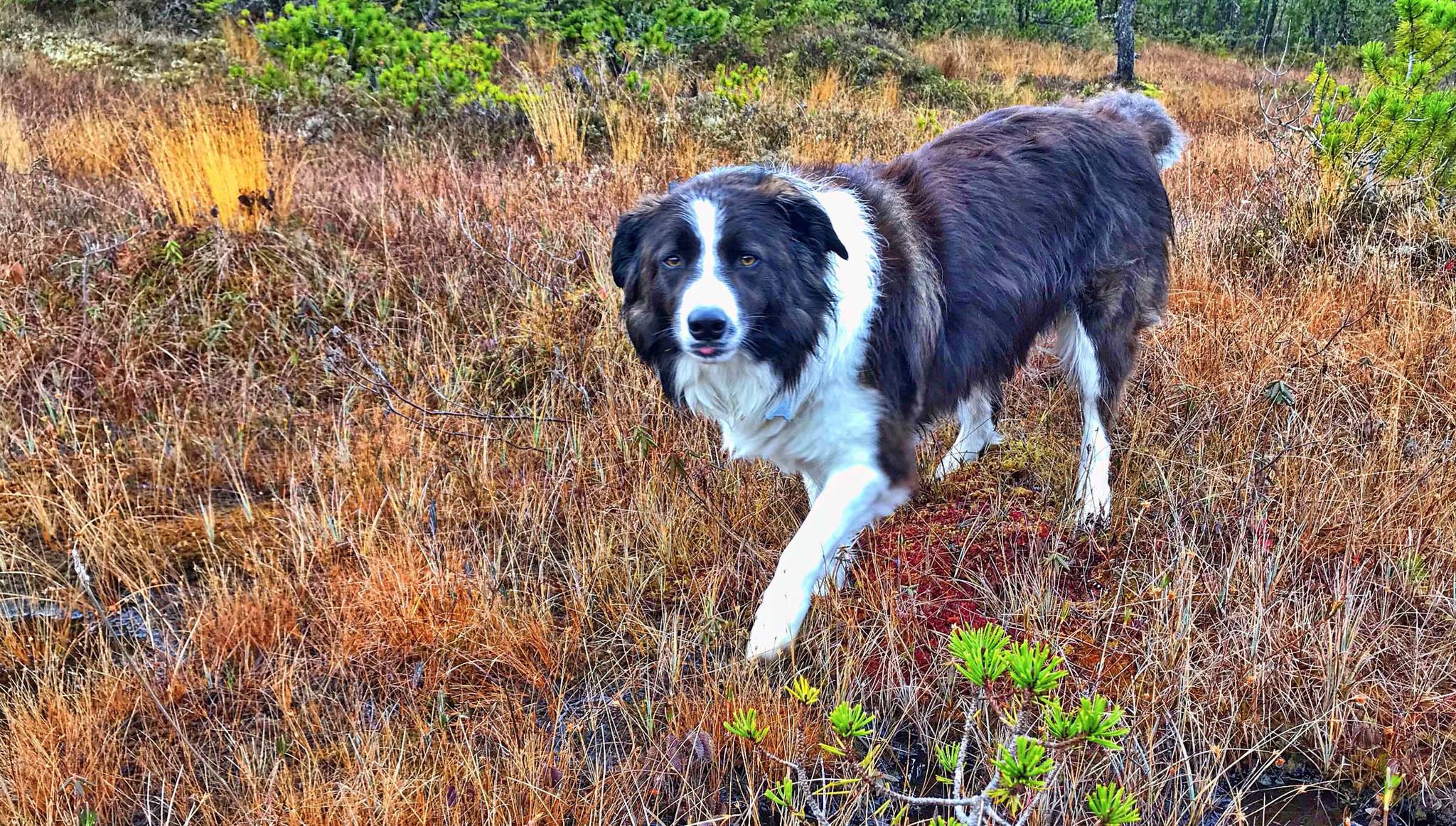
Keet walks on the muskeg. (Courtesy Photo | Vivian Faith Prescott)
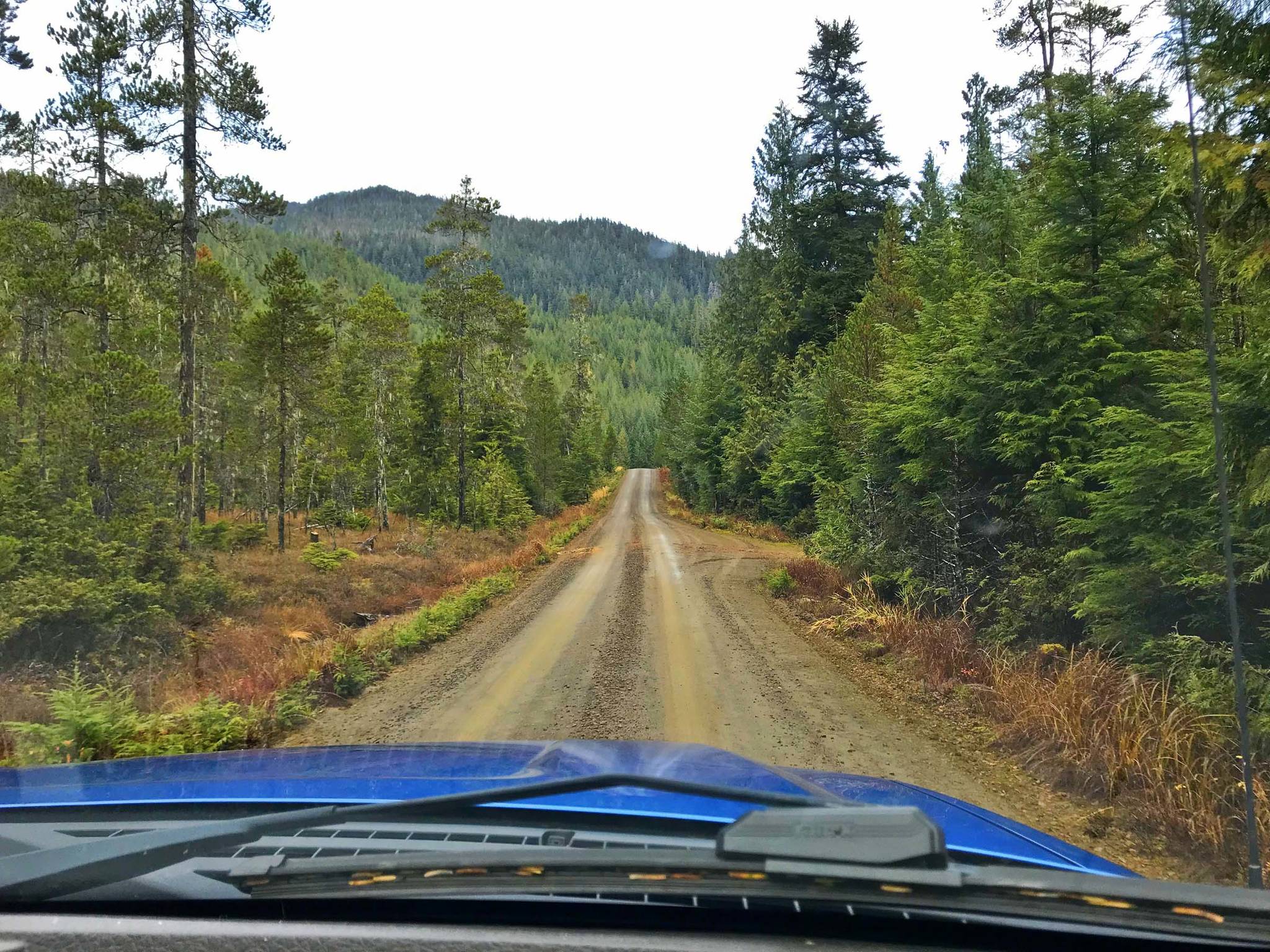
Listening to forest sounds in Wrangell. (Courtesy Photo | Vivian Faith Prescott)
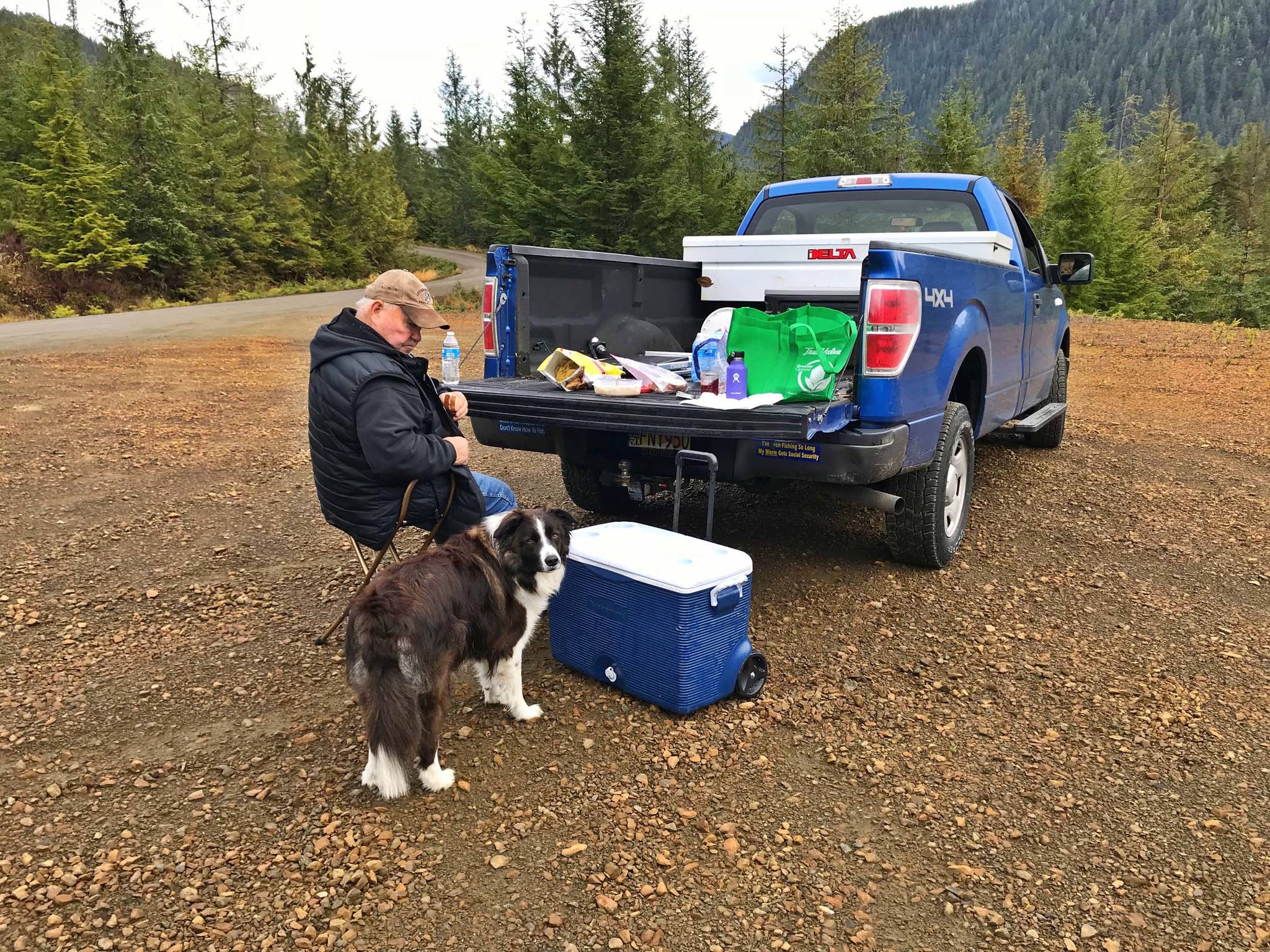
Mickey Prescott and Keet take a picnic break. (Courtesy Photo | Vivian Faith Prescott)
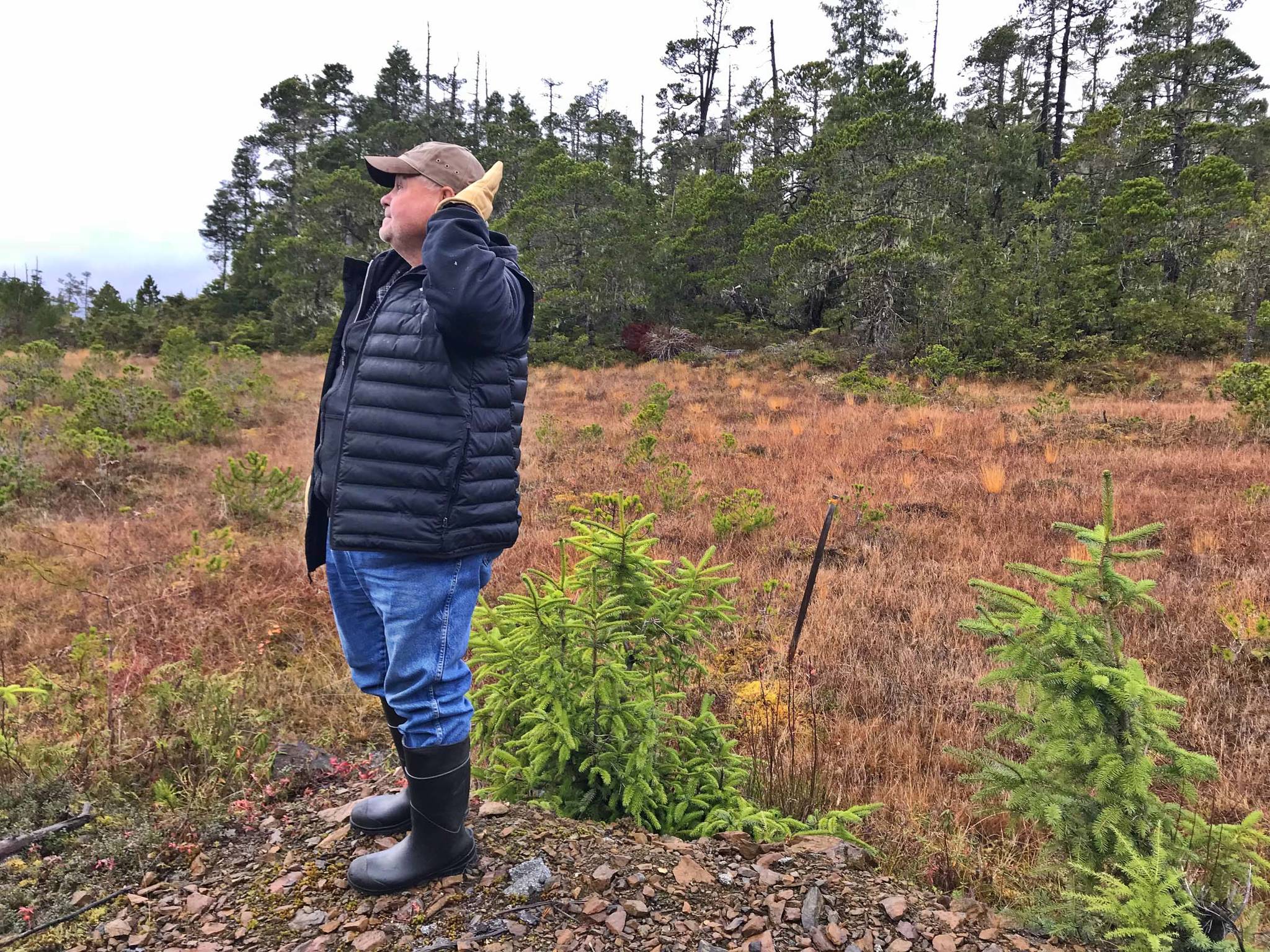
Mickey Prescott listens to the forest for the first time in decades. (Courtesy Photo | Vivian Faith Prescott)
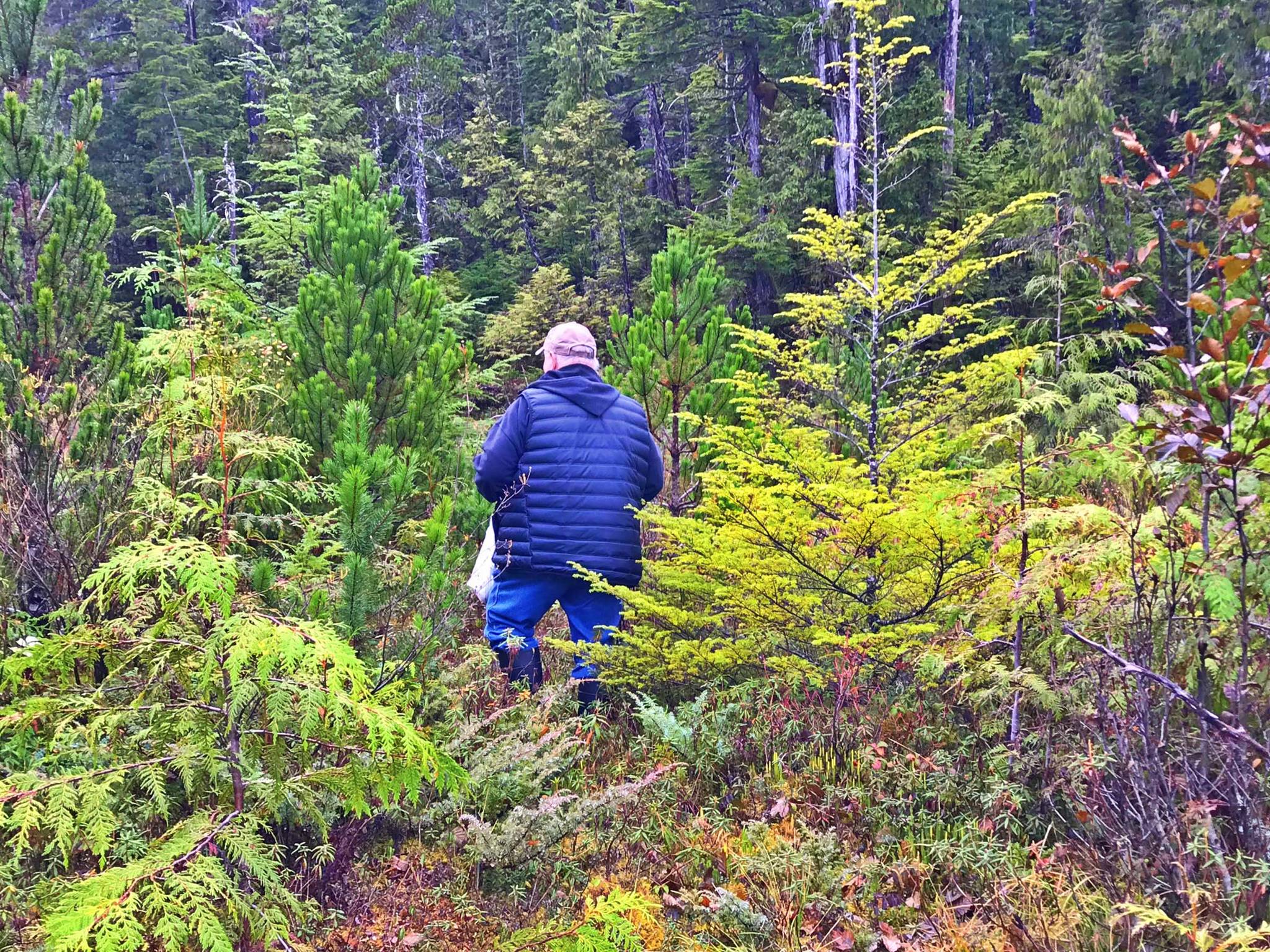
Mickey picks tea and listens to the forest. (Courtesy Photo | Vivian Faith Prescott)
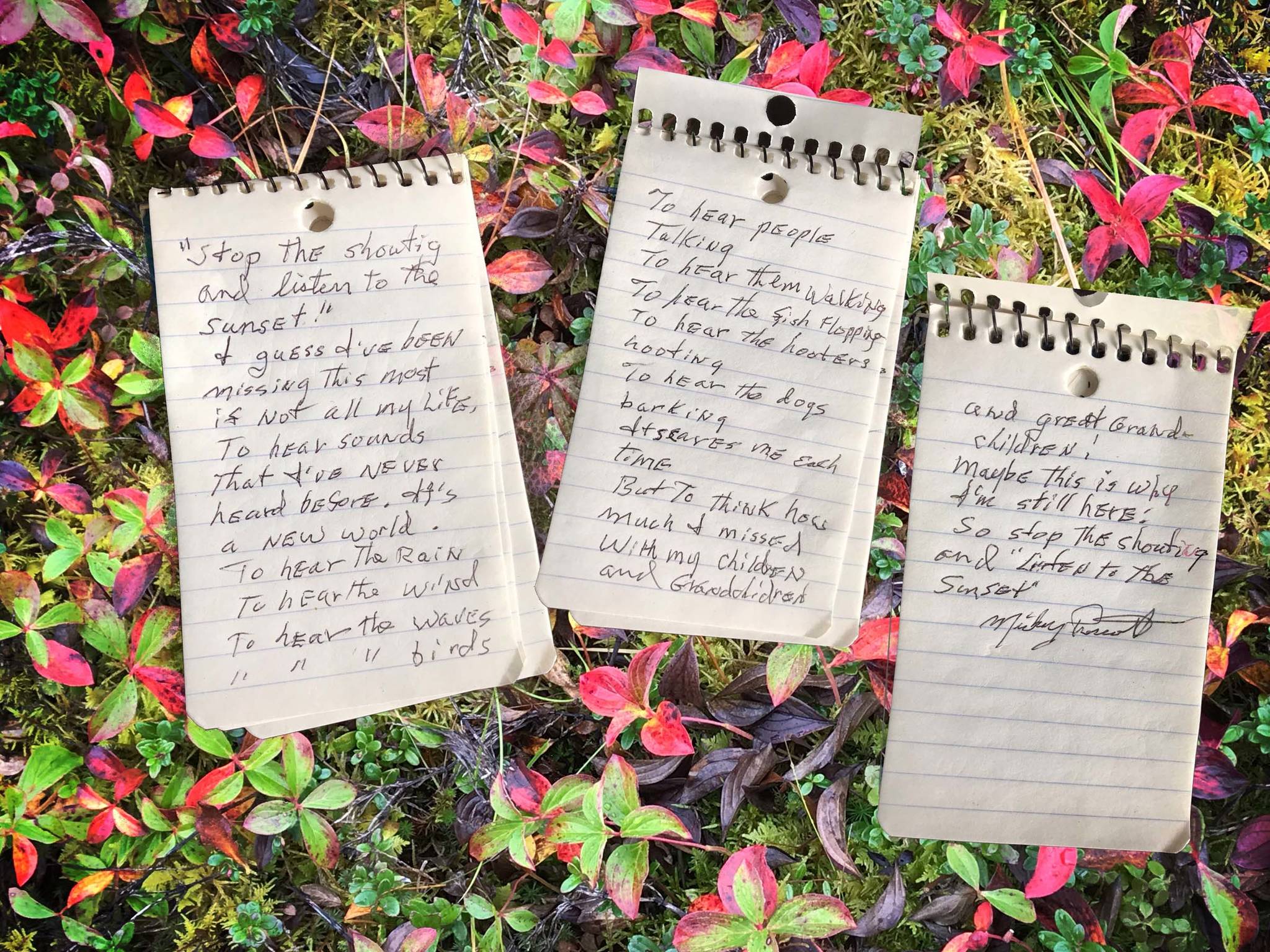
A poem by Mickey Prescott. (Courtesy Photo | Vivian Faith Prescott)
