
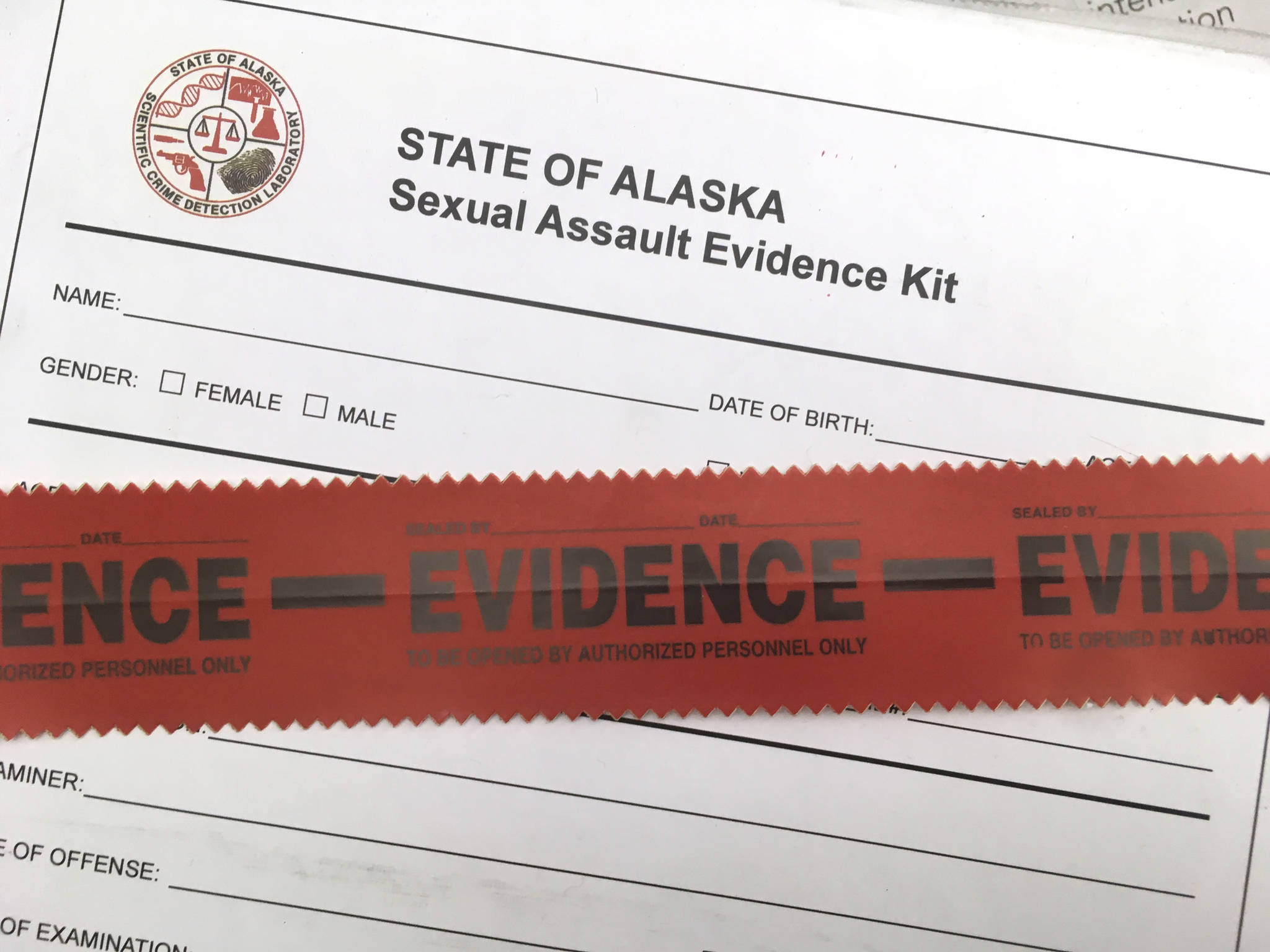
The Alaska Department of Public Safety has a plan and money to test thousands of shelved evidence kits from sexual assaults, and it’s now proposing a way to make sure none are ever shelved again.
On Friday, the department released its annual report on the number of untested sexual assault evidence kits, colloquially known as rape kits. Statewide, the report lists 2,568 untested and shelved kits, with 7 percent coming from the Juneau Police Department. That’s down from 3,484 shelved kits last year.
While the state has enough money to test those shelved kits, it is worried about the problem recurring: The crime lab doesn’t have enough manpower to test every new kit that comes in its doors.
To fix the issue, this year’s report recommends the state “create a dedicated sexual assault analysis team.” Doing so will cost an estimated $700,500 per year. That money will hire four new forensic scientists and pay for the chemicals and equipment they need to do the job.
The request has been submitted from the department to the governor’s office and could be part of the governor’s budget request next month. If it appears in that request, the Alaska Legislature would have the final say.
Kits consist of physical evidence taken from the body of a sexual assault victim following an assault. Kits may go untested for a variety of reasons, such as when the identity of a perpetrator is already known and doesn’t need to be established by DNA.
In recent years, Alaska and other states have taken greater interest in testing all kits: As the theory goes, evidence from untested kits could be used to identify serial rapists or link a perpetrator in a known case to one in an unknown case.
In 2016, under instructions from Gov. Bill Walker, the Department of Public Safety applied for (and received) a $1.5 million grant to test kits in the custody of the Alaska State Troopers. Five hundred and seventy-seven of those have been sent to a private lab for testing. The state has also used federal grant money to hire a cold-case investigator to examine the results of the testing and a prosecutor to deal with the cases that result from those investigations.
The grant-funded program only dealt with kits in the custody of the state, not those in the hands of the state’s many municipal police departments. In 2017, the Alaska Legislature passed Senate Bill 55, which required the state to inventory all untested kits statewide. That report revealed 3,484, mostly in the custody of the Anchorage Police Department. The same report estimated it would cost between $2.2 million and $3 million to test all of those kits.
In response, the Alaska Legislature earlier this year appropriated $2.75 million to cover testing. Again, the state crime lab lacks the resources to process those kits atop its normal work, so they are being sent to a private lab on the East Coast for testing.
Testing all of the shelved kits is expected to take several years. While the first results will arrive by March 2019, the last will not come until 2021.
While that grant will take care of all shelved kits (except for a handful of rare instances), the crime lab is still receiving more kits than it can handle in a given year, and not all new kits are earmarked for testing. Given enough time, the problem of shelved kits will return.
• Contact reporter James Brooks at jbrooks@juneauempire.com or 523-2258.
