
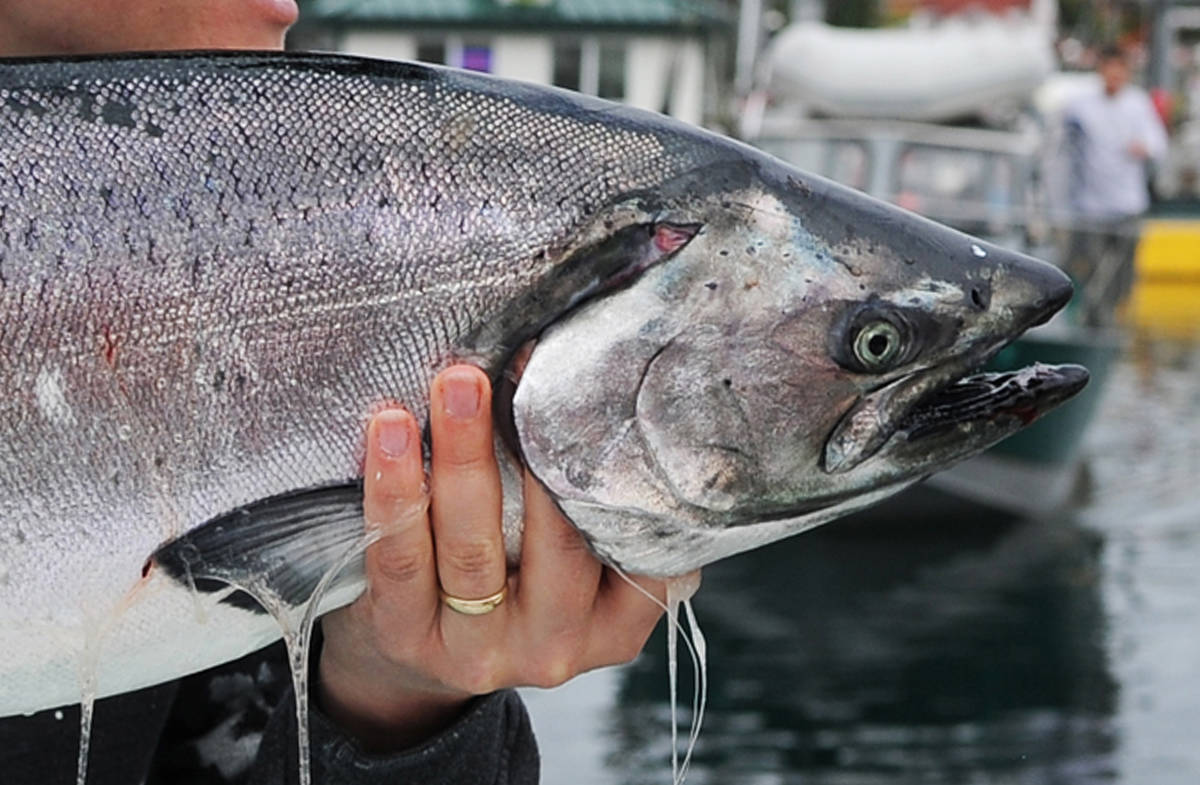
Ballot Measure 1, up for a vote during the statewide election Nov. 6, provides three tracks for development projects on salmon habitat in Alaska.
Some projects are minor, some major, and others can received what’s called a general permit for common activities done by many people.
Proponents have said that responsible development won’t face undue permitting hurdles. Opponents have said even routine projects like road widening would screech to a halt.
In a three-part series, the Empire is taking a look at how Ballot Measure 1 changes Alaska law. After talking with measure proponents, opponents and habitat managers, we’re trying to provide voters with an unbiased look at the permitting process for everything from an ATV crossing, to a personal dock or a massive mine.
An article in Sunday’s newspaper looked at general permits, which apply to things like skiff launches, stream crossing and recreational suction dredging in certain locations — everyday activities which a large number of people do with a minimal effect to habitat.
[Analysis: How Ballot Measure 1 could affect everyday activities]
An article in Thursday’s paper will look at what will be required of major Fish Habitat Permits under Ballot Measure 1.
So, what type of development could receive a minor permit?
The difference between a major and minor permit comes down to what Ballot Measure 1 calls “significant adverse effects” to fish habitat (more on that below). Minor permits could apply to things like personal docks, temporary water use permits and boat ramp maintenance.
Right now, anyone building on fish habitat has to apply for a Fish Habitat Permit. The measure doesn’t change that. Permits are approved or denied by the Alaska Department of Fish and Game’s Habitat Division, which has three offices around the state.
Approval or denial hinges on whether or not it can provide for the “proper protection of fish and game.” (That phrase here refers to wildlife, not the state agency.) Ballot Measure 1 doesn’t change this.
What it does change is the definition of proper protection. Current law doesn’t specify what proper protection means. Habitat biologists have so far defined proper protection using their expertise. Ballot Measure 1 outlines fish protection in legal language. That section (which would appear as AS 16.05.867 under the measure) is vague enough to allow managers some latitude.
Basically, it codifies into law how development would be allowed to permanently change anadromous fish habitat (habitat for fish, like salmon, that live in both salt and freshwater).
Things like water quality and temperature would have to stay largely intact before and after building occurs. Stream flow, fish passage, bank and bed stability and habitat diversity — anyone building would have to ensure that those could be completely restored in a reasonable timeframe under Ballot Measure 1.
This differs from current practice. Habitat managers sometimes alter or divert streams permanently if they believe the work won’t harm fish populations. A stream could be rerouted around a project, or fish habitat could be added somewhere off-site to make up for the loss of habitat.
Both major and minor permits would have to meet this bar. If they can’t, that doesn’t mean a permit will be denied, but developers would be required to take a few extra steps to help avoid harming habitat.
The difference between major and minor Fish Habitat Permits comes down to what projects pose “significant adverse effects.”
About a half page of the 8-page measure defines what’s significant. If a project impairs or degrades any habitat characteristics listed under the “proper protection” section, that’s significant. Interfering with spawning, rearing or migration of anadromous fish, or increases in fish death at any life stage — all these are considered significant adverse effects under Ballot Measure 1.
Anything at risk of significantly changing fish habitat would receive more scrutiny, both from the public and government agencies, under a major permitting track. Minor permits would also receive their own public comment period, something required of major, minor and general permits.
• Contact reporter Kevin Gullufsen at 523-2228 and kgullufsen@juneauempire.com. Follow him on Twitter at @KevinGullufsen.
