
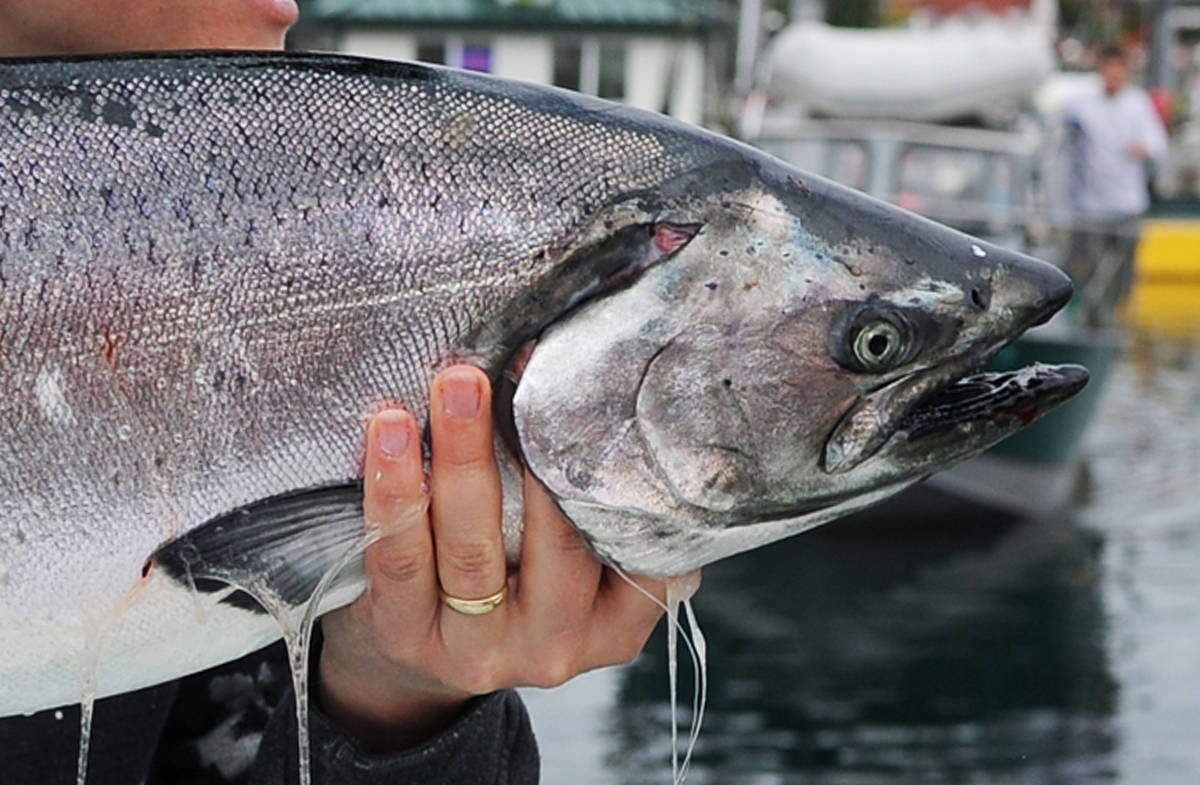
Ballot Measure 1 provides for building on fish habitat in Alaska in three tracks: major, minor and general permits.
The measure will appear on the statewide ballot Nov. 6, and changes how the Alaska permits everything from ATV stream crossing to mines.
In the third part of a series looking at the measure’s legal language, the Empire is parsing the most controversial permitting process: major permits.
A major permit would apply to construction or water use with the potential to significantly affect fish habitat. Any development that has the potential to harm salmon would trigger a major permit.
This permitting track would apply to most large projects on fish habitat in Alaska.
Things like boat launches, ATV stream crossing and recreational suction dredging would likely receive a general permit. We covered those in Sunday’s Empire.
[Analysis: How Ballot Measure 1 could affect everyday activities]
Minor permits would apply to things like private docks and temporary water use. An article in Tuesday’s newspaper covered those.
[Analysis: Minor permits under Ballot Measure 1]
So what’s the process for receiving a major permit and what types of projects would get them?
Alaska law already requires what’s called a Fish Habitat Permit for building on anadromous fish habitat, or crossing anadromous fish habitat with wheeled or tracked vehicles. (Anadromous fish, like salmon, live part of their lives in both fresh and salt water.)
Alaska Department of Fish and Game’s Habitat Division has the authority to approve or deny Fish Habitat Permits. For the fast five years, they’ve processed between 1,500 and 4,000 Fish Habitat Permits, according to Fish and Game.
Ballot Measure 1 doesn’t change this. But it does change the criteria for how these permits are approved or denied.
Developers would need to secure a major permit for construction on anadromous fish habitat that could produce “significant adverse effects.” Mines and dams on fish habitat would likely pose this risk. So too would a lot of road and bridge construction.
A half page of the eight-page measure defines what effects are significant and what aren’t.
Here’s a condensed description of projects with significant adverse effects:
• Development that impairs or degrades habitat characteristics as defined the measure. That includes changing the stream temperature or seasonal flow regimes, bank and bed stability, habitat diversity, or the safe and timely passage of fish up and down streams.
• Development that interferes with or prevents spawning, rearing or migration at any life stage, or increases conditions known to cause fish death.
• Anything that lowers the capacity of anadromous waters to maintain aquatic diversity, productivity or stability, or impairs any additional criteria adapted by Fish and Game through regulation.
If Fish and Game finds a project poses a risk of significant adverse effects, that triggers the major permitting track. Basically, it that track includes a few extra steps developers must take to assure they are doing all they can to avoid harming fish. It doesn’t mean the permit will be denied, but it does lengthen the approval process and may make it more expensive for both the state and applicants.
Once Fish and Game classifies a project as major, the first step is for the department to prepare a draft permit assessment. That would detail the extent and timing of the project, as well as its potential adverse effects.
The assessment would look at what possible alternatives or modifications could be put in place to lessen harm to habitat. Ballot Measure 1 lists which changes applicants would have to consider first. An applicant would have to consider whether they can prevent adverse effects by moving the site, timing or management of the project.
If the project can’t be done somewhere else, or at a different time, Ballot Measure 1 then allows applicants to look at whether or not they can minimize adverse effects by limiting the project’s size or duration. If that’s not possible, permit applicants could look at how they could restore affected habitat after the life of the project.
Fish and Game would then determine whether any of those alternatives would mitigate any, or at least some, habitat harm in a timely manner. This determination would be listed on the assessment. It basically signals whether or not Fish and Game plans to approve the project.
Major permits will also require a bond, which would cover the cost of restoring fish habitat should a developer not follow its permit conditions. That cost would be listed in the draft assessment.
A permit applicant would be required to pay for the work the assessment costs. This isn’t far from current practice, as permit applicants already pay the Habitat Division to help them design projects for the “proper protection of fish,” managers say.
Once prepared, the major permit assessment gets posted online and a 30-day public comment period opens. Comments are considered when drafting a final assessment, which also gets posted online. Fish and Game includes a permit determination — a rubber stamp or a denial — on the final assessment.
A major permit could get approval if it does several things. It has hold a public comment period and post a bond for reclamation. Approval would only be granted if the alternatives or modifications applicants agree to are enforceable and mandatory.
What it costs
How much Ballot Measure 1 may slow permitting down, and how much more costly the process becomes, would depend partly on how the State of Alaska funds certain state agencies, and how much of that cost they pass on to permit applicants.
Four state agencies have said the measure would cost a total of just over $3 million.
In an FAQ provided to voters, Fish and Game said the annual cost increase would be about $1,319,000 for at least five years.
The Alaska Department of Transportation and Public Facilities estimated they’d need about $953,900 annually to fund eight new full-time positions. That figure doesn’t include things like office furniture, supplies or phone and IT services, or the increase in project costs for delays or additional habitat surveys.
The Department of Environmental Conservation said they’d need $282,600 annually, partly due to the measure making Division of Water permits more complex and broad. DEC would also need money for new training and more in-state travel, according to the FAQ.
The Department of Law said they’d need to fund two additional full-time civil attorneys to perform legal work created by the initiative. They estimate Ballot Measure 1 would cost Law an additional $450,000 annually.
A fifth state agency affected by the measure, Alaska Department of Natural Resources, said it does not anticipate any cost increase.
• Contact reporter Kevin Gullufsen at 523-2228 and kgullufsen@juneauempire.com. Follow him on Twitter at @Kevin Gullufsen.
