
Alaska has a teacher problem. Well, the whole country has a teacher problem, but it’s even more pronounced in rural areas of Alaska. It’s tough to live here for some people, which makes it hard to attract good teachers to fill open teaching positions across the state.
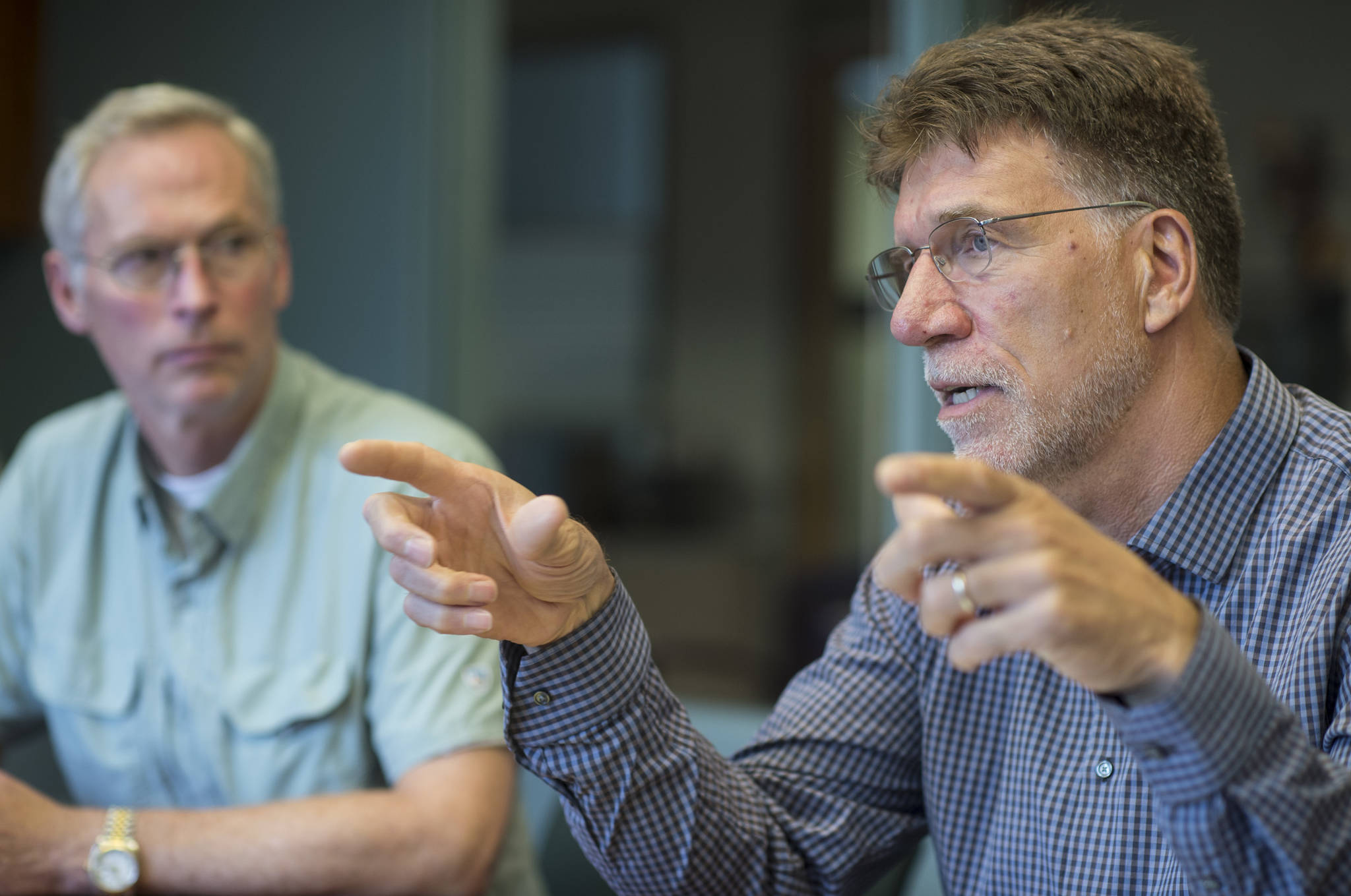
“People aren’t as willing to come to Alaska as they used to be,” said Executive Dean of the Alaska College of Education Steve Atwater.
But teachers who are from Alaska, and know how to live and thrive here, are more likely to stay. That’s why the University of Alaska System President Jim Johnsen has set a goal for 90 percent of all new teacher hires to have graduated from the University of Alaska by 2025. It’s part of an initiative called “Grow your own,” which is used by teacher recruitment programs across the country.
Nearly two-thirds of all teacher and administrative school positions are hired from out of state each year, according to data from the university. Many teachers come to get initial experience out of university, then leave after one or two years to go back to the Lower 48.
“Between 2004 and 2014, district-level teacher turnover in rural Alaska averaged 20 percent per year, and about a dozen districts experienced annual turnover rates higher than 30 percent,” said Dayna Jean DeFeo, a senior research associate for the Center for Alaska Education Policy Research in a report. In contrast, the national rate is only 8 percent, according to a report by the Learning Policy Institute.
Right now, Atwater said about 43 percent of teachers are coming from the University of Alaska. In order to raise that number to 90 by 2025, the university is focusing on two main goals: recruitment and retention, especially among Alaska Natives.
“You want to get more people into the pipeline,” he said. “And you have to get people to stay.”
To accomplish this goal, the university is taking a multifaceted approach including traditional-type recruiting, public awareness and outreach, a statewide mentoring program to support teachers who are already working in Alaska, a K-12 outreach program to encourage young students to enter the profession, reorganizing the structure of the education programs in the university and a scholarship program to help recruit, educate and retain Alaska Native teachers.
Recruiting efforts
“I’m reaching out to private foundations to support scholarships for teachers,” Atwater said. “And we are hiring a recruiter to service the system.”
They haven’t hired the recruiter yet, but he said they are down to four different candidates and will likely hire someone in January. He hopes having a professional recruiter will allow them to also reach out and target professionals who might already have a career, but might not be that happy and could be swayed to come learn how to teach.
“The biggest piece that has to happen is to raise the social esteem of teaching,” Atwater said. “Take for instance a child. What can you do to make the teaching profession appealing to them?”
That’s where a K-12 outreach program helps. Glenda Findley coordinates the program out of her office at the University of Alaska in Fairbanks.
One of their programs called Educators Rising Alaska steers high school students to the teaching profession by offering a sequence of four courses. Kids can take these courses that teach instructional skills and leadership skills as electives.
“Educators Rising Alaska is a powerful tool to help communities grow the next generation of local, well-prepared teachers,” Findlay said in an email.
Another one of their programs involves holding online job fairs to recruit new teachers and answer questions from teachers who already work throughout the state.
More place-based teaching
Only 5 percent of teachers in the state are Alaska Natives, Atwater said.
In Juneau, Assistant Dean for the Alaska College of Education Ronalda Cadiente Brown heads a program specifically aimed at producing more Alaska Native teachers and administrators. PITAAS (Preparing Indigenous Teachers & Administrators for Alaska Schools) provides scholarship for Alaska Natives across the state.
[PITAAS Program seeks to increase number of Alaska Native teachers]
Data from the program shows that 99 percent of indigenous educators teach in their communities on a long-term basis. Since the founding of the program, PITAAS has graduated 181 students. Only three of them left the state, Brown said.
Thunder Mountain High School Vice Principal Rhonda Hickok is one such graduate from PITAAS. After working as the program director for PITAAS, she decided to get an administrative degree through PITAAS.
“I went from being the program admin to being someone who got to benefit from the program,” said Hickok.
She said the most important part of the program to her was the support system. People in the program help counsel participants on what courses to take to ensure that you progress through graduation. It’s like having a personal cheerleading squad, she said.
“You have people here who understand their community or understand the needs of a smaller community and they have lived or experienced smaller community life,” she said. “Their ability to flourish there and gain the trust of the students is just a higher level than somebody else. That’s really at the heart of PITAAS.”
Retaining efforts
Recruiting efforts by their own will not be enough. That’s why the university is devoting money and time to help the Alaska Statewide Mentoring Project (ASMP), as well.
To help people make the transition from student to teacher, mentors provide support throughout the school year for new teachers. This program is also run out of the Fairbanks campus.
“We’ve accomplished successes [in improving teacher retention] through working with Elders from statewide regions who help ensure culturally responsive practices throughout…education levels, and have done so under a shrinking fiscal budget,” Coordinator Glenda Findlay said.
As for the goal of 90 percent?
“It’s a lofty goal,” said Vice Principal Rhonda Hickok. “But I think it can be done. We have models in place and it’s just really opening the minds of people who are in positions of power to understand and jump on board.”
When it comes down to realistically achieving the goal, Executive Dean Steve Atwater thinks the university will have to increase their numbers from around 250 education graduates each year to about 400 to 500.
“The Alaska-prepared teachers just stay longer,” he said. “As you put more Alaskans into the classrooms [the number of vacancies each year] will go down.”
• Contact reporter Mollie Barnes at 523-2228 or mbarnes@juneauempire.com.
