On the Trails: Late summer flowers
Published 10:30 pm Tuesday, August 19, 2025


After a spell of fine summer weather, the rains came again. A stroll on the dike trail yielded floral signs that it was now late summer.
Fireweed stood tall. Many of the flowering stalk held developing seed pods and in a few places the seed pods were releasing mature seeds. There was still a good tuft of open flowers and a thin strand of young buds at the tops of the inflorescences. Those terminal buds may or may not open — it depends on conditions. Fireweed is a species with indeterminate flowering — meaning that inflorescence size is not set at the beginning of the flowering season; the main stem keeps growing and making new buds. In contrast, there is determinate flowering, in which the terminal flower of an inflorescence is the first to develop (e.g., onion, begonia, forget-me-not). Indeterminate flowering bears the cost of producing buds that may not produce seeds but offers the opportunity to extend the time of flower and seed production if conditions are right.
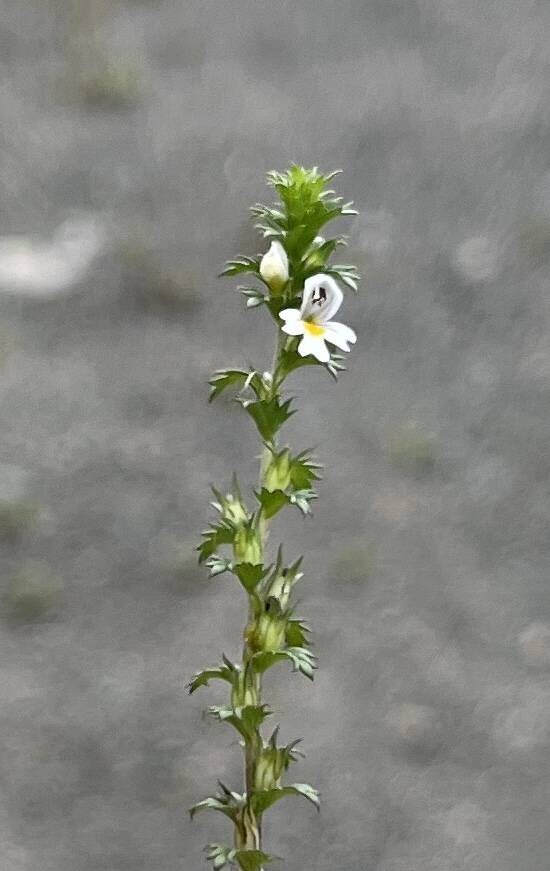
Down near the ground, perky little eyebright still bloomed. Now the flowering stems were “tall” (for an eyebright), standing up 6 or 7 inches with newer flowers at the top. I spotted a few tiny buds at the tip of the stem, indications of few more flowers that may come. There may be more than one species here, but I have not tried to sort that out. In general, eyebrights are pollinated by bees and other insects, but some of them can self-pollinate. Down in the meadow, scattered flowers of beach peas peeped through the taller vegetation. The purple flowers are pollinated by bees, which must do a little prying-open to reach the nectar and pick up or deposit pollen.
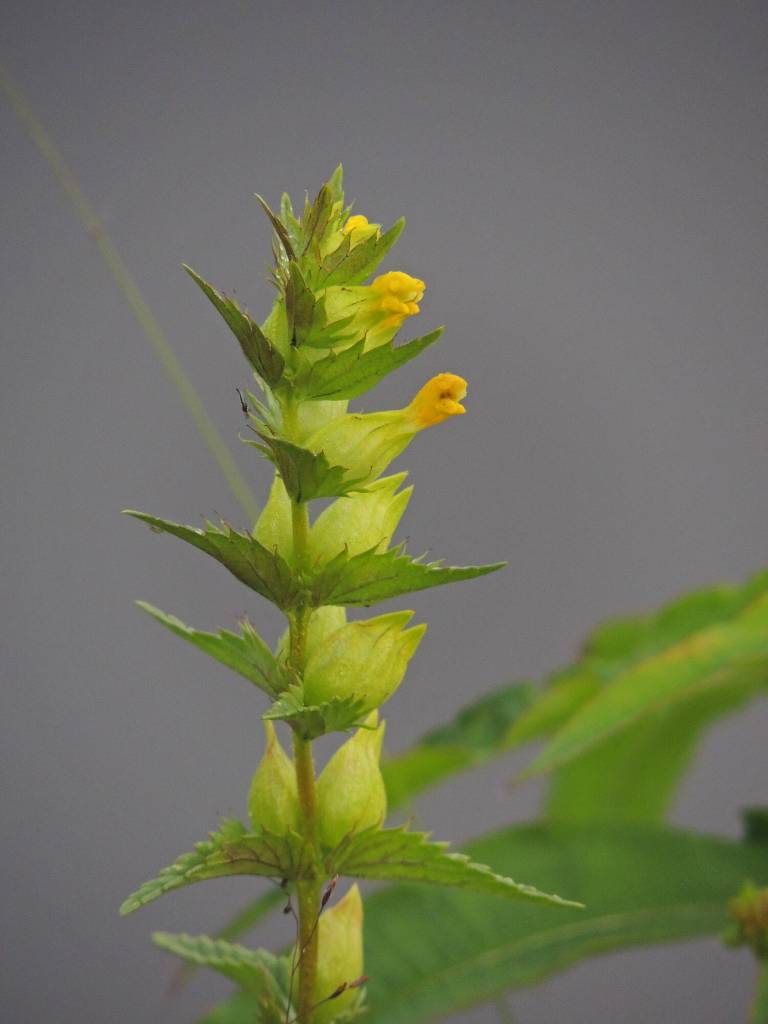
Yellow-rattle (or rattlepod) was mostly finished flowering; many stems bore the eponymous rattle-y pods, with just a few yellow flowers at the top. Also, a few very small individuals were just starting to flower. Alongside the trail, subalpine or wandering daisy (or wandering fleabane) displayed its purple flowers (actually inflorescences, with the colorful ray florets surrounding a central bunch of yellow disc florets). It’s a perennial, with determinate flowering. It is usually pollinated by bees and other insects and may sometimes self-pollinate.
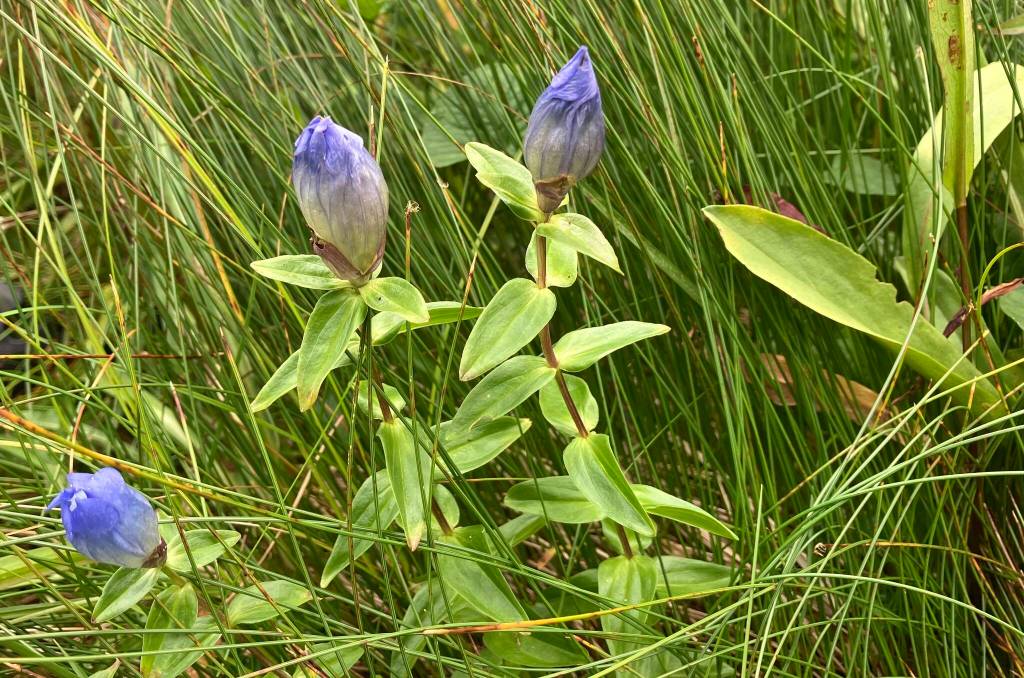
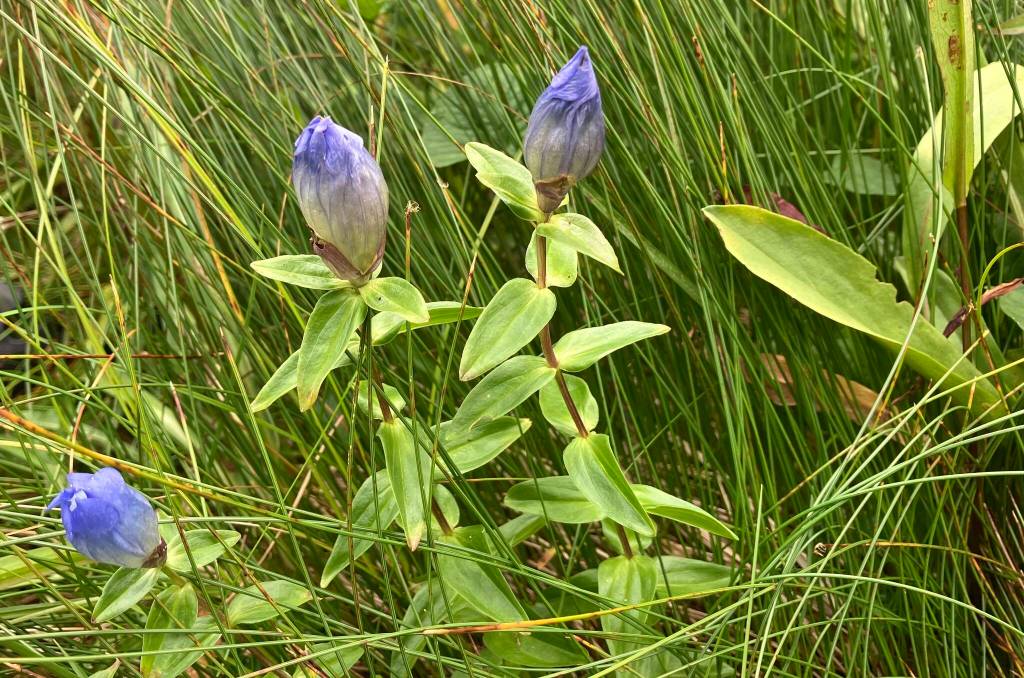
Meanwhile, up in the Crow Hill muskeg-meadows, lady’s tresses were still blooming nicely (indeterminately). This little orchid is pollinated mostly by bees, and the dust-like seeds are wind-dispersed. There were lots of swamp gentians (or Douglas gentians), whose small white flowers were almost lost in the exuberant sedges. A determinately flowering annual, it is probably pollinated by flies and bees. Blue-flowered broad-petaled gentians poked their solitary flowers up over some of the sedges. The colorful flower does not open; a visiting bumblebee is strong enough to pry the petals apart, find a bit of nectar, and potentially pollinate the flower. The seeds are small and may be dispersed chiefly by wind.
Along several trails, including the Brotherhood Bridge trail, there’s kneeling angelica (Angelica genuflecta). A tall stalk bears a flat-topped inflorescence of many tiny white flowers, with some lateral inflorescences below. Those lateral shoots commonly bear a leaf that is bent at a good angle in the middle, giving the plant its specific name — genuflect refers to a bent knee. Question to readers: would you say this is determinate or indeterminate flowering?
In the meadows on the Boy Scout trail, a little white flower known as northern grass-of-Parnassus peeped up through the taller vegetation. It flowers determinately, and it’s not really a grass. The white petals have UV markings that can be used as nectar guides by insect pollinators, especially flies, but also bees, wasps, and others. Some infertile stamens lie between five fertile stamens; the infertile ones bear bristles with droplets that probably help attract pollinators. The five pollen-bearing stamens surrounding the stigma actually move — one at a time, they bend over the stigma and then bend away, over the petal. Although self-pollination may be possible, the style bearing the stigma elongates before the stigma is receptive, taking the receptive surface above the reach of the stamens. All of that rearranging is thought to result in a suitable architecture for achieving cross-pollination.
Here and there we find clumps of goldenrod. The common one is Canada goldenrod, with tall stems and large inflorescences of many yellow flowers, with younger flowers uppermost (indeterminate). A friend and I recently watched the flowers being visited by bumblebees, wasps, a moth, and various flies. There is another local species that is much shorter and sometimes sprawling; we see it much less often.
• Mary F. Willson is a retired professor of ecology. “On The Trails” appears every Wednesday in the Juneau Empire.