Opinion: Alaska’s budget must be brought in line with our ability to pay for it
Published 3:00 am Wednesday, March 27, 2019


Four years ago, Gov. Bill Walker came into office determined to wake the Alaska public to the reality of a massive fiscal crisis that would quickly swallow up all available savings if we didn’t take decisive measures to put the state finances in order. He suggested state income and sales taxes, budget cuts and finally the earnings of the Alaska Permanent Fund as the solution.
For four years, our Legislature became intensely divided over these measures to the point of paralysis. Now, Gov. Mike Dunleavy is sounding the alarm, this time with the message that whatever we do, it is going to be deeply painful, but we absolutely must take action.
Hoping for some clarity on this matter, let’s take a look at our fiscal history since the beginning of the Prudhoe Bay era.
[Opinion: Be very afraid of politicians who say not to worry]
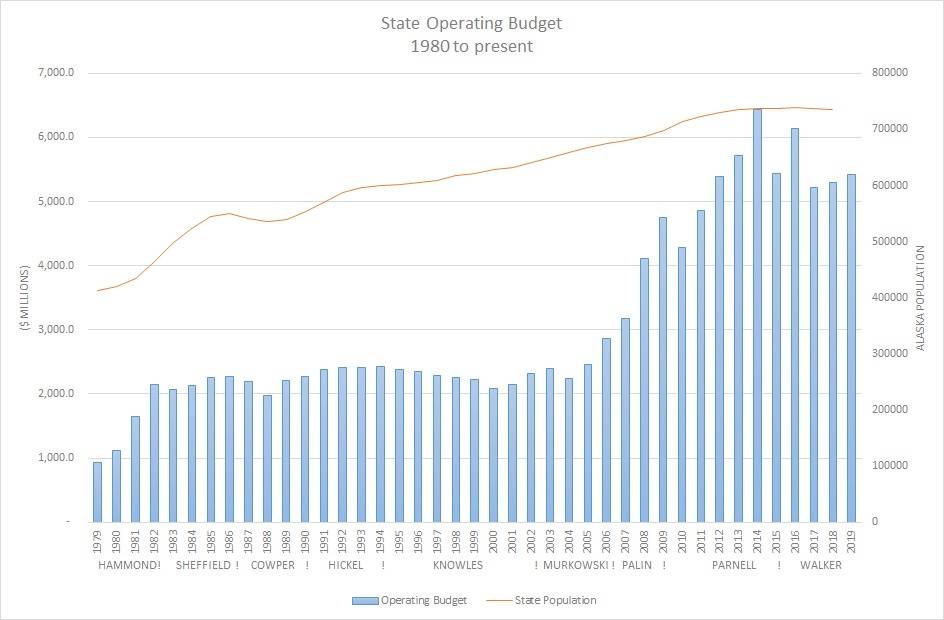
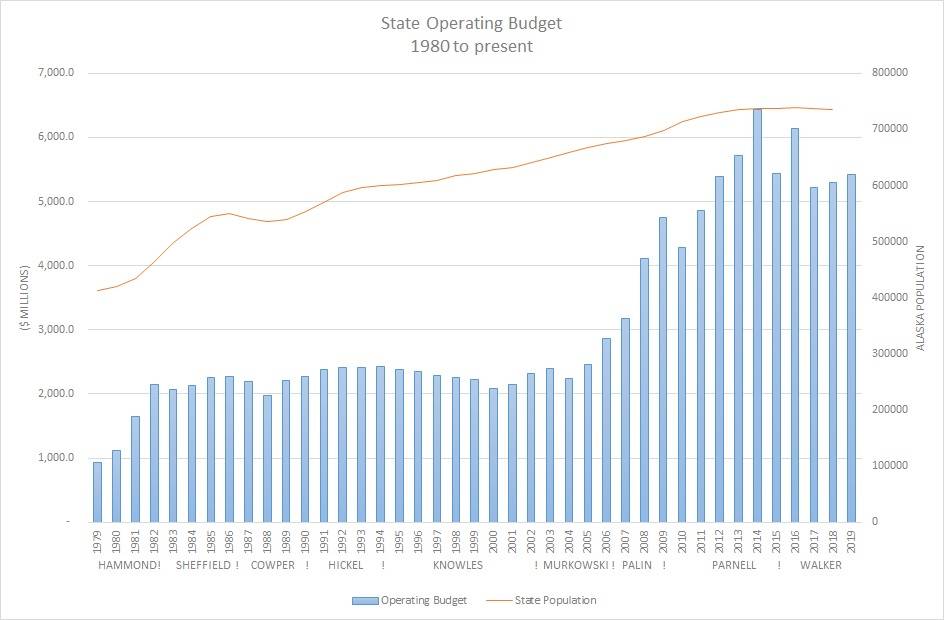
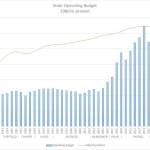
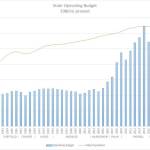
The attached chart shows how our state operating budget has evolved since the second term of Gov. Jay Hammond, who quickly built up the state’s ability to manage the new oil regime with exploding demands on government. His budget grew from a pittance during his first term to over $2 billion by the end of his second term. Amazingly, this chart shows that a $2 billion budget sufficed for our needs through the Govs. Bill Sheffield, Steve Cowper, Wally Hickel, two Tony Knowles administrations and finally the Frank Murkowski administration.
Then came a stark change in the momentum of Alaska’s fiscal management during the Govs. Sarah Palin and Sean Parnell administrations when the operating budget crossed the $3 billion mark, then $4 billion and $5 billion, and capping out at over $6 billion. Wow. What happened?
As an outsider looking in, it is difficult to say, but examining budget summaries posted on the Alaska Legislative Finance Office website gives a few clues.
[Opinion: Changing Alaska’s oil tax policy again would stall economic momentum]
Several big ticket items start showing up in the Palin and Parnell budgets which were either much smaller or did not appear in earlier budgets. Notably, entries on the order of $400 million and $625 million show as Oil Tax Investment Credits. Much has been written about the pros and cons of this strategy to prop up oil production levels, but its impact on our fiscal solvency is pretty clear. Another category is labelled “Fund Capitalization” including $125 million (twice) to the Alaska Industrial Development and Export Authority, or $355 million to “Instate Pipeline.” Another entry shows a $744 million “Resource Rebate” in Fiscal Year 2009.
Clearly, more research is needed to identify these costs.
Debt service is a growing category during the Palin and Parnell administrations from around $50-$60 million in 2007 to $240 million per year in Parnell’s second term. One of the largest contributors to the growing operating budget during these years involves direct appropriations to the retirement system. These appropriations grew quickly from $18.6 million before Palin’s term to $633.8 million per year by the end of Parnell’s term with a one-time $3 billion appropriation in his FY 2015 budget.
[Opinion: Solve Alaska’s budget problem with a lower PFD]
It seems obvious that we have allowed our budget to grow far beyond our means in this declining oil era. Our budget must be brought in line with our ability to pay for it. Of course, we must pay for it. Walker’s proposal for a state income tax and a modest sales tax seems to be in order. A sales tax would mean everyone would contribute to the cost of government since only half of Americans pay income tax.
However, I believe that Dunleavy is right not to place our budget burden on the Alaska Permanent Fund. Buying our current budget with the Permanent Fund would just lock in all of the poor decisions and unsustainable policies made over the last 40 years that live in this budget. Hammond hoped to make a solemn dedication to all future Alaskans when he declared at the announcement of the PFD program that this fund and its earnings “belong to the people, not to the government.”
Can we keep that promise?
• Alexander Hoke lives in Juneau. My Turns and Letters to the Editor represent the view of the author, not the view of the Juneau Empire.