Tshibaka sees more than red:Trump-back candidate discusses policy goals in Senate
Published 9:30 pm Wednesday, October 12, 2022


This is the first in a three-part series of interviews with U.S. Senate candidates.
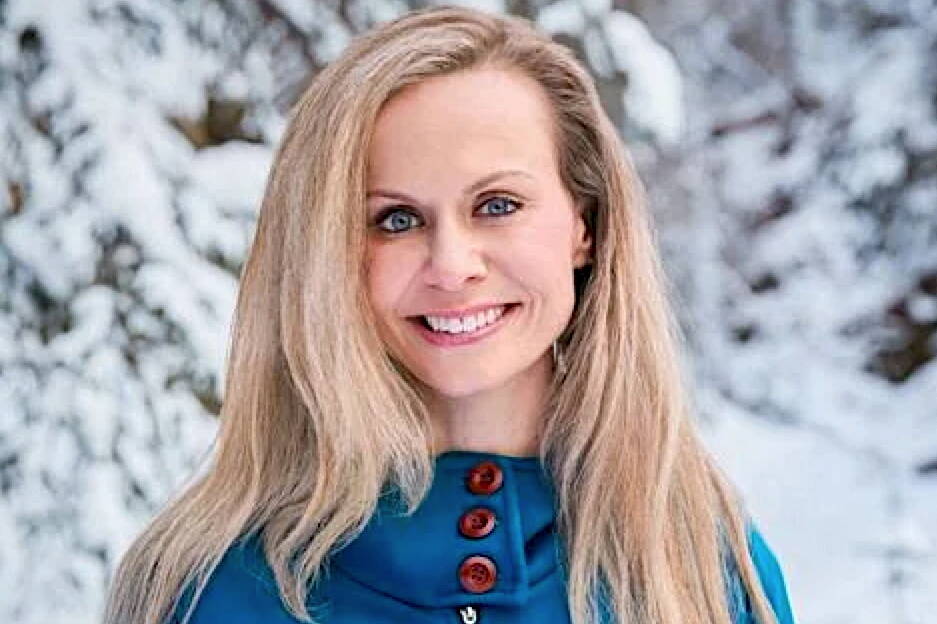
Kelly Tshibaka can toss out Trumpisms with the best of them and many potential voters know her largely via controversial “liberal media” headlines. But ask how she hopes to fix problems if elected to the U.S. Senate rather than talking about what others have broken and the former state Department of Administration commissioner can weigh in with plenty of weighty words ranging from seabeds to outer space.
Take Russia, for instance, where instead of the MAGA red-meat “hoax” about election tampering she talks about how the U.S. military’s increasing focus on the foreign neighbor and other countries with competing Arctic interests is a threat that can also be an opportunity throughout Alaska with investments in satellite, technology and other infrastructure.
“I think I’m uniquely positioned for the vision and the relationships and the experience to make this happen, given that I served for eight years under President Obama as one of the senior leaders in the national security apparatus and in the national security community helping out with these issues and having these relations,” she said in an interview Tuesday. “I think this will be a huge opportunity for us as another economic driver and a way we can easily get infrastructure built in Alaska.”
Similar investments in government and private entities to allowing monitoring of foreign activity, as well as domestic, in Alaska’s waters can be a key solution to fisheries problems caused by species shortages, overfishing and other factors — including climate change, Tshibaka said.
“We definitely need to invest in enforcement for the seafood industry because it’s valuable to all of us,” she said.
Tshibaka is new to elected politics, having worked at the U.S. Department of Justice, chief data officer for the U.S. Postal Service, acting inspector general at the Federal Trade Commission and Office of the Director of National Intelligence, in addition to recently serving as a state commissioner.
The Republican challenger has won the favor of the state’s party apparatus after the incumbent voted in February to convict former President Donald Trump in the impeachment trial for his role in the Jan. 6 U.S. Capitol riot (with Trump visiting Alaska in July to offer Tshibaka his endorsement). But the state’s new ranked choice voting means Tshibaka can win a clear majority of first-choice votes among Republicans and then lose because the incumbent gets most of the second-choice votes of people picking Democrat Pat Chesbro as their first choice.
Signs of that possible outcome were seen in the Aug. 16 primary when Chesbro, who was at about 16% in pre-primary polls, actually got about 6% and the roughly 10% of other voters voted almost exclusively for Murkowski, who scored a decisive first-place finish in a vote where the top four finishers advanced to the November general election.
While surprise fourth-place finisher Buzz Kelley dropped out soon after and endorsed Tshibaka, she said she hasn’t changed her campaign approach since in an attempt to appeal to a wider range of voters leading up the general election.
“There tends to be a shift between the primary and the general,” she said. “Our shift was a lot earlier because of ranked choice voting.”
Initial efforts after Tshibaka announced her candidacy at the end of March was solidifying her base of Republican support, but because that happened quickly the shift to other voters was possible, she said.
One of the dominant bipartisan issues this election cycle is affordable housing. Tshibaka says there are multiple things a U.S. Senator can do to help, naming first the oft-invoked mantra of conservatives of repealing regulations. When asked to name a specific one that would address the problem in Alaska, she acknowledged knowing she doesn’t know.
“I’d have to go and get into it,” she said. “This is what I’m hearing from people in the affordable housing world when I talk to them, that the regulations have become more and more onerous.”
Beyond that Tshibaka said Alaska’s allocation for low-income housing from the U.S. Department of Housing and Urban Development has remained consistent for the past 20 years, without taking into account inflation and the state’s housing costs. She said it’s an instance in which she would seek a bigger share of federal funds for Alaska — which of course has been a dominant characteristic of the state’s Congressional delegation once they gain senior positions going back decades.
“We just don’t have the same equitable access to funds for Alaska as we should in the HUD housing bloc,” she said.
Abortion is another dominant national issue getting plenty of attention in Alaska, even though the state’s Constitution protects a woman’s rights to choose, but Tshibaka said she doesn’t see the next Congress enacting any major legislation to codify or deny abortion rights. Instead, she said her focus would be on funding for related health care services.
“We need to start directing the issue of money into our clinics here in Alaska to provide women’s health care clinics,” she said. Also, contrary to what she said are incorrect portrayals of of her position, she said she supports birth control.
Tshibaka is strongly supportive of another social issue currently favored by conservatives, a so-called Parental Bill of Rights ensuring they have “a right to be fully informed and to approve of any sex education, gender identification, or race theory material being presented or discussed with their child.”
How much legislation gets passed at all in the next Congress if Republicans capture one or both chambers is frequent fodder for pundits, who speculate the next two years might be dominated with investigations and/or impeachment hearings intended to hurt President Joe Biden and Democrats going into a presidential election year. Tshibaka, who’s joined the MAGA crowd with references to “extremist” members of the Biden administration and questions about his mental acuity, said she doesn’t see that as the best use of time if elected to a Republican-led Senate.
“There may very well be a basis for impeachment hearings,” she said. “But the point is what are we actually accomplishing? I’ve seen thousands of Alaskans and knocked on their doors…When I knock on the doors they don’t say ’impeach Joe Biden.’ They’re talking about inflation. And they’re talking about that our jobs are shut down, we don’t have energy independence and public safety and education, and I think those are the times we need to be spending time on in Congress.”
Tshibaka has previously said she would use investigations and budget cuts as tools to accomplish goals such as regulatory rollbacks and compliance with rules she alleges are being ignored. It’s far from the only controversial coverage, with other stories noting how she boasted during a visit to Juneau last month about “leading” a strike of the Alaska Marine Highway system and The New York Times reporting last month she’s among the Senate candidates in battleground states who won’t commit to accepting the election results if they lose.
During the past week considerable focus was on allegations from a super PAC tied to Senate Minority Leader Mitch McConnell, claiming Tshibaka may have committed fraud while working for the federal government, based on an investigation in 2011 that has been reported previously. Tshibaka, bringing up the matter during her Empire interview without being asked about it, reiterated she received documentation from the investigating authorities long ago stating matter is closed with no wrongdoing found.
• Contact Mark Sabbatini at mark.sabbatini@juneauempire.com