Statewide test scores ‘unacceptable’
Published 9:30 pm Tuesday, November 15, 2022


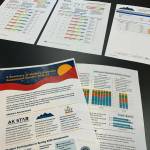


Juneau’s students are failing abysmally in new statewide test scores with 33% rated as proficient in English, 23% in math and 49% in science. So the question for educators and policymakers is if the results are a failure of:
A) underwhelming students and/or teachers
B) ongoing COVID-19 shutdown struggles
C) state funding/policymakers
D) the tests themselves
E) some/all of the above
The simple answer to a complex question is “E,” according to Juneau School District Superintendent Bridget Weiss, although she’s quick to eliminate one of the options from equation.
“I would say that our children not failing,” she said Wednesday. “The system as we are equipped to address education is struggling to meet the needs of our students.”
Lingering COVID-19 effects, along with statewide policy and funding issues existing well before the pandemic, were cited by Weiss and other education officials as primary causes.
Results for the statewide AK STAR tests in English and math, plus the Alaska Science Assessment were released last week by the Alaska Department of Education and Early Development. Statewide about 30% of students scored advanced or proficient in English, 23% in math and 38% in English.
The past year was the first for the AK STAR assessment, which replaced the PEAKS assessment for English and math. The two tests are designed differently and therefore results “cannot be directly compared without caveat,” according to a statement from the state’s education department.
While Juneau’s results were slightly better than the statewide average in English and significantly better in science, local results by school — and grade levels at each school — varied widely. Only 16% of students at Kax̱dig̱oowu Héen Elementary were rated proficient in science, for example, while 74% of elementary students were proficient at Sayéik: Gastineau Community School.
The differences by grade are typified in the districtwide results, with 47.6% of fifth graders, 45.9% of eighth graders and 52.2% of 10th graders rated proficient in science.
One other key qualifier is participation rates, which also vary widely by school and grade. Districtwide participation in the science results, for instance, were 94% for fifth graders, 82% for eighth graders, 79% for 10th graders.
Also, while homeschool advocates might find cause to celebrate proficiency rates well above the district average m all three subjects, the participation rates of HomeBRIDGE students in English and math were slightly above 40%,compared to nearly or well above 90% participation at Juneau-Douglas High School: Yadaa.at Kalé.
The pandemic that shut down in-person learning and was otherwise disruptive beginning in early 2020 remains a foremost challenge for educators, even though restrictions during the past year were less than the year before, Weiss said.
“Generally we anticipated scores that would reflect some learning loss as a result of the pandemic,” she said, saying educators were working with “a very disruptive learning model.”
The larger drop in local math scores compared to English is a clear indicator of the limits of remote learning, Weiss said.
“It’s harder to teach math instruction, especially to younger kids with the advantage of classroom dialogue, learning alongside peers and modeling a teacher does,” she said.
Weiss concurred with statewide education leaders who stated the test scores reflect a net decline in funding during the past decade and other policy problems.
“The COVID-19 pandemic certainly disrupted the typical learning experience for students in Alaska and these results are unacceptable,” Heidi Teshner, the state’s acting education commissioner, said in a prepared statement. “However, the truth is that Alaska’s results were unacceptable before the pandemic.”
And, yes, the test itself may be an imperfect indicator of student learning and motivation in Alaska’s broad range of school settings, Weiss said.
“We live in a very diverse state,” she said. “I think there are communities in Alaska we have that are very unique…they’re rich in culture that is not reflected on a standardized assessment.”
But while the scores were poor, they were also widely expected by state and local officials, and Weiss said the Juneau district welcomes the chance offered by the results to pinpoint where problems are and work on solutions.
“We’ve really had a lack of data for a while,” she said. “We were eager to get the scores because they give us a measure of where the students are at in their learning.”
• Contact Mark Sabbatini at mark.sabbatini@juneauempire.com