School district leaders approve putting grades 9-12 at JDHS, 7-8 and HomeBRIDGE at TMHS
Published 9:30 pm Wednesday, February 21, 2024


This a developing story.
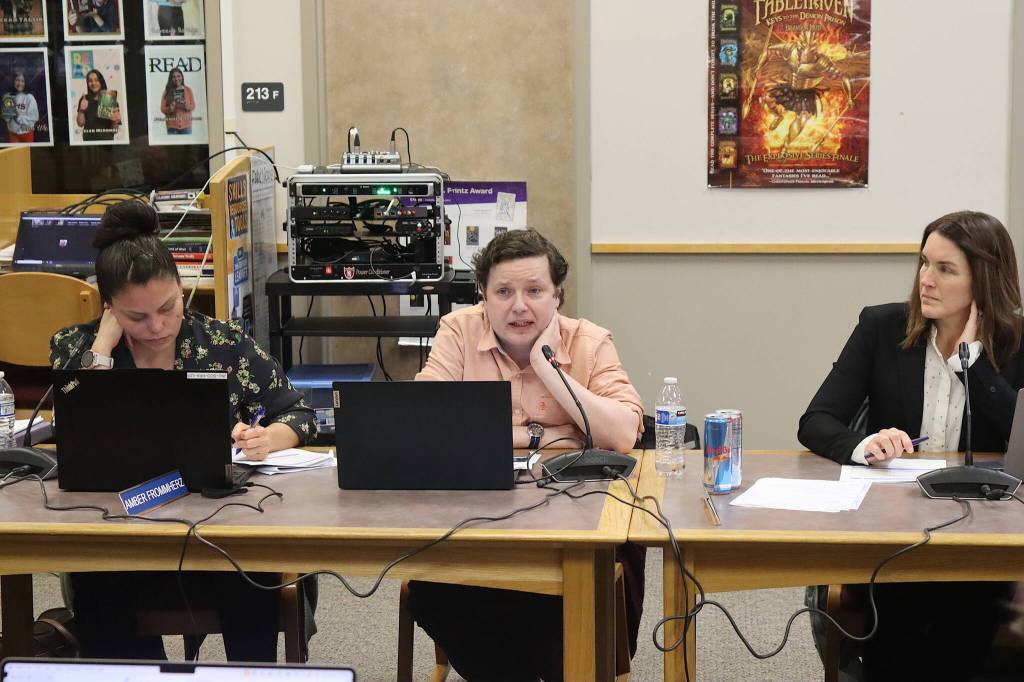
A conceptual plan consolidating students in grades 9-12 at Juneau-Douglas High School: Yadaa.at Kalé, grades 7-8 and the HomeBRIDGE program at Thunder Mountain High School, and adding sixth-graders to the current K-5 elementary school system was approved by the Juneau Board of Education during a contentious seven-hour meeting that started Thursday evening and ended after midnight Friday morning.
The Juneau School District’s alternative and optional programs will also be affected, with Yaaḵoosgé Daakahídi High School, Montessori Borealis and Juneau Community Charter School relocated to the building used by Dzantik’i Heeni Middle School. The Tlingit Culture, Language and Literacy program will remain at Harborview Elementary School.
In addition, the plan to cope with the district’s budget crisis will close Marie Drake Elementary School, Floyd Dryden Middle School and the district’s administrative office, turning those buildings back over to the City and Borough of Juneau that owns them.
Approval of the decision at about 12:30 a.m. Friday came about an hour after the board rejected a nearly identical plan that was debated during the previous hours of public testimony and discussion by district leaders.
But board members, subsequently acknowledging both their exhaustion and a practical need to select a working option during the meeting due to upcoming deadlines — and the possibility of laying off one-third of the district’s teachers to balance the books if no consolidation action was taken — ultimately passed the modified plan to the verbal disapproval of some in the audience who suggested the decision was illegal and should be challenged.
The restructuring is necessary to deal with a projected budget deficit of nearly $10 million in a roughly $77 million operating budget for the fiscal year starting July 1 — and similar ongoing deficits in future years — due to a multitude of causes including faulty accounting, declining enrollment and many years of flat funding from the state.
The district also is facing a projected deficit of nearly $8 million for the current year, although the Juneau Assembly has tentatively agreed to provide a $4 million zero-interest loan and take over $3.9 million in “shared costs” for buildings used by both the city and school district.
Furthermore, the meeting occurred on the same evening the Alaska Legislature reached a historic agreement on an education bill that will increase the state’s $5,960 Base Student Allocation by $680, which would provide an additional $5.2 million to the district next year — although it’s not known if Gov. Mike Dunleavy will veto some or all of those funds after rejecting half of a similar one-time increase last year.
Even if the BSA increase remains intact, it won’t cover enough of the district’s deficit to prevent the need for consolidation, Will Muldoon, chair of the school board’s finance committee, said during a break in Thursday night’s meeting.
“It could lessen the severity of the actions we need to take, but I don’t think it eliminates it,” he said.
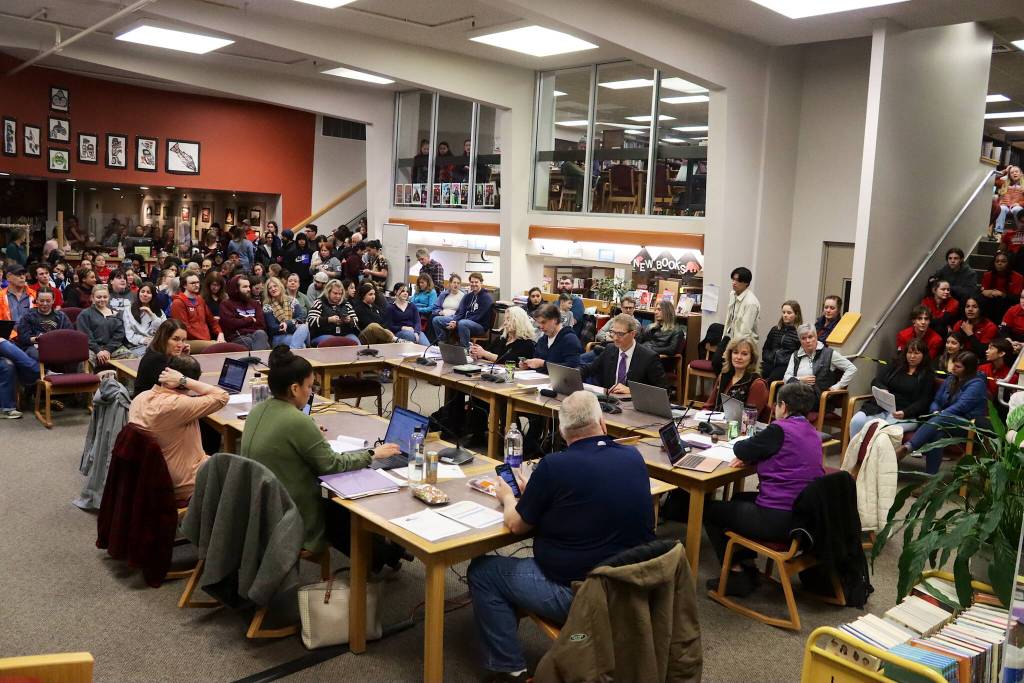
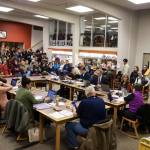
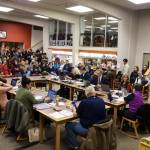
The decision followed hours of testimony from a crowd that board members called one of the largest in recent memory, with attendees overflowing the JDHS library into a video viewing area set up in the school’s commons area where students eat lunch. Also, some people testifying online said they had difficulty following at least some portions of the meeting because the Zoom feed consistently was at its maximum of 500 viewers.
Dozens of students, parents and educators testified with no single restructuring choice emerging as a dominant option, although many people did argue in favor of a “new” option beyond those considered by officials that would keep both high schools operating by having students in grades 7-12 attend them. However, plenty of strong feelings against that idea were expressed as well.
Among the audience members staying until the end of the meeting was Edward Hu, a senior at JDHS who participated in a rally along Egan Drive on Tuesday calling for a plan that put students in grades 9-12 at that school. The rally stemmed from a a special board meeting last Saturday where members tentatively approved further study of a plan consolidating grades 7-9 and special programs at JDHS and grades 10-12 at the smaller TMHS.
’“I was a huge advocate for the 9-12 (high school), you know, and so I really am happy and appreciative of the board for making that decision,” he said. “I know that there were some parents that weren’t happy, but I feel like this will really benefit our community as a whole.”
Many people who testified during Thursday’s meeting, reiterating a main point during weeks of previous meetings, said both of Juneau’s high schools should remain open because they have distinctly different identities befitting different types of students. There were also concerns consolidation into one school would result in fewer opportunities to participate in sports teams and other activities.
That prompted many of the comments by people in favor of two schools for grades 7-12, including long-ago JDHS alumni Charles Van Kirk who said consolidation “robs the identity” of “two totally different communities.”
“There is a way to do this guys, and I think that you’re eliminating the opportunities and I think it’s creating a lot of angst in the community as a result,” he said. “We need both high schools.”
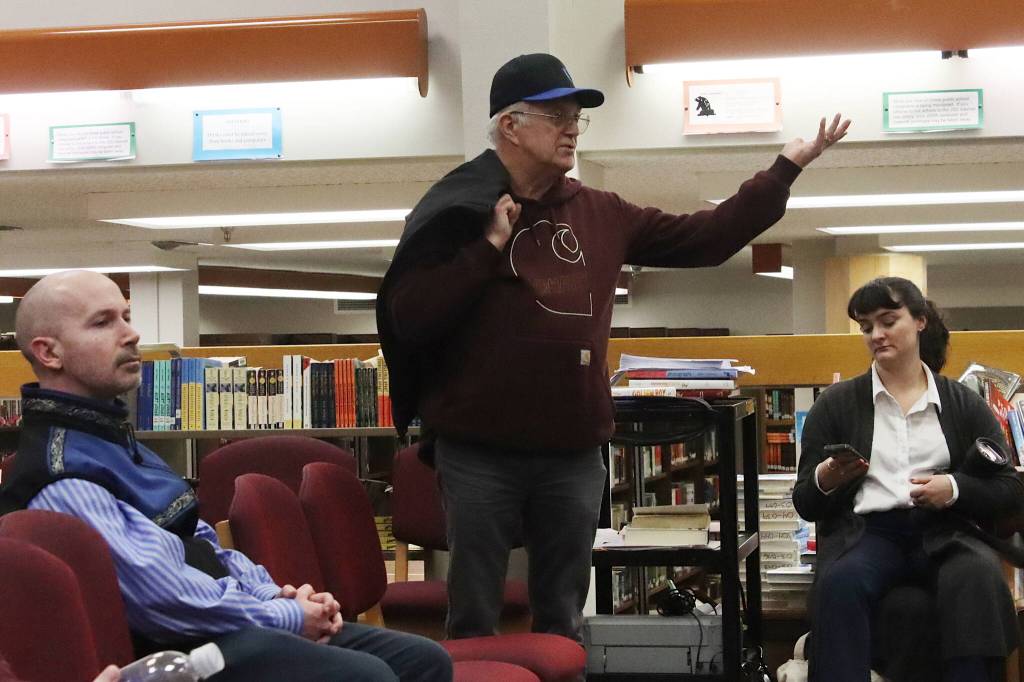
Van Kirk, at the end of the meeting after the board’s final vote, also stood and confronted members, asking how he could challenge a decision he considered illegal due to the similar proposal that was rejected a short time earlier. The second vote occurred after City Attorney Robert Palmer explained the legal means by which board members could vote on amended versions of previously considered proposals.
Among those opposing the grade 7-12 schools was Jess Stanley, a sixth-grade teacher at Floyd Dryden, who expressed concerns about how the younger students in particular would fit in socially and otherwise.
“It’s not something that’s been done before and it just feels like too much change right now,” she said. “I don’t believe we have funds or time to try something totally new.”
The board voted 5-2 to move forward with the plan. Casting the opposing votes were the two newest members, David Noon and Britteny Cioni-Haywood, who prevailed in last October’s municipal election.
Numerous additional steps need to be taken before the plan is official, including board approval of a budget for next year that implements the plan. The state Department of Education and Early Development, which has agreed to give the district up to five years to pay off its existing deficit without penalty, must also approve the plan. The state-approved budget must be presented to the Assembly by March 15 in order to meet legal deadlines related to layoff notices sent to employees affected by the consolidation.
• Contact Mark Sabbatini at mark.sabbatini@juneauempire.com or (907) 957-2306.