Rainfall-ing short: Juneau’s summer 1 inch shy of record
Published 1:34 pm Monday, September 7, 2020
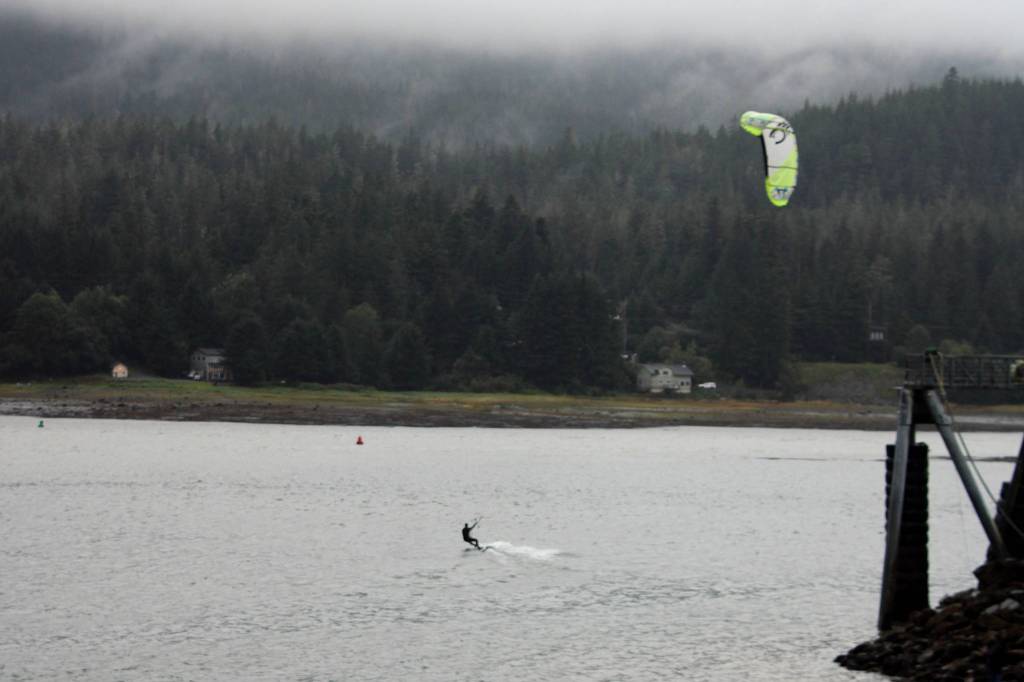


For all its hype, Juneau’s long, wet summer was still an inch short of a rainfall record.
“The record for the wettest summer was 24.27 inches in 2014,” said Kimberly Vaughan, observation program leader with the National Weather Service in Juneau. “We bumped off the (previous) third place, which was 1961. The first and second wettest are 2014 and 2015.”
With this year’s total rainfall at the Juneau International Airport observation station coming in at 23.27 inches, Juneau was precisely one inch short of the mark. Low pressure systems in the Gulf of Alaska contributed to the high levels of rain, Vaughan said. Meteorologists consider summer to go from June 1 to Aug. 31.
“We had a lot of lows that tracked into the gulf, sending multiple waves across the panhandle,” Vaughan said. “These storms are typically further north of us, but this year just didn’t (do that). There were other parts of Alaska that were a little drier because we were getting their weather. We had a lot more lows that tracked across the gulf into Southeast Alaska.”
Those patterns contributed to rainy weather across the region. Both Ketchikan and Petersburg both received record high rainfall this summer, according to the weather service.
[What to expect during mail-in municipal election]
This summer is nearly the opposite of last year’s relative heat and sunshine. Then, it only rained 10.48 inches, less than half of 2020’s precipitation, Vaughan said. At the time, many areas in the state were experiencing drought conditions that have since abated.
“It’s good for the salmon runs that are happening right now. We’ve had some issues in drier years,” Vaughan said. “The outlook for this fall is looking like there’s better chances of their being above normal on temperature, but there’s no signals on where the precipitation will be.”
While the NWS is able to theorize that the odds of it being a warmer fall than not, Vaughan said they’re not yet able to predict what sort of winter Juneau will have.
“Yes, we have normals. But it’s not like weather operates on a linear scale. We have years that are gonna be up and years that are gonna be down. There’s too many variables to necessarily pinpoint,” Vaughan said. “Basically we have equal chances of precipitation and temperature over the winter months over December and January.”
The heavy rainfall, in addition to being positive for many aspects of Southeast Alaska’s rainforest, will have other benefits for the region.
“We need to build up that snowpack,” Vaughan said. “That snowpack is sort of like your battery backup. The more we have up there, the better.”
Contact reporter Michael S. Lockett at 757-621-1197 or mlockett@juneauempire.com