Peltola, Murkowski still dominating fundraising
Published 9:30 pm Thursday, October 27, 2022

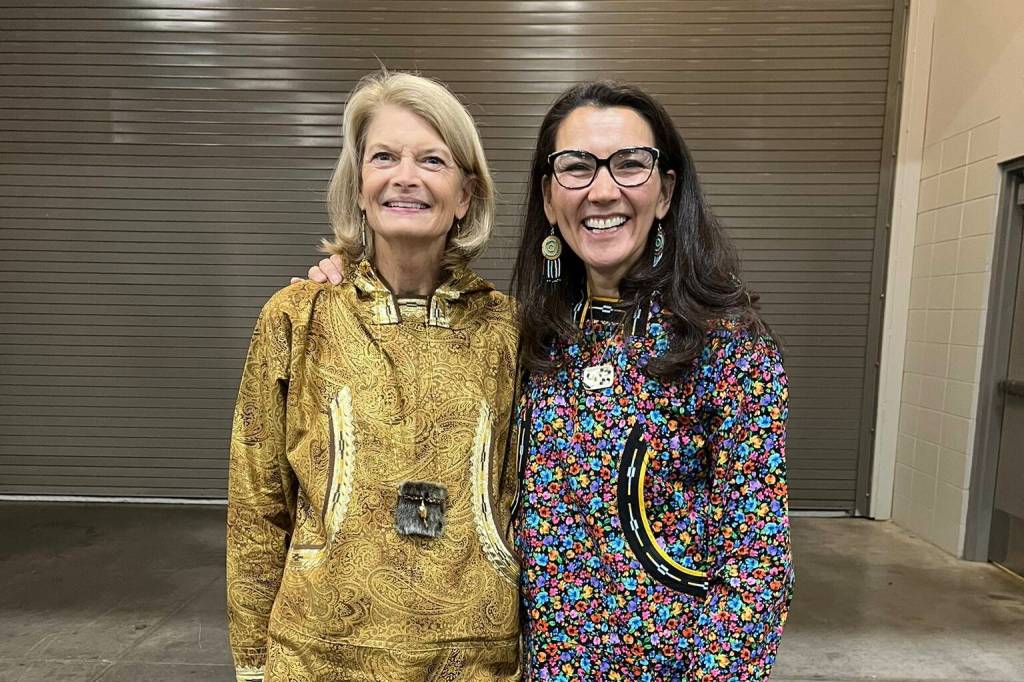
Fundraising in Alaska’s Congressional races continues to be a lopsided affair, with both Rep. Mary Peltola and Sen. Lisa Murkowski raising millions of dollars more than their combined opponents and having at least three times as much cash on hand for the Nov. 8 general election.
Peltola, a Democrat who has soared to international fame since winning the Aug. 16 special election to fill the remainder of the late Don Young’s term, has raised nearly $5.8 million, spent $3.4 million and has $2.4 million in the bank as of Oct. 19, according to reports due Thursday to the Federal Elections Commission. Most of that amount is since her special election victory, since she was relatively unknown compared to her main competitors earlier.
During a campaign event in Juneau on Monday, Peltola made light of the heavy spending by her campaign with two weeks to go.
“Soon the advertising will stop, I promise,” she told the hundreds of supporters in attendance, noting the intense effort is because the outcome is “not a slam-dunk.”
The vast majority of Peltola’s money is from individuals, including a significant percentage from out of state, but she also has numerous $5,000 contributions from groups and PACs such as the NEA Fund For Children And Public Education, NARAL Pro-Choice America and several labor unions.
Her closest competitor in both funds raised and polls, former Republican Gov. Sarah Palin, reported about $1.75 million in contributions, $1.6 million in expenses and about $120,000 cash on hand. Her remaining cash puts her at a disadvantage against Republican Nick Begich III, who has raised a total of about $1.5 million, spent a bit over $1 million and has about $474,000 cash remaining.
Alaska’s new ranked choice voting means Palin and Begich are likely competing to finish second when the first- and second-choice preferences on ballots are tallied — assuming Libertarian Chris Bye is eliminating in the first round since he is far behind in fundraising and polls. But a recently released poll by Alaska Survey Research shows Peltola winning handily over either Republican in a ranked choice tally, and closing in on an outright majority of first-choice ballots.
The U.S. Senate race may be more uncertain even though the same poll shows incumbent Lisa Murkowski winning by an 11% margin over fellow Republican Kelly Tshibaka, since other polls and pundits suggest the race is roughly dead even.
But there’s little question Murkowski has the financial edge, reporting about $10.8 million in donations, $8.7 in spending and $2.1 million cash on hand. In addition, the Alaskans for L.I.S.A. super PAC reports raising more than $5 million in contributions and $4.6 million in expenditures.
Tshibaka reports $4.9 million in contributions, $4.2 million in expenditures and about $700,000 cash on hand. A third candidate, Democrat Pat Chesbro, did not file a report for the most recent deadline, but a report for the period ending Sept. showed about $174,400 in donations, $110,400 in expenses and $64,000 cash on hand.
Both Murkowski and Tshibaka are receiving support from so-called “dark money” groups from out of state who are not required to disclose individual donors, which was a contentious subject during a candidates’ debate Thursday. Tshibaka, noting the incumbent has received considerably more in such donations, accused her of being beholden to outside interests.
“It couldn’t be further from the truth in terms of me being beholden to anybody on the outside,” Murkowski said.
Tshibaka, meanwhile, has benefited from about $1.4 million in supporting ads from such a group, but perhaps the most currently noticed allocation is for 20,000 “Vote for Kelly Tshibaka” lightsabers that got held up by U.S. Customs in what some of the candidate’s supporters alleged was a “deep state” conspiracy.
• Contact Mark Sabbatini at mark.sabbatini@juneauempire.com