Palin v. New York Times heads back to trial
Published 9:30 pm Saturday, April 12, 2025
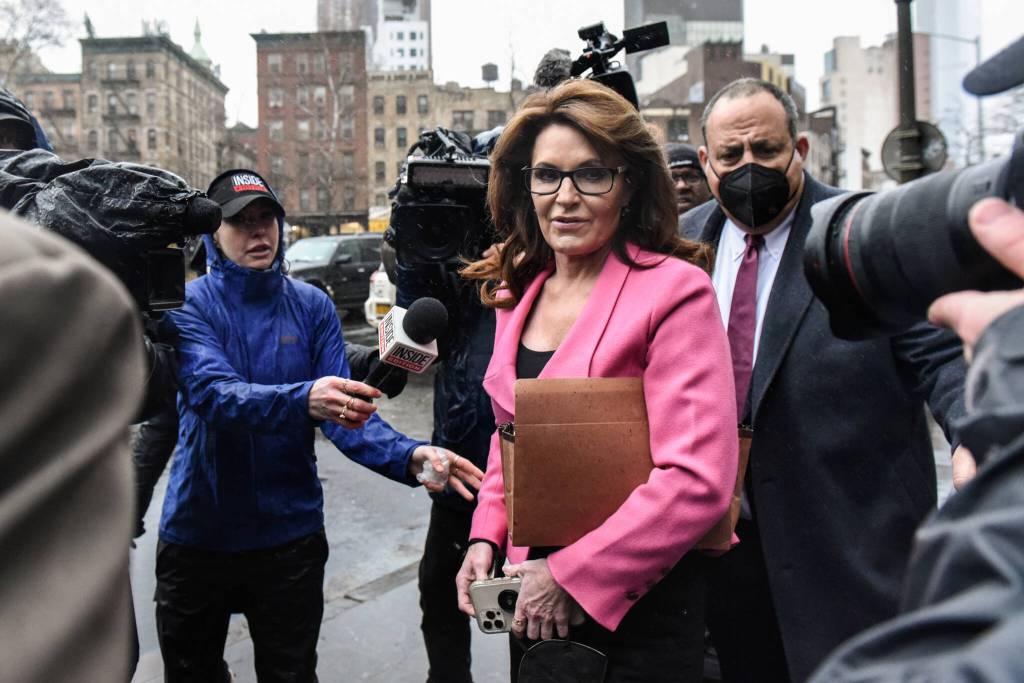
Sarah Palin’s yearslong defamation case against The New York Times, potentially testing the extent of First Amendment protections for journalists, will soon go to trial in federal court in New York City.
Again.
Three years ago, a federal jury and judge each ruled against Palin, the onetime Republican vice-presidential nominee and Alaska governor. She had claimed that an editorial that the Times published in 2017 had defamed her by wrongly suggesting that an ad from her political action committee had inspired a mass shooting.
But Palin successfully appealed the verdict, and a retrial was ordered. It is scheduled to begin Monday.
Much of the trial is expected to be a repeat of the first. Most of the witnesses, evidence and legal arguments will be the same, including the Times’ defense that its mistakes were inadvertent and did not harm Palin. The same federal judge, Jed S. Rakoff, will be presiding in the same courtroom in the Daniel Patrick Moynihan United States Courthouse in lower Manhattan.
What has changed is the country. Trust in the media has declined, and the Manhattan jury pool may have shifted to the right. A number of defamation lawsuits in the past three years have resulted in eye-popping payments, raising the stakes in the Palin case. And the retrial comes as President Donald Trump and his administration have attacked the notion of an independent press, deploying litigation, investigations and other strong-arm tactics against news organizations.
If Palin prevails, Trump and his allies will almost certainly promote the victory as a powerful rebuke of the press. Her lawyers have said they hope to use the case as a vehicle to get the Supreme Court to reconsider long-standing precedents that make it harder for public figures to win lawsuits against journalists and others.
“The case is, in many respects, an old-school media libel action resurrected into a newly complicated defamation landscape,” said RonNell Andersen Jones, a law professor at the University of Utah. “It may prove to be a real barometer of the changing public attitude about the press and the changing appetite for American press freedom.”
A representative for Palin declined to comment. A New York Times spokesperson, Charlie Stadtlander, said in a statement: “We’re confident we will prevail and intend to vigorously defend the case.”
The editorial at the center of the suit condemned violent political rhetoric and action after an anti-Trump leftist opened fire on Republican lawmakers at a baseball field in June 2017.
The editorial mentioned a shooting that had taken place six years earlier in Arizona. A mentally ill gunman had killed six people at an event for Gabrielle Giffords, a Democratic member of Congress. Before that shooting, Palin’s political action committee had circulated a map with crosshairs over numerous Democratic congressional districts, including Giffords’. The Times editorial incorrectly suggested that the map had incited the shooting.
The Times swiftly corrected and apologized for the editorial. About two weeks later, Palin sued, claiming her reputation had been damaged. Thus began an eight-year (and counting) legal odyssey.
To win defamation lawsuits, public figures like Palin need to prove that publishers acted with “actual malice,” meaning they knew that what they were writing was false or exhibited reckless disregard for a statement’s accuracy. The Supreme Court created that standard in a landmark 1964 decision in New York Times v. Sullivan. It is that precedent that Palin’s lawyers, as well as Trump and some other conservatives, are eager to challenge at the Supreme Court.
Palin’s lawsuit asserted that the Times had every reason to know that she was not connected to the 2011 shooting but disregarded that because of the outlet’s liberal bias against Palin. The Times argued that the errors were honest mistakes under tight deadline pressure, precisely the type of miscues that are protected under the actual malice standard. Rakoff agreed and dismissed the lawsuit.
But in 2019 a federal appeals court in New York concluded that the judge had reached his decision improperly.
The trial took place three years later. In addition to Palin, the other key witness was James Bennet, who in 2017 was the head of the Times editorial page and had inserted the inaccurate language. On the stand, he claimed that he had not meant to imply in the editorial that the crosshairs map had directly incited the 2011 shooting.
Bennet, who is a defendant in the lawsuit and the brother of a Democratic senator, had previously been editor of The Atlantic. Palin’s side wanted to tell jurors that while he was running the magazine, it had published pieces debunking the links between the map and the shooting — evidence, Palin’s camp argued, that he had acted with reckless disregard for the truth six years later. Rakoff excluded that evidence from the trial.
After a 10-day trial, jurors deliberated for about five hours before announcing their verdict: The Times was not liable for defaming Palin.
Problems soon emerged. While the jurors were deliberating, Rakoff announced that he planned to throw out the lawsuit, regardless of the jury’s verdict. Some jurors later said they saw alerts from news outlets about the judge’s announcement.
Palin appealed the verdict, citing the exclusion of The Atlantic articles and Rakoff’s announcement, among other things. Last year, the same federal appeals court again ruled for Palin and ordered a new trial. The court did, however, reject Palin’s request to reconsider the Supreme Court’s actual malice standard.
After that decision, lawyers for both sides briefly discussed the possibility of settling the lawsuit, according to three people familiar with the negotiations. But the talks stalled when the Times made clear that it would not pay Palin, the people said.
In recent weeks, lawyers for Palin and the Times have been jostling in court over which evidence and arguments will be permissible. Palin wants to tell jurors about Bennet’s resignation from the Times in 2020, after the publication of an editorial by Sen. Tom Cotton, R-Ark., that the Times later said fell short of its standards. The Times has asked Rakoff to exclude the evidence, saying it is irrelevant and could prejudice jurors.
• This article originally appeared in The New York Times.