Legends of Lady Baltimore, Juneau’s famous bald eagle, fly on after her death
Published 9:30 pm Sunday, June 9, 2024


This story has been updated with additional information and corrected to note Louise Riofrio was a naturalist, not the manager, at the Juneau Raptor Center.
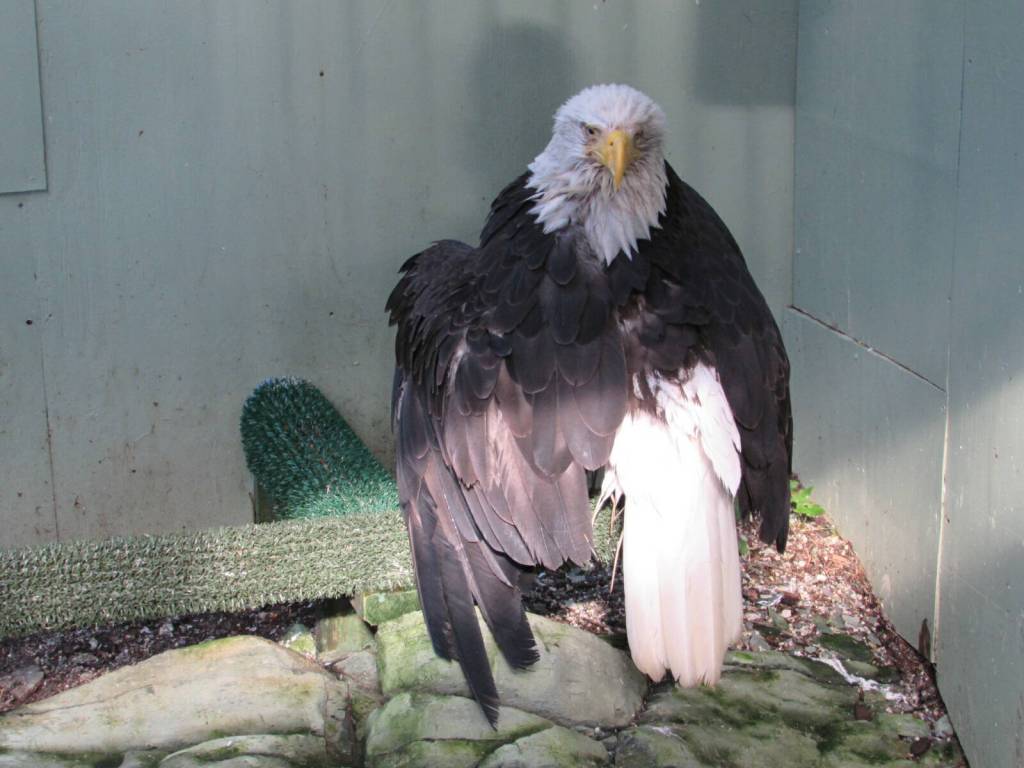
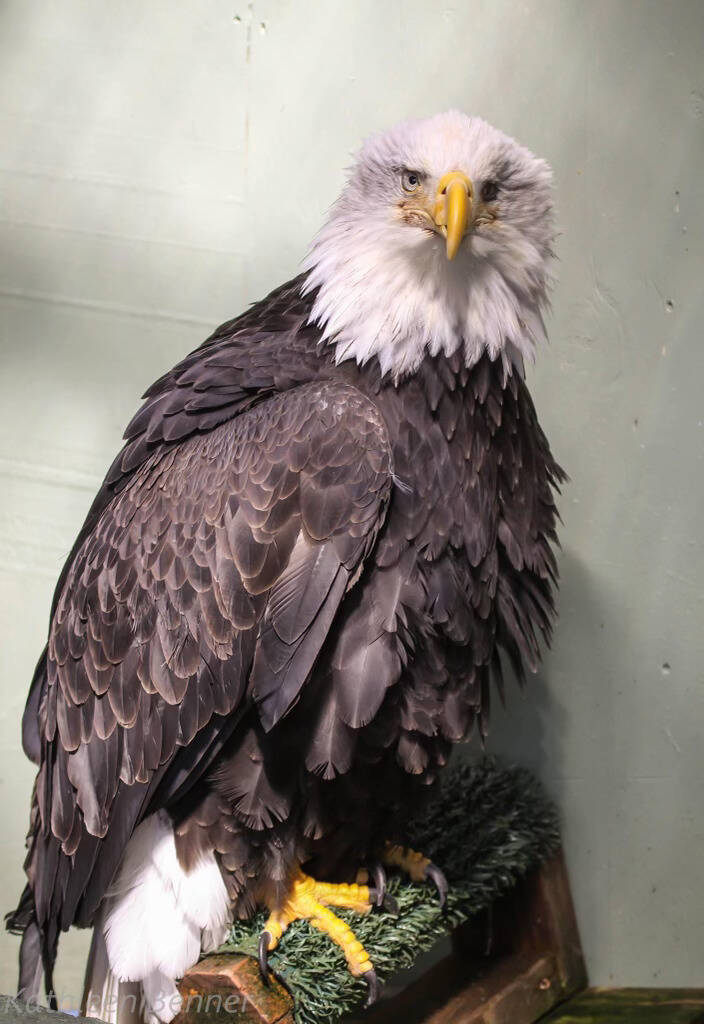
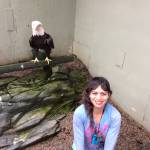
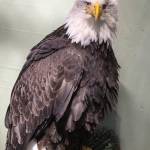
Lady Baltimore, a rescued American bald eagle who was protected at Mount Roberts for years, passed away in February.
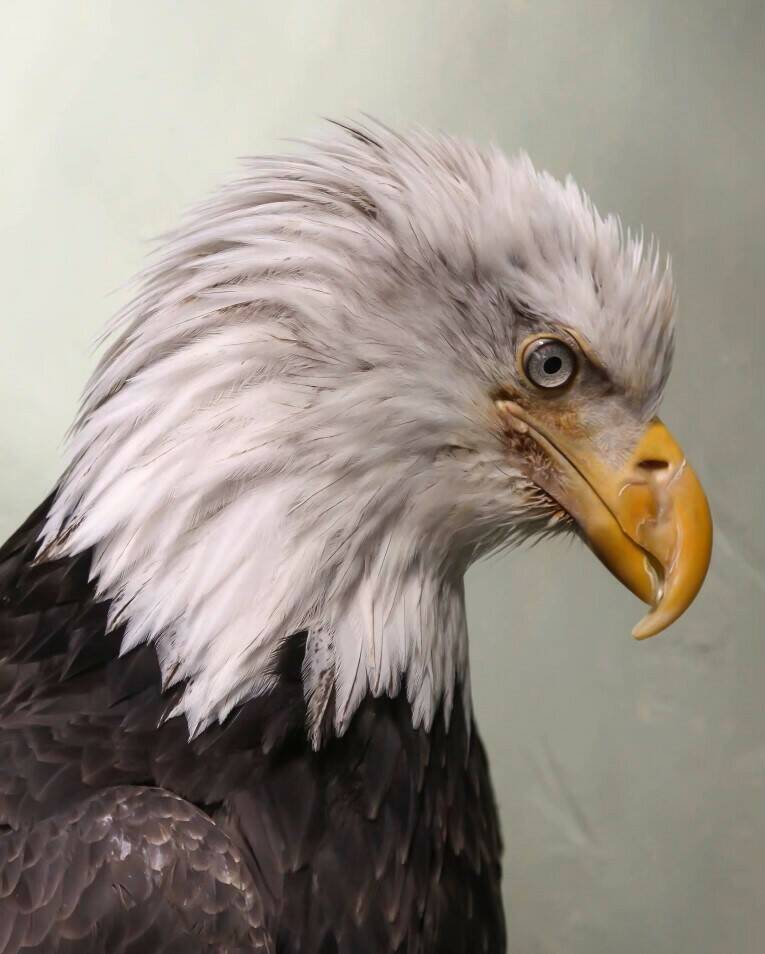
The eagle was rescued in North Douglas after a gunshot in 2006 damaged her beak and caused her to suffer a wing injury. The injury to her beak caused the retina in her left eye to become detached, blinding her in that eye.
Bald eagles are federally protected animals and killing one comes with severe penalties up to $100,000, according to the U.S. Fish and Wildlife Service. Lady Baltimore’s attacker was never found, but she found her home of many years on Mount Roberts.
Due to her injuries, Lady Baltimore was deemed non-releasable by the Juneau Raptor Center. She spent her springs and summers in an educational display at the Mount Roberts Tramway (now known as the Goldbelt Tram) and her winters in a raptor center volunteer’s backyard.
After JRC ceased operations in 2022, Lady Baltimore moved to the Alaska Raptor Center in Sitka. JRC had closed due to a loss of volunteers and board members during the COVID-19 pandemic.
ARC euthanized Lady Baltimore in February due to severe arthritis that was impacting her quality of life, avian director Jennifer Cedarleaf said.
“We picked her up in the spring to check her wings and see how she was doing,” Cedarleaf said. “We looked at her feet. When we got her in they didn’t look the greatest, they looked like she had arthritis. We had taken some X-rays when we initially got her here. Her feet looked a bit worse when we picked her up, so we took some more X-rays and compared them, and they had gotten quite a bit worse. I don’t know why — if it was the fact she was moving around more, she had more space — but it had just gotten to the point where we felt like she was probably in pain all of the time. So we made the decision then to euthanize her because it’s the right thing to do.”
The eagle’s exact age remains unknown, but raptor center volunteers said she was at least five years old when she was found in 2006, which would make her 23 years old, if not older, at the time of her death. Cedarleaf believes she was very old, but there’s no way to confirm this. A bald eagle’s average life span in the wild is 20-30 years, and in captivity, they can live to be up to 40.
Even with one eye, Lady Baltimore could still see better than humans. A bald eagle’s eyesight is approximately eight times sharper than the human eye. The fovea in the human eye has around 140,000 cones per millimeter, but in the central fovea of a bald eagle, there are over a million cones per millimeter, meaning they have incredible depth perception. However, Lady Baltimore could not survive on her own. Her injuries caused her to aim her body poorly when flying and hunting, according to JRC.
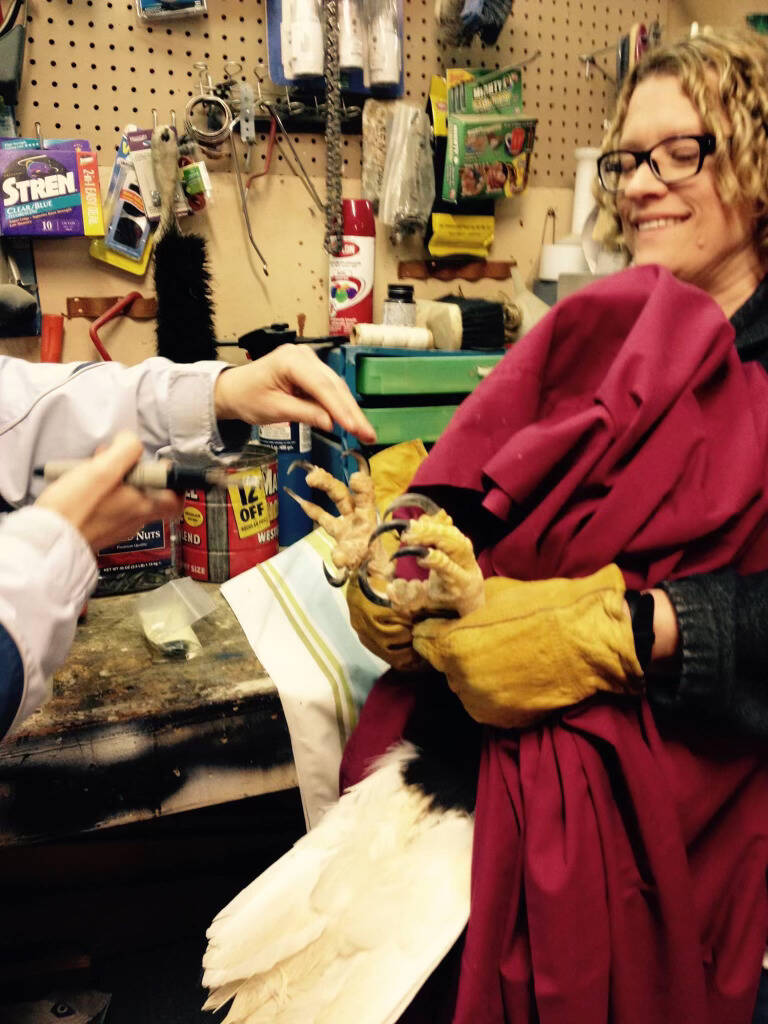
In addition, the eagle suffered a broken outer talon that never properly healed, said Jaimie Rountree, who was JRC’s operations manager.
“It never curled again, it always stayed up,” she said. “Which was one of the reasons that we always felt she was so dignified, like royalty, because you know how when you make fun of somebody who’s drinking a cup of tea and their pinky finger is sticking out? That’s what her talon used to do.”
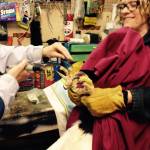
Lady Baltimore needed annual care such as clipping her beak since it never grew back properly and checking her eyes, Rountree said. But while such checks could often provoke an apprehensive “fight or flight response” by eagles, she said Lady Baltimore grew accustomed to the handling over the years.
“Once you actually got a hold of her, she knew, she would settle down, and she would just sit there and let you do the maintenance that you needed to do,” Rountree said. “She was just so smart.”
Towards the end of Lady Baltimore’s life, she developed a cataract in her good eye. JRC was aware of her cataract before sending her to Sitka.
ARC monitored her cataract and behavior closely since the U.S. Fish and Wildlife Service states it’s illegal to possess a completely blind bird. This is because raptors rely heavily on their vision, so blindness would severely impact their quality of life.
“With birds and raptors, they have so much of their senses that come through their eyes that if they can’t see they’re just basically lost,” Cedarleaf said.
After coming to Sitka in the spring of 2023, Lady Baltimore was kept in ARC’s main flight, a large space where she could fly around and interact with other rehabilitation birds.
Cedarleaf said Lady Baltimore seemed to enjoy her enclosure at the ARC. She said she bonded there with a four-month-old bald eagle who also had vision impairment. He was named Al since he was rescued from Alice Island in Sitka.
“We picked up a young bird that had just left the nest,” she said. “He had cataracts in both eyes. We thought ‘maybe he can see a little,’ so we put him out on the main flight. He connected with Lady Baltimore. He would always sit on the perch next to her and be wherever she was. He just really connected with her for some reason. Unfortunately, he ended up having to be euthanized because his cataracts degraded and he was completely blind. But the whole time he was there he was with Lady B.”
At first, the eagle was mistaken for a male and was called Lord Baltimore. Bald eagles exhibit size dimorphism; females on average are about one-third larger than males. The bald eagle is also Alaska’s largest resident bird of prey with a wingspan of up to 7.5 feet and weight between eight to 14 pounds.
Kathy Benner joined JRC as a volunteer in 1999 and managed the nonprofit for the last three years of its operations. She called volunteering at JRC a “labor of love.” She’s now the avian curator for the American Bald Eagle Foundation in Haines. Benner was Lady Baltimore’s winter caretaker.
Benner said along with female bald eagles being larger than males, they also have bigger personalities.
“When she was living at my house, as soon as I pulled in the driveway, she would do her call,” Benner said. “So I always kind of felt like she was welcoming me home. She was wonderful. So I had a big enclosure at my property out in the valley, and Lady Baltimore lived in there in the winter, and sometimes we’d have other bald eagles in there that we were rehabbing. So these are birds that were rescued from the wild and had an injury, but they were recuperating. She was always so gentle with the juveniles. And I think that’s what they saw in Sitka as well. She just had this wonderful personality.”
She said the raptor center’s goal was to rehabilitate birds, but that wasn’t always possible.
“Lady Baltimore was injured but we chose her to be able to be an ambassador because of her personality,” Benner said. “She seemed to really enjoy when the visitors came by. We call it enrichment. It’s where the bird isn’t just sitting there staring at a wall; they have interactions with people and things around them. Lady Baltimore seemed to just really enjoy it and she was super popular. I would go up to the tram at least a couple of times a week when I was managing. And I would talk to visitors who honestly came on a cruise just to visit her. She made a huge impact. People really loved her.”
Benner added that Lady Baltimore’s impact as an ambassador spread further than educating cruise ship visitors.
“We got lots of donations,” she said. “But we did not receive money from any government agency. We had to raise our money. We had memberships, we got wonderful donations. And it helped us to take care of all those other injured birds that came in. So Lady Baltimore had a very important role. She literally helped to save other eagles because we were able to have her as an education bird and people got to come see her, and they would give us donations, and all that money went right back in. To me, that’s the big impact right there.”
Louise Riofrio, a naturalist at JRC who tended to Lady Baltimore while she was in Juneau, said the eagle inspired her.
“I would clean out her enclosure every morning and feed her salmon,” she said. “She really liked fish heads. And I would just spend days, long days, every day with her. So I got to know her quite well. I got to know lots about eagles just being with her. Now I know that Native peoples could use eagle cries for navigation. It inspired my writings. I do write books and screenplays. I’m making a film about the eagles. I’ve written a book about Alaska with a lot of my eagle photos in it. It’s inspired a lot of things in me.”
She described Lady Baltimore as “classy” and having “an aristocratic air,” hence the name Lady Baltimore.
Riofrio said she hopes someday another educational bird could carry on Lady Baltimore’s legacy in the enclosure that sits vacant at the top of Mount Roberts, especially since a new $170,000 enclosure was built in 2019. The project received $120,000 of support from Goldbelt Tram and was built by Silverbow Construction.
Riofrio said Lady Baltimore’s resilient story is a testament to the species’ rebounding after a severe decline in the Lower 48 States between the 1870s and 1970s.
On Aug. 9, 2007, bald eagles were removed from the federal list of threatened and endangered species, meaning they were no longer protected under the Endangered Species Act, according to the Alaska Department of Fish and Game. The bird continues to be protected by the Migratory Bird Treaty Act and the Bald and Golden Eagle Protection Act.
Since 2007, bald eagles have rebounded and re-established breeding territories. Bald eagles are more abundant in Alaska than anywhere else in the United States, with the state’s population estimated at 30,000 birds.
If you see an injured raptor: Alaska Raptor Center’s number is (907) 747-8662. Push the “bird emergency” option.
• Contact Jasz Garrett at jasz.garrett@juneauempire.com or (907) 723-9356.