How tails help birds get ahead
Published 7:40 am Tuesday, July 28, 2020


By Mary F. Willson
For the Juneau Empire
I recently watched a brown creeper hitching up a little spruce tree just outside my window. Brown creepers typically forage for invertebrates by moving vertically up a tree trunk, hooking their sharp little claws into the roughness of the bark. They actually hop upward, moving both feet at the same time, while the body is braced by the tail. The two central tail feathers are strong and somewhat pointed, although the outer tail feathers have softer tips. The tail is essential to the creeper’s upward locomotion.
That elementary observation made me think more generally about the tails of birds. Their tails are made of feathers supported by a bony structure comprised of fused tail vertebrae. The feathery tails are obviously important in aerial locomotion and maneuverability; that role has been well-studied and we easily see it when watching eagles or gulls swooping back and forth. But here I want to focus on some particular uses of the tail that have special functions, such as seen in the brown creeper.
[We’re on track to break summer rainfall records]
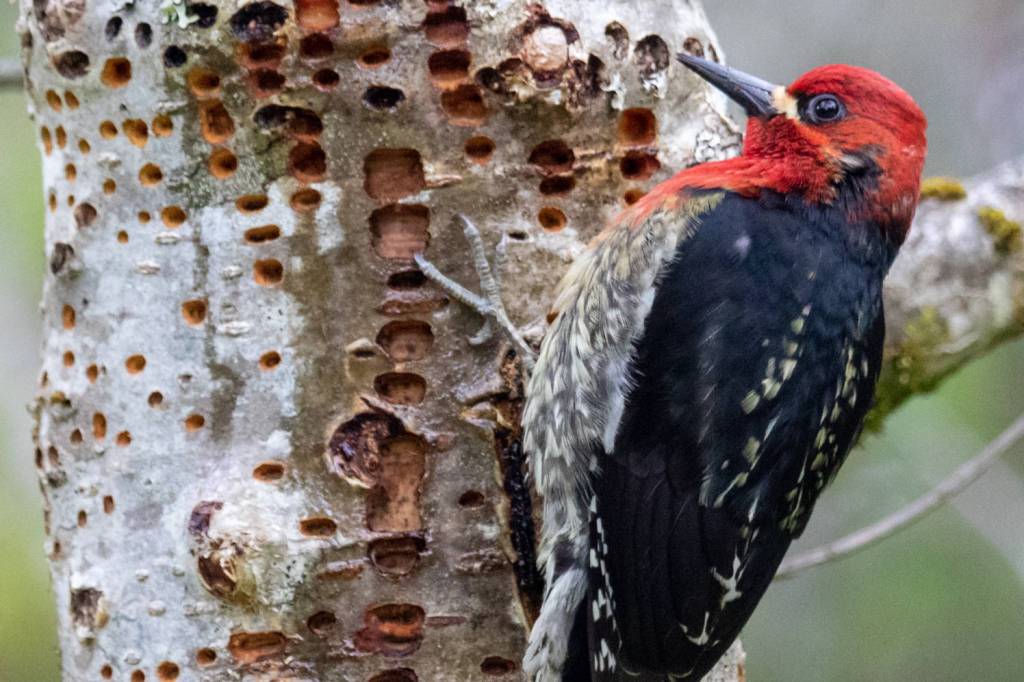
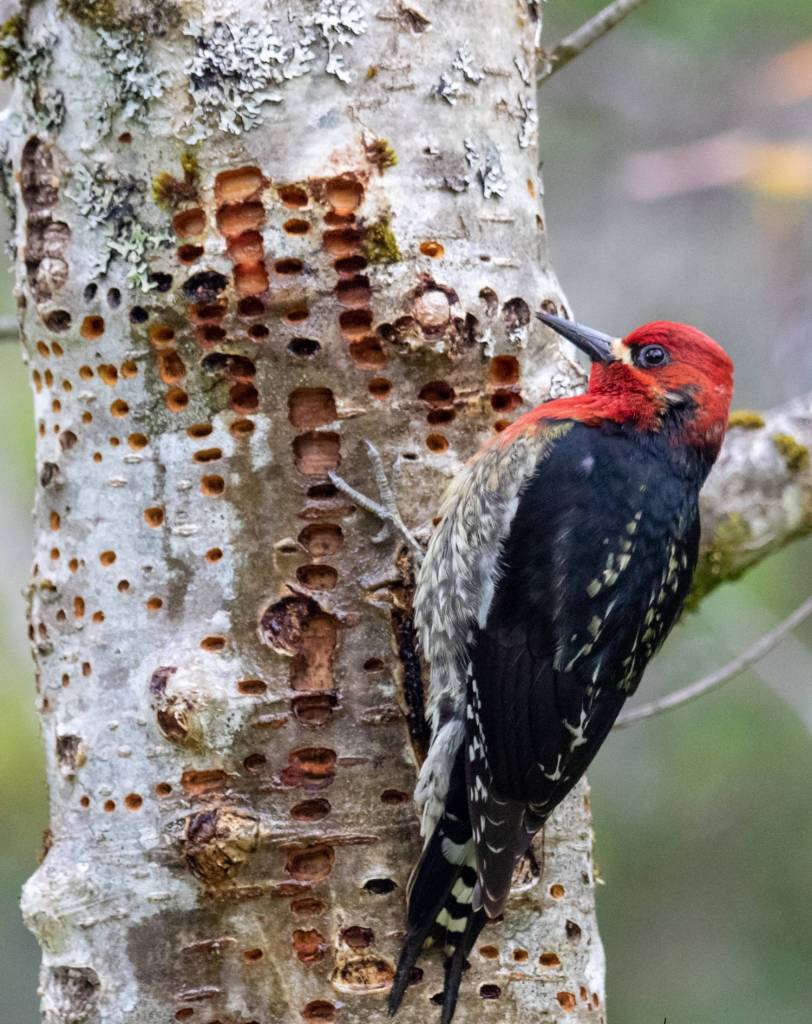
Like brown creepers, our wood peckers climb tree trunks by hopping upward while braced by a strong tail. The strong, pointed tail feathers are also very important when the woodpecker is excavating a cavity, bracing the body while the bird hammers away. Three-toed woodpeckers have especially strong central tail feathers, allowing them to rear back on tiptoes and put the whole body behind the strike. In contrast, sapsuckers excavate chiefly by using just head and neck movements, and their central tail feathers are not quite so robust.
Both creepers and woodpeckers molt their tail feathers in an unusual pattern. Most birds are said to shed the central ones before the outer ones. But creepers and woodpeckers keep the central ones until the new outer ones have fully regrown, to maintain at least some tail support for their climbing activities while the new central tail feathers are growing in.
The little aerial insectivore called Vaux’s swift (and its eastern relative, the chimney swift) is unable to perch on twigs. It clings well, however, to vertical surfaces such as the interiors of hollow trees (or chimneys) where it nests. Aiding the vertical cling are its spine-tipped tail feathers that press against the walls, helping support the bird in that orientation.
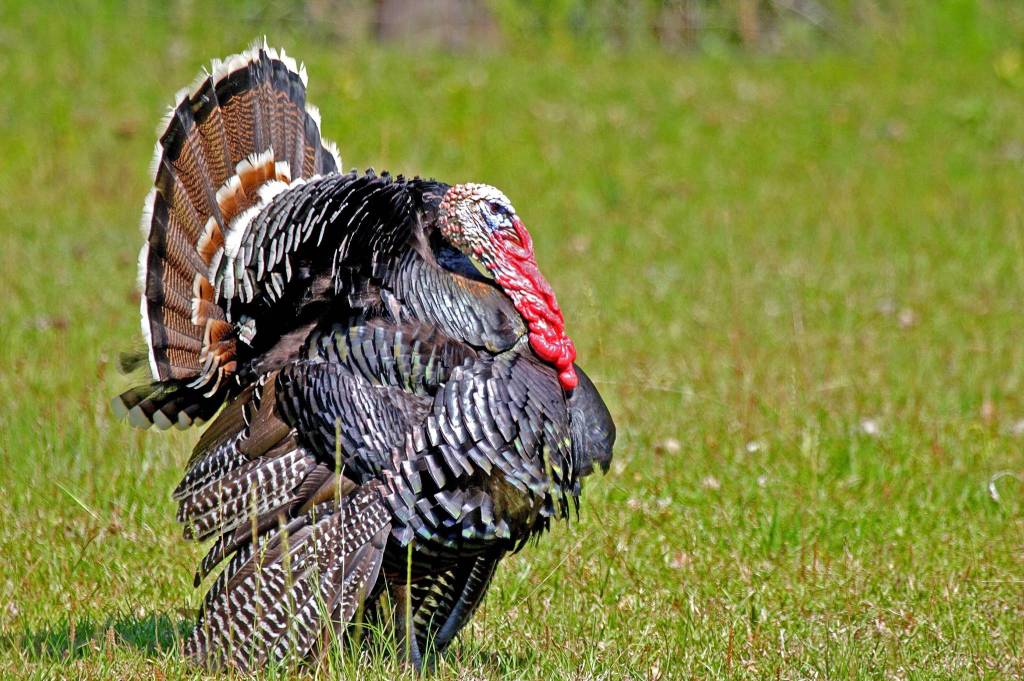
In other birds, raising and spreading the tail fan makes the birds look bigger. Male turkeys, for example, display their spread tails when they puff up and strut to impress females and other males.
A ruffed grouse male raises his tail fan during the drumming display that advertises ownership of the display site and attracts females. Female grouse may use a raised tail fan when defending a brood of chicks.
Some birds have turned tail feathers into sexual adornments. Males of some of the African widowbirds and whydahs have tail streamers several times longer than the body — aerodynamically somewhat disadvantageous but apparently alluring to females. Similarly, males of certain manakins in the neotropics and birds-of-paradise in New Guinea have long, decorative tail feathers with odd shapes useless for flight.
[Bright sights on a cool, damp day]
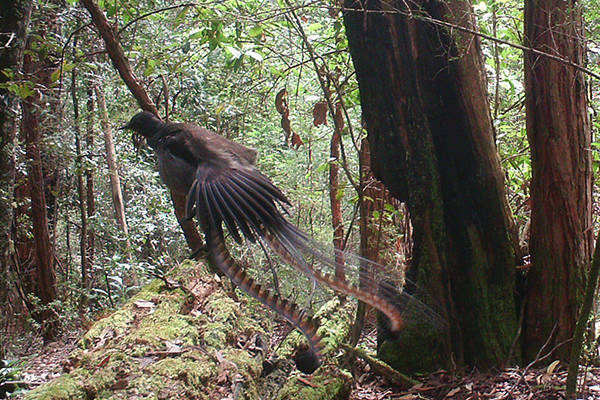
Ring-necked pheasants, native to Asia but introduced elsewhere, have colorful, long tail feathers that they spread, raise and orient toward another bird during courtship or intimidation of other males. There are many kinds of pheasants in Asia, often with fancy tail displays… including, of course, the biggest, most famous pheasant of them all—the peacock, a native of India but domesticated around the world. All that beautiful color and shimmer of a peacock’s ‘tail’ display is not made by tail feathers at all! The real tail feathers are dull, stiff things supporting the gaudy display from behind. The display itself is formed by upper tail coverts — body feathers on the rump that have become decorative and long. Perhaps the fanciest true tail belongs to the lyrebirds of Australia. Male superb lyrebirds have huge, ornate tails used in courtship. Some of the feathers are fluffy, some are wiry, and two elaborate ones make the lyre-like shape.
Males display on a cleared mound on the forest floor, raising the elaborate tail, and dancing, while mimicking the sounds of many other birds. That display is better seen and heard than just imagined; videos are readily accessible on the internet.
• Mary F. Willson is a retired professor of ecology. “On The Trails” is a weekly column that appears every Wednesday.