Update: Budget to be shaped by committee as session nears end
Published 10:30 pm Friday, May 13, 2022


This story has been updated with new information.
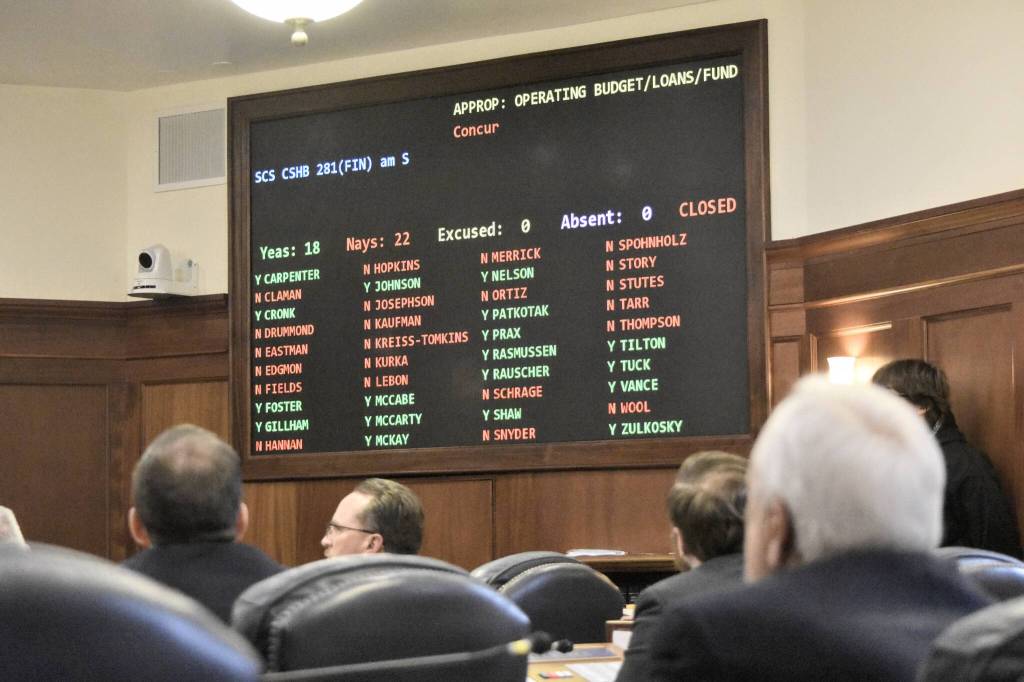
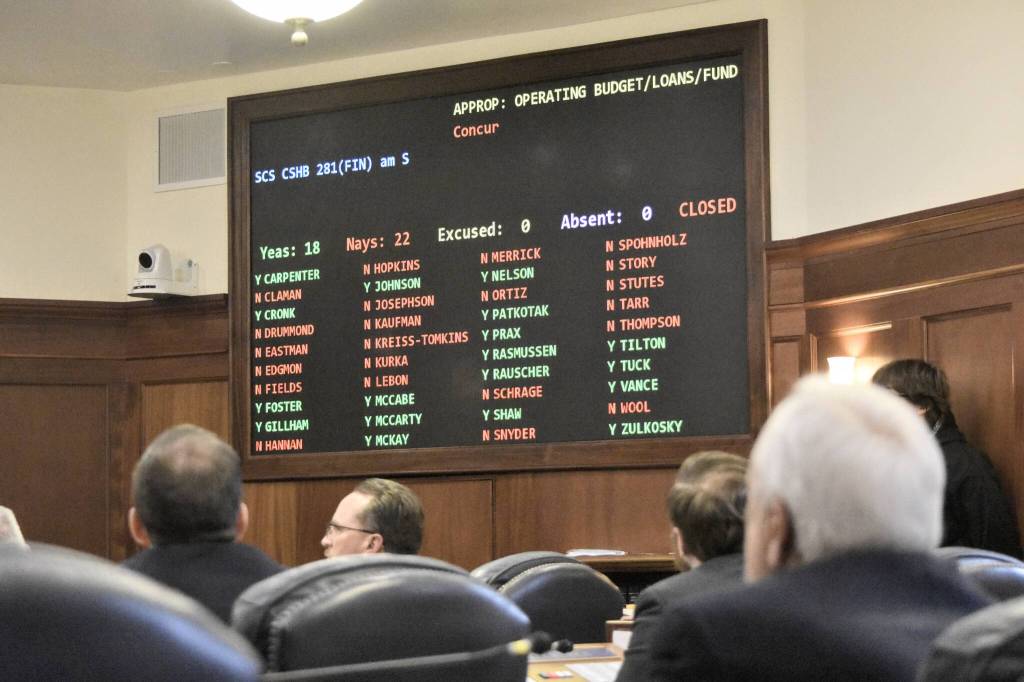
The Alaska House of Representatives rejected a proposed budget bill passed by the Senate earlier this week, sending the state’s budget to be negotiated in a conference committee.
House members voted against the budget 22-18 and broke mostly along caucus lines, but several members of the House Majority Coalition voted for the budget, and some minority members opposed it.
Voting to concur with the Senate’s budget were Reps. Ben Carpenter, R-Nikiski; Mike Cronk, R-Tok; Neal Foster, D-Nome; Ronald Gillham, R-Kenai; DeLena Johnson, R-Palmer; Kevin McCabe, R-Big Lake; Ken McCarty, R-Anchorage, Tom McKay, R-Anchorage; David Nelson, R-Anchorage, Josiah Patkotak, I-Utqiaġvik; Mike Prax, R-North Pole; Sara Rasmussen, R-Anchorage; George Rauscher, R-Sutton; Laddie Shaw, R-Anchorage; Cathy Tilton, R-Wasilla; Chris Tuck, D-Anchorage, Sarah Vance, R-Homer and Tiffany Zulkosky, D-Bethel.
Following the vote, House Speaker Louise Stutes, R-Kodiak, appointed House Finance Committee co-chair Rep. Kelly Merrick, R-Eagle River, and Rep. Dan Ortiz, I-Ketchikan, as members of the conference committee from the majority caucus, and Rep. Bart LeBon, R-Fairbanks, as a representative of the minority.
Lawmakers spent several hours debating the bill Saturday morning, before ultimately rejecting the budget.
According to Foster, co-chair of the House Finance Committee, the state’s operating budget included a total of $14.4 billion, including $8 billion in state unrestricted general fund money and $4 billion in federal money. The Senate added additional funding for Village Public Safety Officer pay and increased state agency operations by $500 million.
“These changes are enough for me to do something out of the ordinary,” Foster said of his support of the budget. “There’s no reason for me to want to go to conference, there’s no way to go up from there.”
Foster noted there hadn’t been a concurrence vote on a budget in the Alaska Legislature since 1982.
The most notable item in the capital budget was the Permanent Fund Dividend amount added in the Senate. Senators voted to have the state follow a statutory formula for the dividend that’s been in place since the 1980s but hasn’t been used by the state since 2016 when the price of oil dropped.
[Tribal recognition bill clears Senate, nears finish line]
Paying a statutory formula has been a consistent demand of many, mostly Republican lawmakers, but some Democrats have also been advocates for a full dividend. On the floor Saturday, supporters of the budget said they were pleased to see the state finally following the law.
“This is your chance right now to show the people of Alaska that you want to follow the law,” said House Minority Leader Cathy Tilton, R-Wasilla, “The people of Alaska have been waiting for this day.”
Several Republicans accused those decrying the budget as irresponsible of fear-mongering and said that the budget fully funded most state programs, including education, and still makes a transfer of more than $1 billion to the Alaska Permanent Fund.
“I don’t know how we can possibly say that the budget is not balanced,” said Rep. Kevin McCabe, R-Big Lake.
Several lawmakers both in the House and Senate pointed to the ongoing conflict in Ukraine as evidence the price of oil was likely to stay high.
But lawmakers from both parties said it was not sustainable to base a budget around the high price of oil, and the state needed to show restraint. LeBon said that as a former banker, the state’s budget didn’t make financial sense.
“I get that we would like to see as large a PFD as possible,” he said. “I know there are constituents that are encouraging that kind of behavior, I’m just wondering, how sustainable is that projection.”
Following the budget vote, Stutes enacted the 24-hour rule, which allows bills to be heard without prior notice, allowing lawmakers to pass several bills quickly, and a House floor session was scheduled for Sunday morning.
The House only voted on the state’s combined operating and capital budgets, and did not hold a vote on the state’s mental health budget, which is also constitutionally required for lawmakers to pass during session.
As of Saturday afternoon, the Senate had not yet appointed its conference committee members but Senators had met earlier and were recessed to the call of the chair.
After the budget was rejected, Gov. Mike Dunleavy issued a statement emphasizing the budget process remains ongoing.
“I continue to believe the revenue picture is in Alaska’s favor,” Dunleavy said. “I continue to believe the budget should be balanced, and I continue to believe the amount of uncertainty in the world due to inflation and higher prices allows state government to have a final budget that is balanced and helps Alaskans — because we have the tools to make that happen.”
Saturday afternoon the Senate appointed Sen. Bert Stedman, R-Sitka, as chair of the conference committee, with Sen. Click Bishop, R-Fairbanks, as the second member representing the majority caucus. Sen. Bill Wielechowski, D-Wasilla, was chosen to represent the Senate Democratic minority.
The end of the legislative session is May 18.
Monday mania
Both the Senate and the House had full calendars Monday, and both bodies spent most of the day in floor session trying to pass as many bills as possible before the end of the legislative session.
The House passed a Senate bill raising the payments made in the Power Cost Equalization program which subsidizes power costs in rural Alaska and bills paying retention bonuses to non-union state employees. The Senate passed a bill from Gov. Mike Dunleavy creating mental health crisis centers and concurred on the House passage of Senate Bill 9, an overhaul of the state’s alcohol licensing laws.
On the budget front, the conference committee met late Monday afternoon and began the process of working through each item in the state’s budget, agreeing on either the Senate or the House proposal for how much of the state’s money to allocate. Once committee members finish that process, their decision must be passed by a simple majority in both bodies of the Legislature.
At the close of business Monday, the conference committee was still in session.
• Contact reporter Peter Segall at psegall@juneauempire.com. Follow him on Twitter at @SegallJnuEmpire.