Former Rep calls attention to ‘frightening’ state of oceans
Published 3:00 am Monday, January 28, 2019
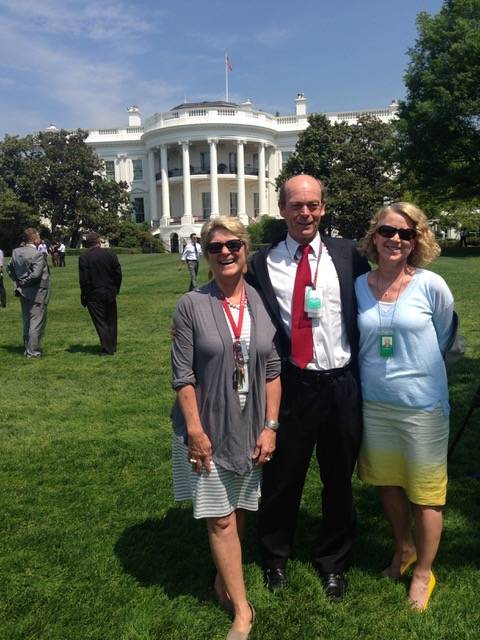



The messenger was warmly received, the disconcerting message not so much.
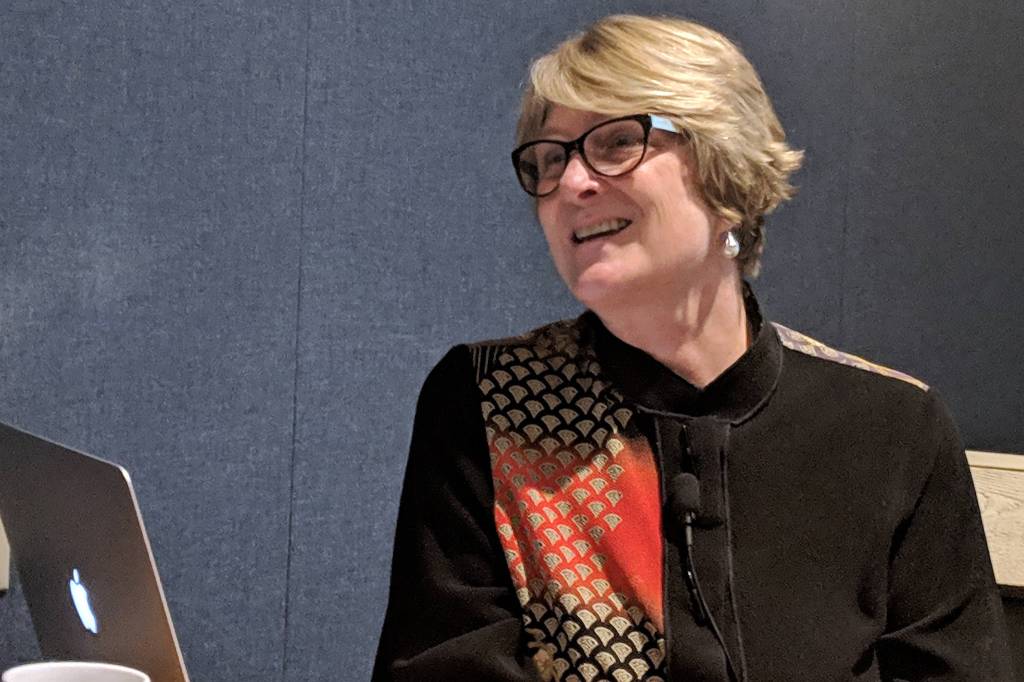
Beth Kerttula, former State Representative and past director of the National Oceans Council under President Barack Obama, highlighted a variety of issues facing the oceans during a pair of lectures Friday.
She received a welcoming introduction at the Mendenhall Valley Glacier Visitor Center from Nikki Olsen with the U.S. Forest Service, who was formerly Kerttula’s tenant.
“I’ve had some great landlords, but there’s only one I call my Juneau mom,” Olsen said.
Kerttula’s words during her installments in the Fireside Lecture series highlighted how little public policy is doing to protect oceans facing a number of crises mostly related to climate change.
“Why is governance important? Why do we care about it?” Kerttula asked. “I’m going to go through some issues. This is kind of the hard part of the talk.”
Issues listed included receding glaciers, warming ocean waters, ocean acidification, red tide, dying reefs, ocean plastic, illegal unreported unregulated fishing, oil spills and more.
“The new models are showing the oceans are warming 40 percent faster on average than a U.N. panel estimated five years ago,” Kerttula said. “These warming temperatures are wreaking havoc in the ocean.”
Kerttula’s interest in ocean health pre-dates those alarming figures and goes back at least a decade.
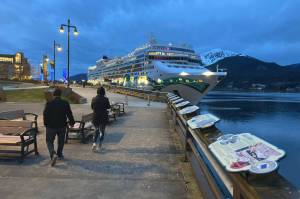
“I was sitting in my cousin’s backyard on Sixth Street, and fumes coming up from the cruise ships were really heavy that day,” Kerttula said. “I just remember smelling it and seeing it and being really disturbed by it. When I got elected, one of the first pieces of legislation I filed was about cruise ship pollution.”
Eventually, that became the first bill in the U.S. to cover cruise ship pollution.
“This is why I started to look at international ocean issues and look at how it not just impacts us but the world,” Kerttula said.
[As blue haze rises, so do cruise ship complaints]
That interest ultimately led to her directing the National Oceans Council, which was created by the National Ocean Policy. The policy also established nine ocean regions with planning bodies comprised of federal, state and tribal members. Under the Trump administration the NOP was remade with a focus on economic and security interests.
Still, Kerttula said some of the same work sharing information and collaborating to make better use of the oceans and Great Lakes continued.
Similarly, Kerttula touted the intent of the Coastal Zone Management Act, which allows states to have final say over what happens to their coastlines. However, a split state house vote meant as of July, 1, 2011, Alaska has withdrawn from the Coastal Management Program.
Not all doom and gloom
While the bulk of Kerttula’s talk underscored the perilous state of the oceans, she did mention some bright spots.
Those included ongoing expansion of renewable energy as well as the United Nation’s Sustainable Development Goal 14.
Goal 14 is one of 17 goals the U.N. has set for sustainability and aims to significantly reduce marine pollution of all kinds by 2025 among other objectives.
“I really think that’s the wave of the future for ocean governance,” Kerttula said. “There’s a lot of hope, but it’s undeniably frightening.”
Kerttula also outlined some ideas that could be beneficial for the future health of oceans.
One was listening to indigenous people, who have thousands of years of experience with environment.
“I don’t know why Western culture hasn’t worked with that, but we need to back up and pay attention,” Kerttula said.
She advocated for adaptive management, which translates to a government that is willing to govern proactively and with trial and error.
“What that really is about is we’re used to having laws and regulations and plans that are maybe not rigid but they’re in writing and they’re clear,” Kerttula said. “I think what we’re facing, is with things changing so fast, you start to need a government that will work on experiments.”
She also encouraged those who are concerned about the state of the oceans and ocean governance to consider making changes that could result in less pollution.
Examples included cessation of using single-use plastics making use of electric or hybrid cards and staying engaged on cruise ship issues.
Staying engaged in general is also important for the future of the oceans and ocean governance, Kerttula said.
“Ocean governance is us, and it’s all about what we do,” Kerttula added. “It’s all about us on a federal, state and local level. Get involved. Stand up and speak up.”
• Contact arts and culture reporter Ben Hohenstatt at (907)523-2243 or bhohenstatt@juneauempire.com. Follow him on Twitter @BenHohenstatt.
• Contact arts and culture reporter Ben Hohenstatt at (907)523-2243 or bhohenstatt@juneauempire.com. Follow him on Twitter @BenHohenstatt.