Experts weigh in on technical aspects of 2018 killing
Published 10:30 pm Wednesday, January 19, 2022
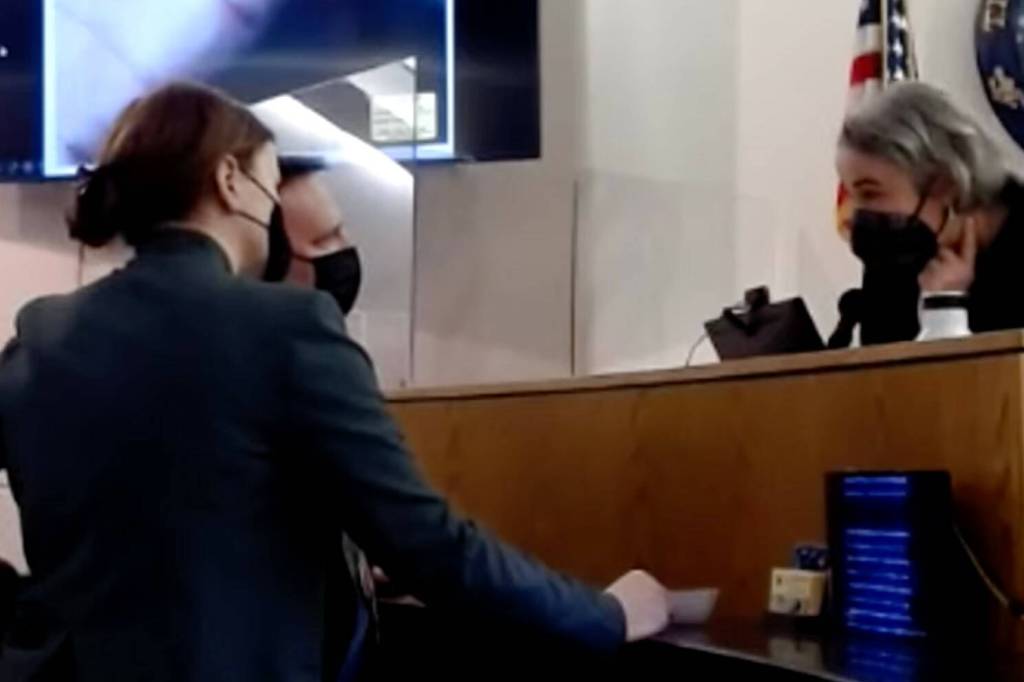
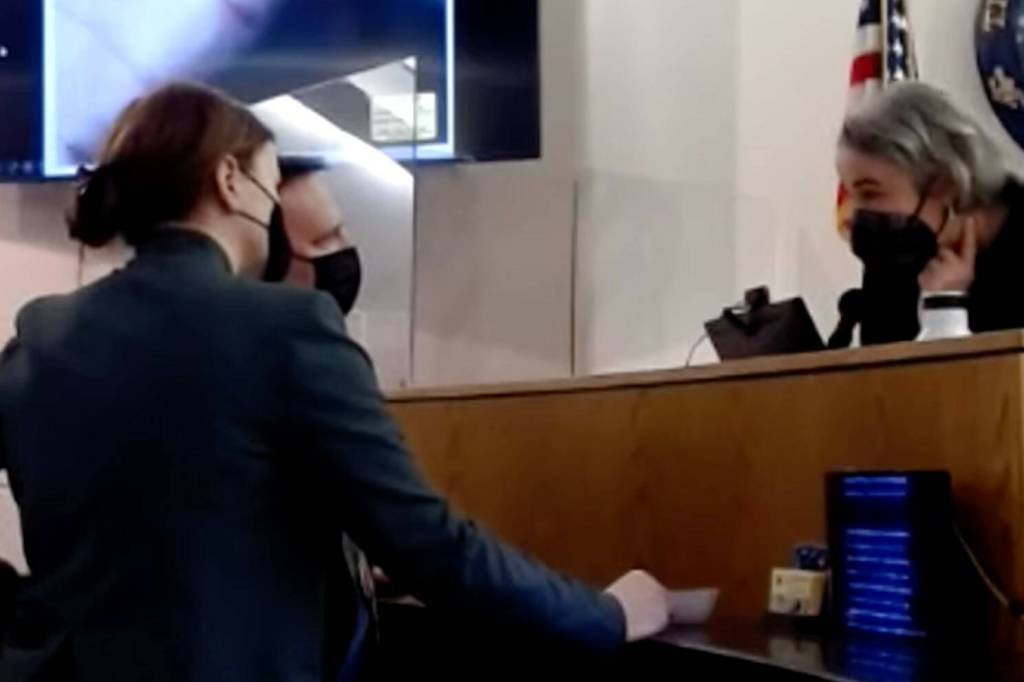
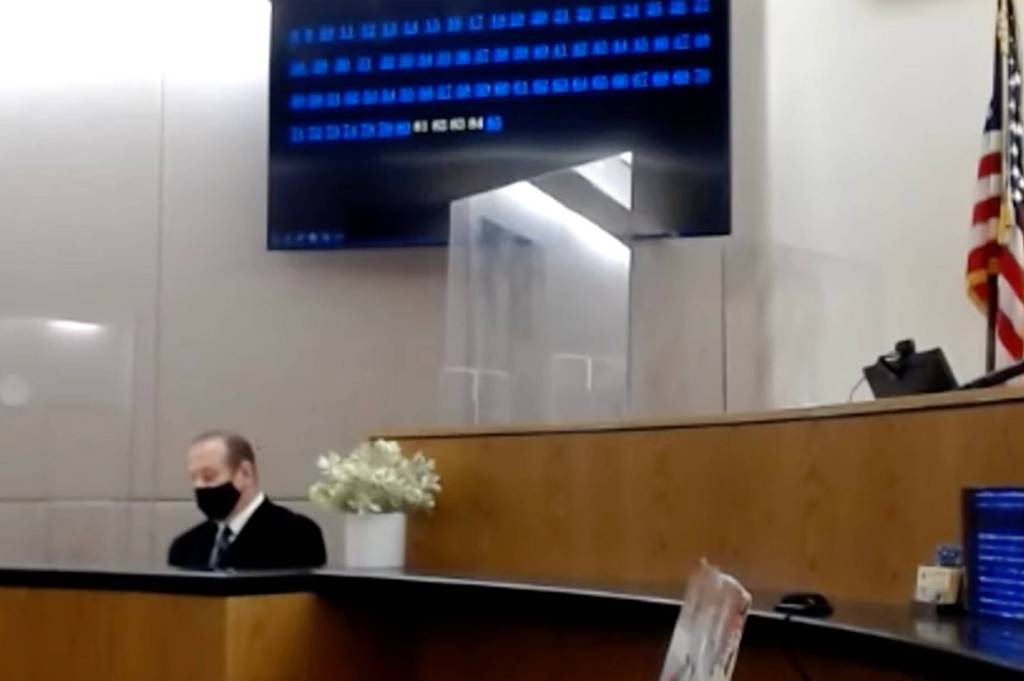



Expert witnesses from Alaska’s state government testified Thursday in the trial centered on a man killed in Yakutat several years ago.
The state’s chief medical examiner and a forensic technician, as well as an investigator from the Alaska Bureau of Investigations testified before the court about their findings.
The defendant, John Lee Stapleton, 50, is being tried for the killing of John Fergerson, 61. Stapleton is charged with two counts of second-degree murder and one count of first-degree murder. He faces up to 99 years in prison if convicted. The minimum sentence for first-degree murder is 30 years imprisonment, under Alaska statute.
“Our main job for the state of Alaska is to determine causes of death for cases that come under our jurisdiction,” said Gary Zientek, the chief medical examiner for the State of Alaska. “So the body comes into the office in Anchorage and we have autopsy techs who assist us with the case.”
[City, state report rising COVID case numbers]
Expert witnesses are specialists, often with many years of experience in dealing with issues that come up in a trial, whose testimony can expand on technical aspects of an investigation for the jury.
Zientek conducted an autopsy on Fergerson’s body as part of the investigation, identifying the three stab wounds, including the fatal one to the heart that killed him, he said.
“When we look at torso wounds, we remove the skin and the chest plate and examine the wounds in the body. We look at the lungs and the heart to see if there’s any injury, and if there is, we document them,” Zientek said. “We also try to get an idea of the direction the wound is going. That’s kind of a more rough estimate, it’s not an exact science.”
They also look for things like defensive wounds, which they didn’t find in this case, Zientek said. There were three stab wounds: the first, which nicked the clavicle bone, and a second, which penetrated left lung, which could have killed Fergerson if it went untreated. The third, however, made this irrelevant, Zientek said.
“The third stab wound was the lowest one, near the mid-portion of the left chest,” Zientek said. “It went through muscle and between the ribs. It penetrated the pericardium. It penetrated through the right side of the heart to the depth of 1.5 inches.”
The pericardium is a sac or membrane that surrounds the heart, Zientek said.
“The other thing about this injury is when it penetrated the heart, the blood started coming out of the heart through this defect. The heart started pumping more and more blood into this sac, which makes it harder and harder for the heart to pump,” Zientek said. “The heart, as it’s working, contracts and expands, contracts and expands. As it gets more and more blood around the heart, it can’t expand.”
The angle of the stab wounds was slanted downward into Fergerson, Zientek said, but that could be for any number of reasons.
“I can tell you why he died. But I can’t tell you what the circumstances leading up to that were in any detail,” Zientek said. “It could have occurred in many different ways. I can’t tell you what position the decedent was in when he was stabbed.”
Forensic scientist III Julia Webb testified about DNA traces found in various blood samples taken from around the apartment, including on the knife found covered in blood underneath Fergerson when his body was finally moved.
“For the blade, that was a single source,” Webb testified. “It matched the DNA profile from Mr. Fergerson. It did not match the DNA profile from Mr. Stapleton.”
Webb said that certain factors could obfuscate the results of the test, including the overwhelming presence of DNA from one person, which could mask results from another. ABI investigator Trooper Ted Nordgaarden said the shirts under which the knife was found were sodden with Fergerson’s blood.
Blood spatters found on walls and carpet in the residence and the kitchen were also not able to be identified as belonging to either Stapleton or Fergerson, Webb said.
“Not every single piece of evidence that comes into the laboratory we can generate a DNA sample from. It can be due to the environment that evidence has been found in,” Webb said. “If it has been out in the elements or out for a certain period of time, that can affect it.”
Nordgaarden began detailing his call-up and subsequent arrival in Yakutat, including the beginning of his investigation, which he will continue Friday morning.
• Contact reporter Michael S. Lockett at (757) 621-1197 or mlockett@juneauempire.com.