Dunleavy vetoes half of education increase as he signs budget
Published 9:30 pm Sunday, June 18, 2023


This is a developing story.
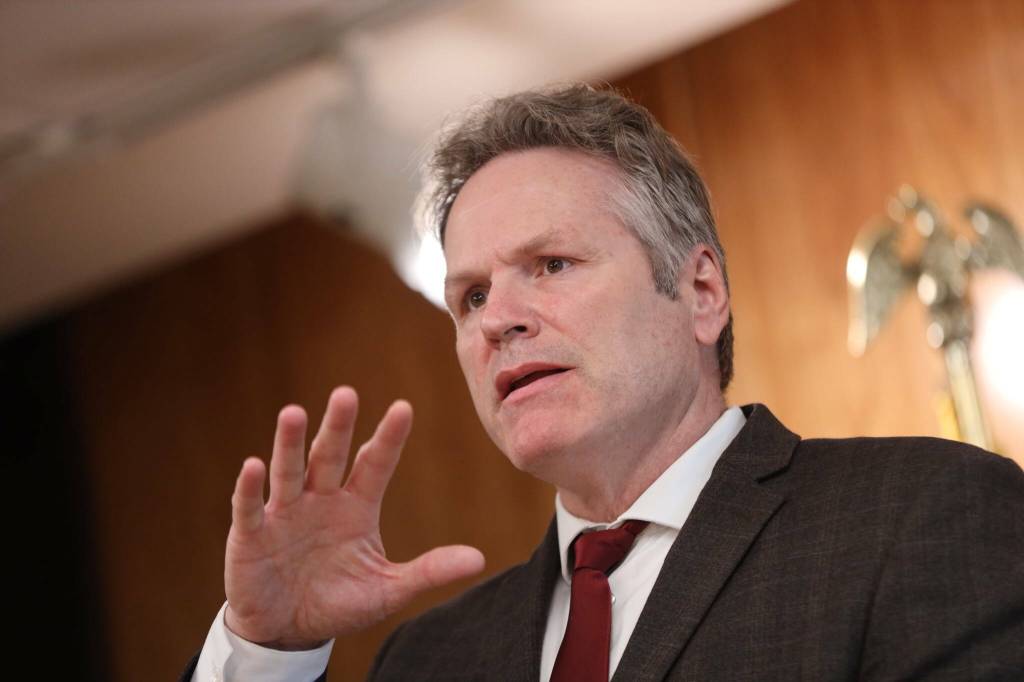
Republican Gov. Mike Dunleavy has vetoed half of a $680 per-student increase in public education funding in the budget for the fiscal year starting July 1, partially defeating what the bipartisan state Senate majority and Democratic House minority called one of their biggest achievements of this year’s legislative session.
The veto of about $87.4 million in funding is part of about $200 million in line-item vetoes announced by Dunleavy on Monday, with other cuts occurring to social care programs, Head Start and numerous capital improvement projects. The governor signed the budget for the coming fiscal year on Sunday, according to a press release, bypassing a public announcement or press conference while doing so.
“The governor’s schedule did not allow him time today to sign the budget,” Shannon Mason, a spokesperson for Dunleavy, stated in an email in response to why the budget was signed privately. “While the budget was signed yesterday, it could not be transmitted to the House clerk’s office until today.”
Mason did not immediately respond to what Dunleavy’s schedule is for Monday, or why he chose to sign the budget Sunday since he has until June 30 to do so before the new fiscal year starts.
Keeping such a low profile is unusual for a budget signing, said state Sen. Jesse Kiehl, a Juneau Democrat who worked for local legislators from 2000 until he was elected to office in 2019.
“Usually governors are proud of the actions they take on budgets, and they want to tell Alaskans why and how they’ve done the right thing,” he said.
Dunleavy does not state his reason for vetoing part of the education funding increase in his press release. It does note the roughly $87 million increase that is included and states “the governor’s decision recognizes that schools need to address inflationary pressures while still preserving general fund dollars.”
The decision quickly drew criticism from lawmakers and other officials who supported the increase.
“I think the governor’s vetoes are very out of touch with what families in the majority of our communities want for their schools in Alaska,” said state Rep. Andi Story, a Juneau Democrat who had made education issues a cornerstone of her legislative agenda.
The Juneau Board of Education included a $400 increase in per-student funding (plus $30 in related funding) in the $96.2 million budget for the coming year it passed in March. Will Muldoon, chair of the board’s finance committee, said the governor’s veto was disappointing, but something board members realized was possible.
“We were very apprehensive about that,” he said. “We didn’t think it was a sure thing.”
The board will likely meet July 11 to consider cuts and other adjustments to the budget, Muldoon said. The budget needs to be submitted to the state Department of Education and Early Development by July 15, but the board can continue to make spending adjustments afterward.
The $6.2 billion operating and capital budget was passed by the Alaska Legislature on May 18, one day after the regular session ended with lawmakers still in a stalemate over key issues. Dunleavy immediately called a special session, which lasted one day as numerous members of the Republican-led House majority crossed over to support a largely Senate-crafted bill when about $35 million in capital projects targeted at specific legislative districts were added at the last moment.
Another veto that’s notable for Juneau and Southeast Alaska residents is cutting by half of $20 million in “backstop money” for the Alaska Marine Highway in case expected federal grant money fails to be allocated as scheduled. The ferry system was among the lowest-scoring state operations in last year’s infrastructure report card and Dunleavy created significant controversy when he was first elected by making steep cuts to the ferry system’s budget.
“Unnecessary funding, to be reevaluated after federal grant award,” is how Dunleavy described the veto in a “statement of objections” on the spreadsheet listing all vetoes.
Also notable for Southeast residents is nearly $3 million in projects for the University of Alaska Southeast, including fuel tank and elevator replacements. Dunleavy’s “statement of objections” for those cuts, which appears for many others as well, is “preserve general funds for savings and fiscal stability.” Kiehl said replacing the buried fuel tanks has been a priority project of his that Dunleavy has vetoed for the past three years.
Kiehl said some of Dunleavy’s other vetoes — including seemingly small ones such as eliminating single employees designated for specific tasks — “will make state government less efficient.” The senator added a hiring specialist to the state Department of Transportation and Public Facilities, for example, to help remedy a crisis-level workforce shortage at the Alaska Marine Highway.
“The governor proposed putting one hiring technician in DOT,” Kiehl said. “I added a second so we could actually staff the ferries. I did the same thing in a couple of other very large departments. He vetoed those.”
Dunleavy also vetoed $3.5 million of the $5 million in additional Head Start funding, $1 million for rural public radio and $2.5 million for statewide tourism marketing.
Lawmakers supporting the $680 per-student education funding increase touted it as the largest in the state’s history and a badly-needed measure since the per-student formula has remained nearly unchanged since 2017. Educators statewide, including the Juneau School District, adopted budgets assuming some or all of the increase would be signed into law.
Also contentious during the session was the size of the Permanent Fund Dividend and how to pay for it. The budget passed by the Legislature provides an estimated dividend of $1,300 that does not rely on tapping into reserve funds — in contrast to a dividend of $3,284 last year Dunleavy highlighted during his reelection campaign.
The press release issued by Dunleavy’s office on Monday does not refer to the Permanent Fund or dividends.
The Legislature can override vetoes by the governor on appropriations bills with a three-fourths vote of the House and Senate either in a special session or during the first five days of the regular session when they reconvene in January. But Kiehl said “it’s tough to see those votes on the horizon.”
Dunleavy and many legislative leaders stated repeatedly during this year’s session a long-range fiscal plan was a priority, and a special session in October to consider such a plan was a strong possibility. But Kiehl noted Dunleavy’s vetoes included $581,000 to fund a 30-day special session.
• Contact Mark Sabbatini at mark.sabbatini@juneauempire.com or (907) 957-2306.