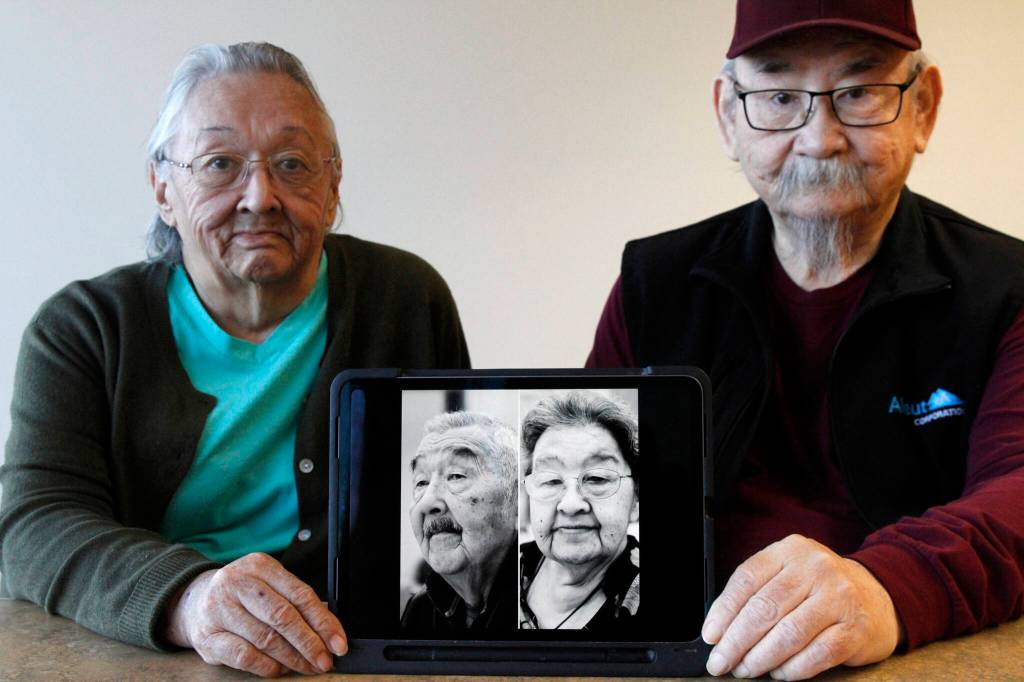
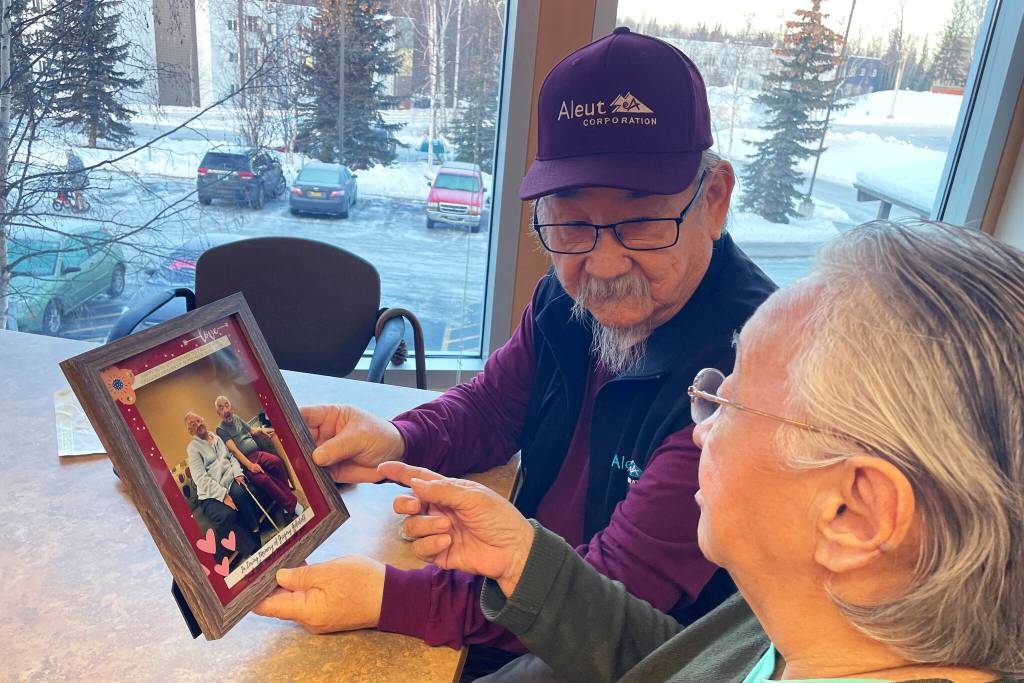
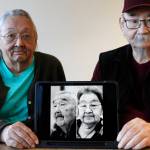
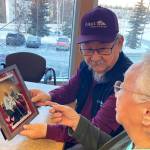
Pauline Golodoff, left, and George Kudrin hold an iPad featuring images of their deceased spouses, Gregory Golodoff and Elizabeth Golodoff Kurdrin, Friday, Dec. 1, 2023, in Anchorage, Alaska. Gregory and Elizabeth were the last two living residents of Attu, Alaska, whose entire population was captured by the Japanese during World War II and sent to Japan until being liberated after the war. The community of Attu was not rebuilt, and residents were resettled elsewhere, mostly in Atka, Alaska. (AP Photo/Mark Thiessen)

Pauline Golodoff, left, and George Kudrin hold an iPad featuring images of their deceased spouses, Gregory Golodoff and Elizabeth Golodoff Kurdrin, Friday, Dec. 1, 2023, in Anchorage, Alaska. Gregory and Elizabeth were the last two living residents of Attu, Alaska, whose entire population was captured by the Japanese during World War II and sent to Japan until being liberated after the war. The community of Attu was not rebuilt, and residents were resettled elsewhere, mostly in Atka, Alaska. (AP Photo/Mark Thiessen)

Death of last surviving Alaskan taken by Japan during WWII rekindles memories of forgotten battle

  • By Mark Thiessen, Associated Press
  • Sunday, December 10, 2023 9:33am
  • NewsWorld War II

ANCHORAGE — Gregory Golodoff spent most of his years on a quiet Alaska island, living an ordinary life, managing a co-op store, fishing for crab and serving as the village council president. But Golodoff’s recent death at the age of 84 has reopened a chapter of American history and stirred up memories of a long-forgotten Japanese invasion that prompted the only World War II battle on North American soil.

Golodoff was the last survivor among 41 residents imprisoned in Japan after Japanese troops captured remote Attu Island during World War II. He was 3 when the island was taken. He died Nov. 17 in Anchorage, his family said. His sister, Elizabeth “Liz” Golodoff Kudrin, the second-to-last surviving Attuan, died in February at 82. Three of their siblings died in captivity.

“The eldest generation has passed away to the other side,” said Helena Schmitz, the great-granddaughter of the last Attu chief, who died in Japan along with his son.

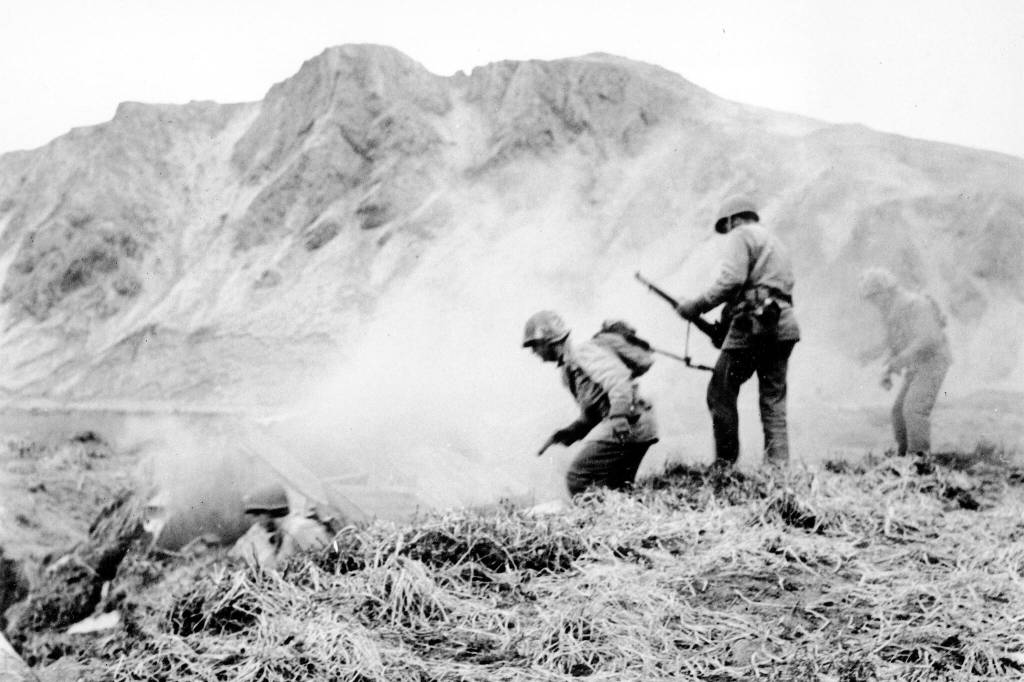
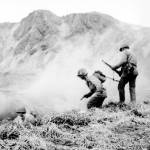
A U.S. squad armed with guns and hand grenades closes in on Japanese holdouts entrenched in dugouts during World War II on Attu Island, Alaska, in June 1943. Gregory Golodoff, who was 3 years old when his remote Alaska island was captured by Japanese troops and who became the last survivor among its 41 residents sent to Japan as prisoners, has died. The island of Attu in the Aleutian chain was one of just a few U.S. territories taken by enemy forces during the war, and the American effort to reclaim it amid frigid rain, dense fog and hurricane-force winds was the only battle of the war fought on North American soil. (U.S. Army via AP, File)

A U.S. squad armed with guns and hand grenades closes in on Japanese holdouts entrenched in dugouts during World War II on Attu Island, Alaska, in June 1943. Gregory Golodoff, who was 3 years old when his remote Alaska island was captured by Japanese troops and who became the last survivor among its 41 residents sent to Japan as prisoners, has died. The island of Attu in the Aleutian chain was one of just a few U.S. territories taken by enemy forces during the war, and the American effort to reclaim it amid frigid rain, dense fog and hurricane-force winds was the only battle of the war fought on North American soil. (U.S. Army via AP, File)

Attu is a desolate, mountainous slab of tundra, about 20 miles (32 kilometers) wide by 35 miles (56 kilometers) long, and sits between the North Pacific Ocean and Bering Sea on the volcanic Ring of Fire. It’s the most westerly island in the Aleutian chain — closer to Russia than mainland Alaska — and was one of just a few U.S. territories, along with Guam, the Philippines and the nearby island of Kiska, taken by enemy forces during the war.

The American effort to reclaim Attu in 1943 amid frigid rain, dense fog and hurricane-force winds became known as World War II’s “forgotten battle.” About 2,500 Japanese soldiers perished, many in hand-to-hand combat or by suicide; 28 survived. Roughly 550 U.S. soldiers died. Initially trained and equipped to fight in the North African desert, many suffered from frostbite and exposure due to inadequate gear.

Even after the surviving captives were freed at the close of the war, they were not allowed to return to Attu because the U.S. military decided it would be too expensive to rebuild the community. Most were sent to the island of Atka, about 200 miles (322 kilometers) away.

With the loss of their homeland, the Attuans’ language, Sakinam Tunuu, is now all but gone, spoken only by members of Schmitz’s immediate family. The distinctive basket-weaving style of the island is practiced by just three or four weavers, and not all are of Attuan descent. Schmitz runs a nonprofit named Atux Forever to revive the cultural heritage.

Much of what is known about the Alaska Natives’ time in Japan is chronicled in the book ” Attu Boy,” written by Golodoff’s older brother, Nick, with assistance from his editor, Rachel Mason, a cultural anthropologist with the National Park Service in Anchorage.

Pauline Golodoff, left, and George Kudrin hold an iPad featuring images of their deceased spouses, Gregory Golodoff and Elizabeth Golodoff Kurdrin, Friday, Dec. 1, 2023, in Anchorage, Alaska. Gregory and Elizabeth were the last two living residents of Attu, Alaska, whose entire population was captured by the Japanese during World War II and sent to Japan until being liberated after the war. The community of Attu was not rebuilt, and residents were resettled elsewhere, mostly in Atka, Alaska. (AP Photo/Mark Thiessen)

Pauline Golodoff, left, and George Kudrin hold an iPad featuring images of their deceased spouses, Gregory Golodoff and Elizabeth Golodoff Kurdrin, Friday, Dec. 1, 2023, in Anchorage, Alaska. Gregory and Elizabeth were the last two living residents of Attu, Alaska, whose entire population was captured by the Japanese during World War II and sent to Japan until being liberated after the war. The community of Attu was not rebuilt, and residents were resettled elsewhere, mostly in Atka, Alaska. (AP Photo/Mark Thiessen)

Mason knew the three siblings. Gregory and Liz had little memory of Attu or Japan, and neither liked to talk about it, she said.

Nick Golodoff, who was 6 when he was captured, had a childlike innocence about his time as a prisoner, Mason noted. The cover of his book featured a photograph of him riding on the back of a Japanese soldier, both smiling.

That experience was far from typical. Of the Attu residents interned in Japan, 22 died from malnutrition, starvation or tuberculosis. Schmitz’s great-grandfather, Mike Hodikoff, died with his son of food poisoning from eating rotten garbage while in Japanese captivity, the book noted.

Japanese soldiers landed on Attu Island on June 7, 1942, when residents were attending services at the Russian Orthodox church. Some ran for their rifles, but Hodikoff told them, “Do not shoot, maybe the Americans can save us yet,” according to the book.

Instead, the village radio operator, Charles Foster Jones, was shot and killed before he could alert authorities, becoming the only U.S. civilian killed by the invading forces in North America, according to a tribute to Jones by the National Oceanic and Atmospheric Administration.

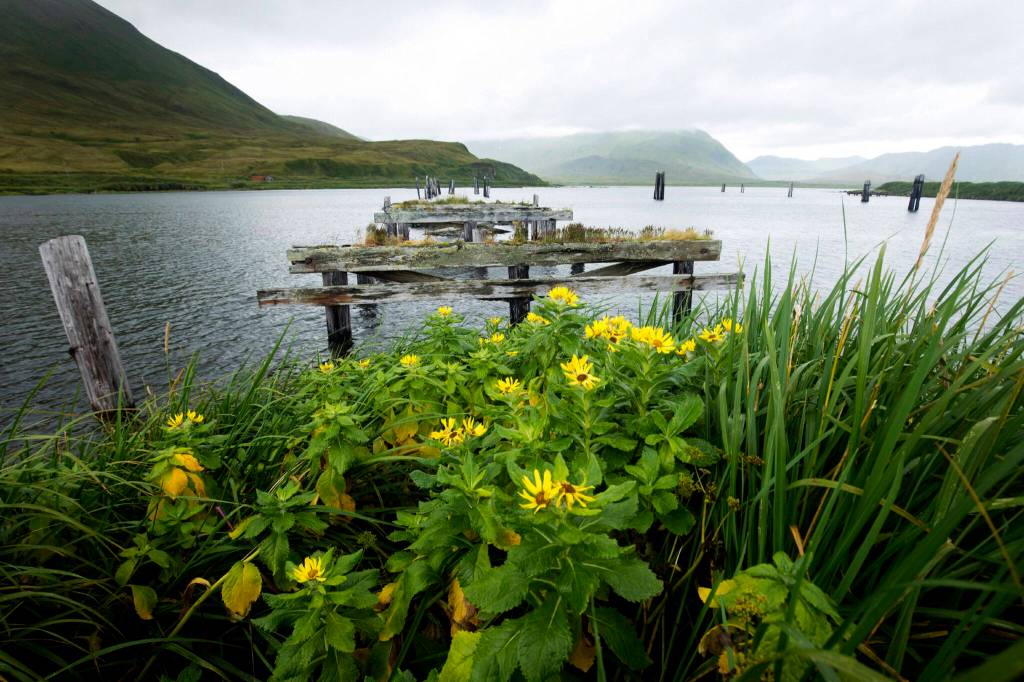
In this photo provided by the U.S. Fish and Wildlife Service, a remnant of World War II remains on Attu Island, Alaska, on Aug. 22, 2017. Gregory Golodoff, who was 3 years old when his remote Alaska island was captured by Japanese troops and who became the last survivor among its 41 residents sent to Japan as prisoners, died Nov. 17, 2023. The island of Attu in the Aleutian chain was one of just a few U.S. territories taken by enemy forces during the war, and the American effort to reclaim it amid frigid rain, dense fog and hurricane-force winds was the only battle of the war fought on North American soil. (Lisa Hupp/USFWS via AP, File)

In this photo provided by the U.S. Fish and Wildlife Service, a remnant of World War II remains on Attu Island, Alaska, on Aug. 22, 2017. Gregory Golodoff, who was 3 years old when his remote Alaska island was captured by Japanese troops and who became the last survivor among its 41 residents sent to Japan as prisoners, died Nov. 17, 2023. The island of Attu in the Aleutian chain was one of just a few U.S. territories taken by enemy forces during the war, and the American effort to reclaim it amid frigid rain, dense fog and hurricane-force winds was the only battle of the war fought on North American soil. (Lisa Hupp/USFWS via AP, File)

The other residents — all Alaska Natives except for Jones’ wife, a white teacher from New Jersey named Etta Jones — were kept captive in their homes for three months before being told to pack up and bring what food they could for the journey to Japan.

They first went to Kiska, another Alaska island; one Attu resident died on the way. Stuffed in the cargo hold of a ship, the others embarked on a two-week voyage to Sapporo, the largest city on Japan’s Hokkaido Island, where they were kept in four rooms in an abandoned dormitory. Only Etta Jones was separated from them and taken in a different boat to an internment facility in Yokohama, south of Tokyo.

One Japanese guard complained the Attuans ate better than the Japanese, but conditions worsened when the Alaskans ran out of the food they brought.

The Golodoffs’ mother, Olean, and others were forced to work long hours in a clay mine. As their numbers dwindled, she also became the cook for the surviving POWs, though there was little to make. She was reduced to gathering orange peels off the street and cooking them on top of a heater, said George Kudrin, who married Olean’s daughter Liz in Atka after he returned from the Vietnam War.

“I fed them to my children, and only then would they stop crying for a while,” Olean once told an interviewer.

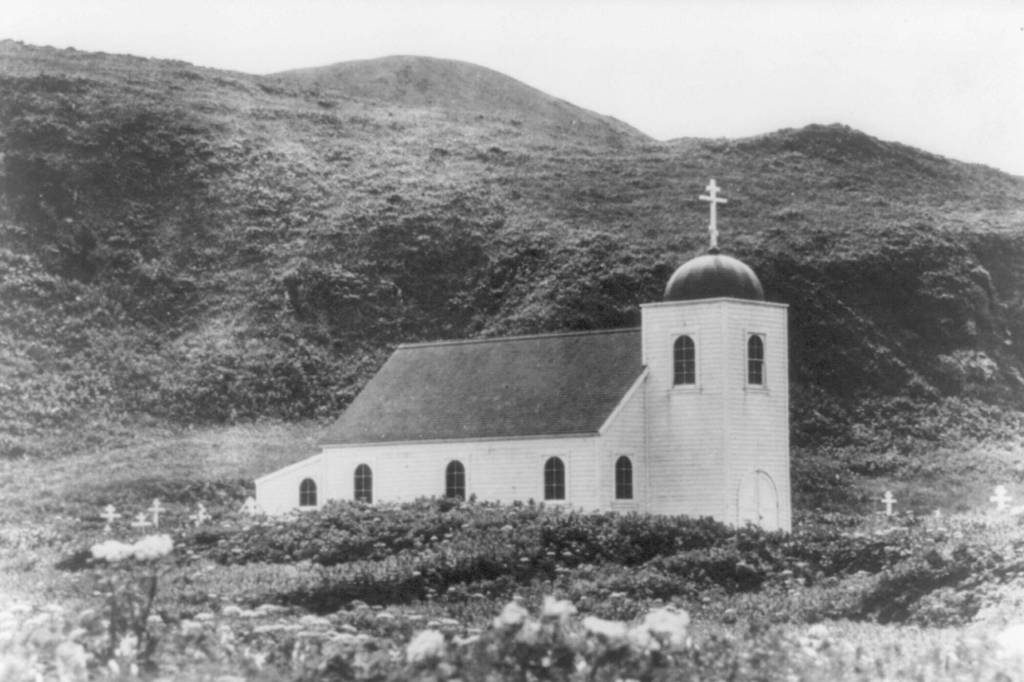
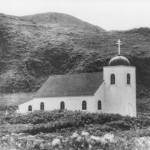
This photo provided by the Library of Congress shows the Russian Orthodox Church in Attu, Alaska, in 1938. Gregory Golodoff, who was 3 years old when his remote Alaska island was captured by Japanese troops and who became the last survivor among its 41 residents sent to Japan as prisoners, died Nov. 17, 2023. The island of Attu in the Aleutian chain was one of just a few U.S. territories taken by enemy forces during the war, and the American effort to reclaim it amid frigid rain, dense fog and hurricane-force winds was the only battle of the war fought on North American soil. (Courtesy of Library of Congress via AP)

This photo provided by the Library of Congress shows the Russian Orthodox Church in Attu, Alaska, in 1938. Gregory Golodoff, who was 3 years old when his remote Alaska island was captured by Japanese troops and who became the last survivor among its 41 residents sent to Japan as prisoners, died Nov. 17, 2023. The island of Attu in the Aleutian chain was one of just a few U.S. territories taken by enemy forces during the war, and the American effort to reclaim it amid frigid rain, dense fog and hurricane-force winds was the only battle of the war fought on North American soil. (Courtesy of Library of Congress via AP)

Her husband, Lawrence, and three of their seven children died in Japan. Nick Golodoff lived until 2013. Another son who survived captivity, John, died in 2009.

Kudrin said Olean didn’t speak of her experiences in Japan, and his wife, Liz, was too young to remember anything.

“She always knew that she was part of the history of World War II and she always said, ‘I am a survivor with my mama,’” he said.

American forces reclaimed Attu on May 30, 1943, after a brutal 19-day campaign. Much of the fighting was waged in dense fog amid winds of up to 120 mph (193 kph). Attu Island today is part of the Alaska Maritime National Wildlife Refuge and known more for being one of the top destinations in North America for groups dedicated to viewing birds, especially those from Asia.

Greg Golodoff’s wife of 50 years, Pauline, said he never spoke with her about his experience in Japan or about being the last living resident of Attu.

“I tried to ask him, but he didn’t want to talk about it,” she said.

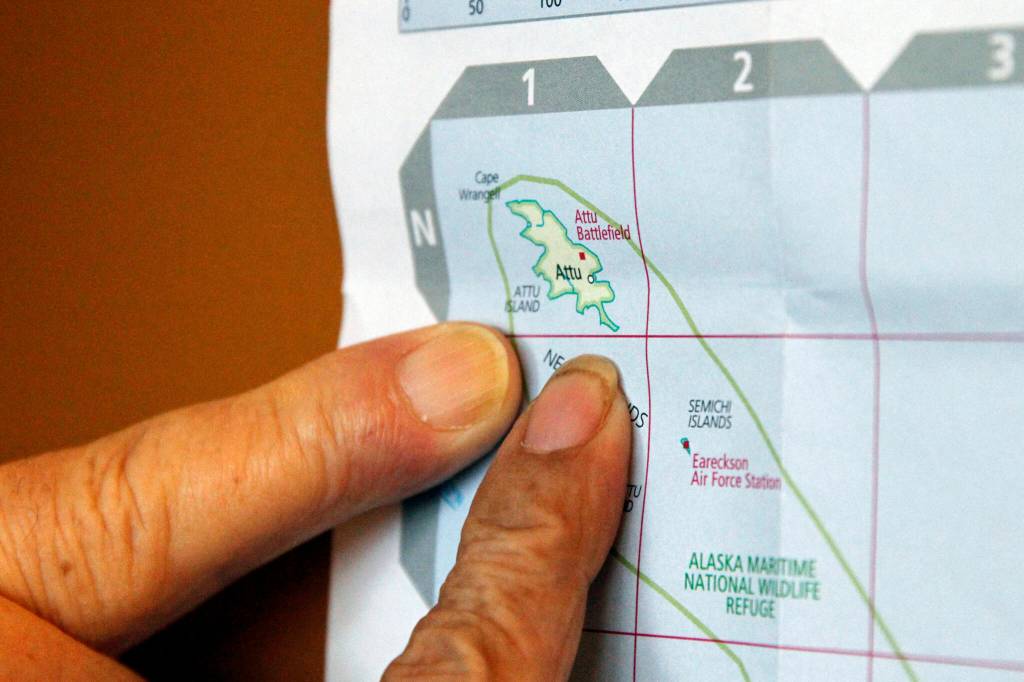
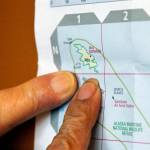
Pauline Golodoff and George Kudrin point to Attu Island, the most westerly in the Alaska’s Aleutian Islands, on a map, Friday, Dec. 1, 2023, in Anchorage, Alaska. Their deceased spouses, Gregory Golodoff and Elizabeth Golodoff Kurduin, were the last two living residents of Attu, Alaska, whose entire population was captured by the Japanese during World War II and sent to Japan until being liberated after the war. The community of Attu was not rebuilt, and residents were resettled elsewhere, mostly in Atka, Alaska. (AP Photo/Mark Thiessen)

Pauline Golodoff and George Kudrin point to Attu Island, the most westerly in the Alaska’s Aleutian Islands, on a map, Friday, Dec. 1, 2023, in Anchorage, Alaska. Their deceased spouses, Gregory Golodoff and Elizabeth Golodoff Kurduin, were the last two living residents of Attu, Alaska, whose entire population was captured by the Japanese during World War II and sent to Japan until being liberated after the war. The community of Attu was not rebuilt, and residents were resettled elsewhere, mostly in Atka, Alaska. (AP Photo/Mark Thiessen)

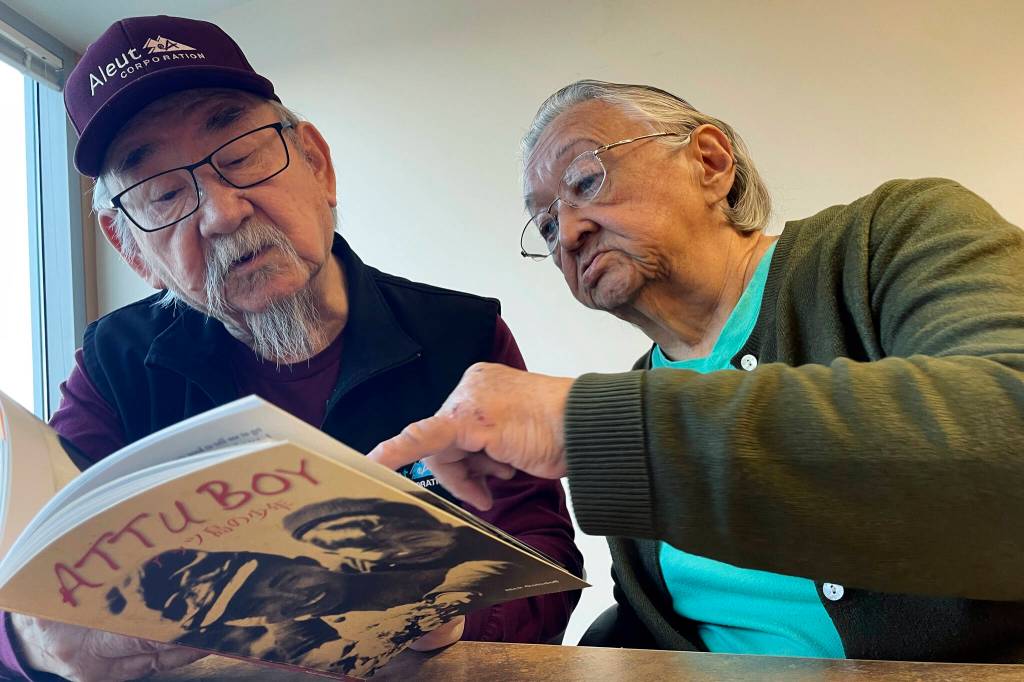
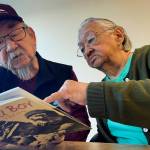
George Kudrin, left, and Pauline Golodoff look at a copy of the book “Attu Boy,” Friday, Dec. 1, 2023, in Anchorage, Alaska. Gregory Golodoff, Pauline’s late husband, and Elizabeth Golodoff Kudrin, George’s late wife, were the last two living residents of Attu, Alaska, whose entire population was captured by the Japanese during World War II and sent to Japan until being liberated after the war. “Attu Boy” was written by Nick Golodoff, who was Gregory and Elizabeth’s older brother. (AP Photo/Mark Thiessen)

George Kudrin, left, and Pauline Golodoff look at a copy of the book “Attu Boy,” Friday, Dec. 1, 2023, in Anchorage, Alaska. Gregory Golodoff, Pauline’s late husband, and Elizabeth Golodoff Kudrin, George’s late wife, were the last two living residents of Attu, Alaska, whose entire population was captured by the Japanese during World War II and sent to Japan until being liberated after the war. “Attu Boy” was written by Nick Golodoff, who was Gregory and Elizabeth’s older brother. (AP Photo/Mark Thiessen)

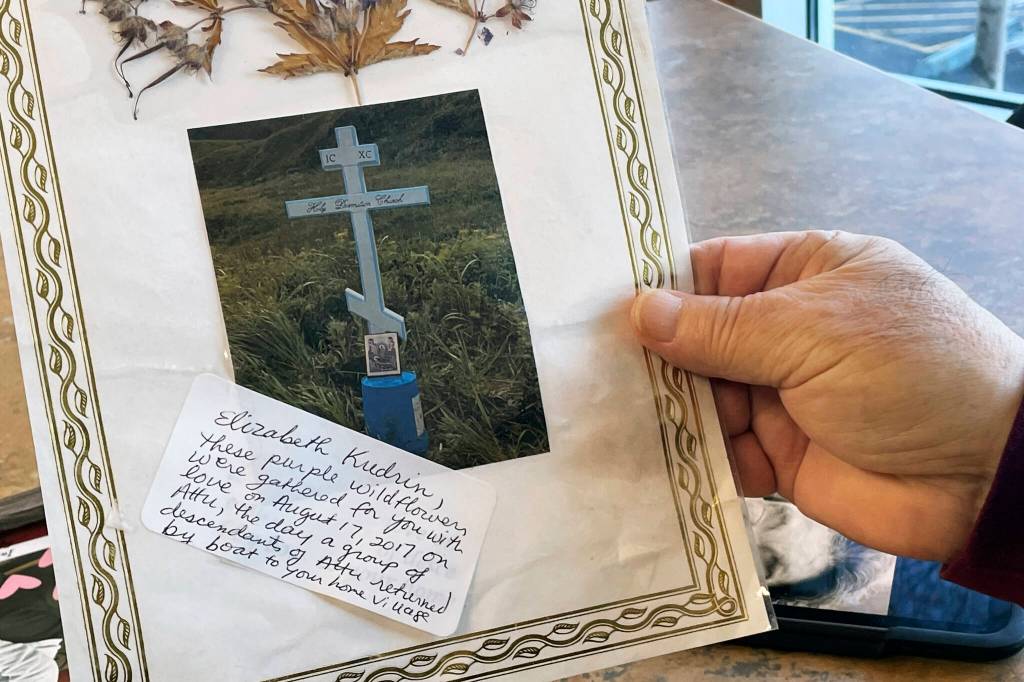
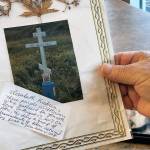
George Kudrin holds a photo of his wife’s grave, Dec. 1, 2023, in Anchorage, Alaska, with flowers gathered on Attu Island pressed inside the laminate cover. His wife was the second to last living descendant of Attu, Alaska, whose entire population was captured by the Japanese during World War II and sent to Japan until being liberated after the war. She died in February 2023, and her brother Gregory Golodoff, the last living Attu resident, died nine months after she did. (AP Photo/Mark Thiessen)

George Kudrin holds a photo of his wife’s grave, Dec. 1, 2023, in Anchorage, Alaska, with flowers gathered on Attu Island pressed inside the laminate cover. His wife was the second to last living descendant of Attu, Alaska, whose entire population was captured by the Japanese during World War II and sent to Japan until being liberated after the war. She died in February 2023, and her brother Gregory Golodoff, the last living Attu resident, died nine months after she did. (AP Photo/Mark Thiessen)

George Kudrin, left, and Pauline Golodoff hold a photo of Pauline and her late husband, Gregory Golodoff, Friday, Dec. 1, 2023, in Anchorage, Alaska. Gregory and his sister Elizabeth Golodoff Kudrin, George’s late wife, were the last two living residents of Attu, Alaska, whose entire population was captured by the Japanese during World War II and sent to Japan until being liberated after the war. The community of Attu was not rebuilt, and residents were resettled elsewhere, mostly in Atka, Alaska. (AP Photo/Mark Thiessen)

George Kudrin, left, and Pauline Golodoff hold a photo of Pauline and her late husband, Gregory Golodoff, Friday, Dec. 1, 2023, in Anchorage, Alaska. Gregory and his sister Elizabeth Golodoff Kudrin, George’s late wife, were the last two living residents of Attu, Alaska, whose entire population was captured by the Japanese during World War II and sent to Japan until being liberated after the war. The community of Attu was not rebuilt, and residents were resettled elsewhere, mostly in Atka, Alaska. (AP Photo/Mark Thiessen)

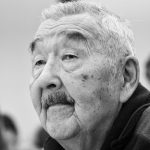
In this photo provided by the U.S. Fish & Wildlife Service, Gregory Golodoff attends a reunion in Alaska, May 18, 2018. Golodoff, who was 3 years old when his remote Alaska island was captured by Japanese troops and who became the last survivor among its 41 residents sent to Japan as prisoners, died Nov. 17, 2023. The island of Attu in the Aleutian chain was one of just a few U.S. territories taken by enemy forces during the war, and the American effort to reclaim it amid frigid rain, dense fog and hurricane-force winds was the only battle of the war fought on North American soil. (Lisa Hupp/USFWS via AP)

In this photo provided by the U.S. Fish & Wildlife Service, Gregory Golodoff attends a reunion in Alaska, May 18, 2018. Golodoff, who was 3 years old when his remote Alaska island was captured by Japanese troops and who became the last survivor among its 41 residents sent to Japan as prisoners, died Nov. 17, 2023. The island of Attu in the Aleutian chain was one of just a few U.S. territories taken by enemy forces during the war, and the American effort to reclaim it amid frigid rain, dense fog and hurricane-force winds was the only battle of the war fought on North American soil. (Lisa Hupp/USFWS via AP)

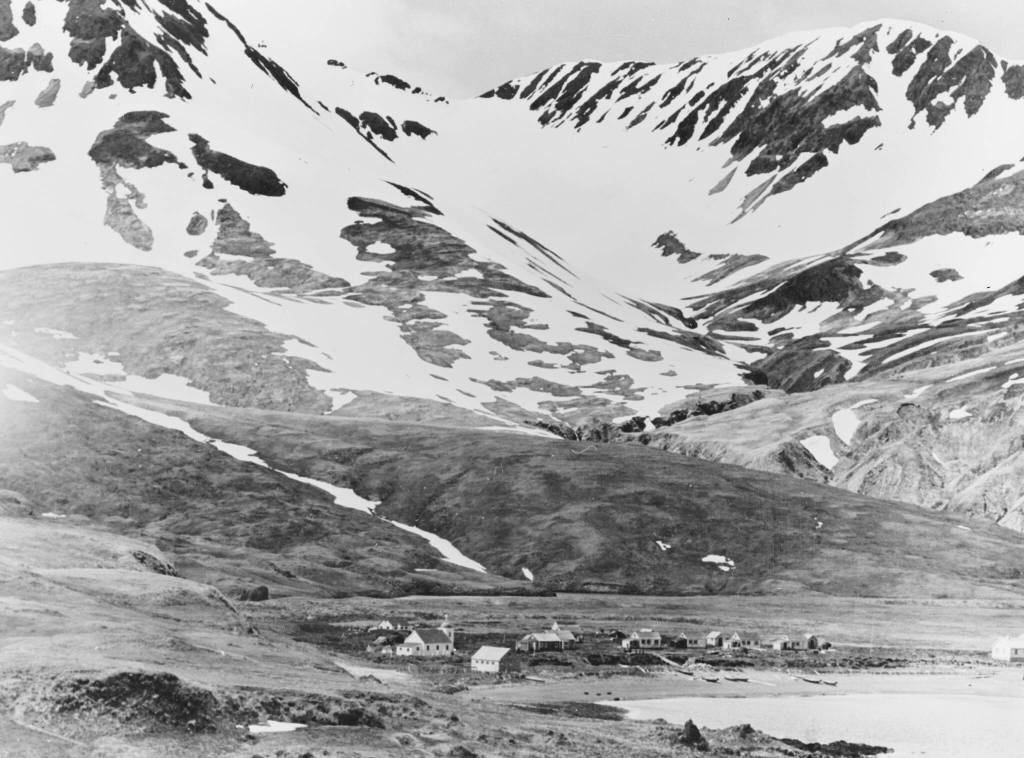
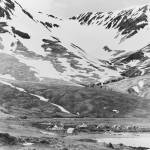
This photo provided by the Library of Congress shows the village of Attu, Alaska, in June 1937. Gregory Golodoff, who was 3 years old when his remote Alaska island was captured by Japanese troops and who became the last survivor among its 41 residents sent to Japan as prisoners, died Nov. 17, 2023. The island of Attu in the Aleutian chain was one of just a few U.S. territories taken by enemy forces during the war, and the American effort to reclaim it amid frigid rain, dense fog and hurricane-force winds was the only battle of the war fought on North American soil. (Courtesy of Library of Congress via AP)

This photo provided by the Library of Congress shows the village of Attu, Alaska, in June 1937. Gregory Golodoff, who was 3 years old when his remote Alaska island was captured by Japanese troops and who became the last survivor among its 41 residents sent to Japan as prisoners, died Nov. 17, 2023. The island of Attu in the Aleutian chain was one of just a few U.S. territories taken by enemy forces during the war, and the American effort to reclaim it amid frigid rain, dense fog and hurricane-force winds was the only battle of the war fought on North American soil. (Courtesy of Library of Congress via AP)

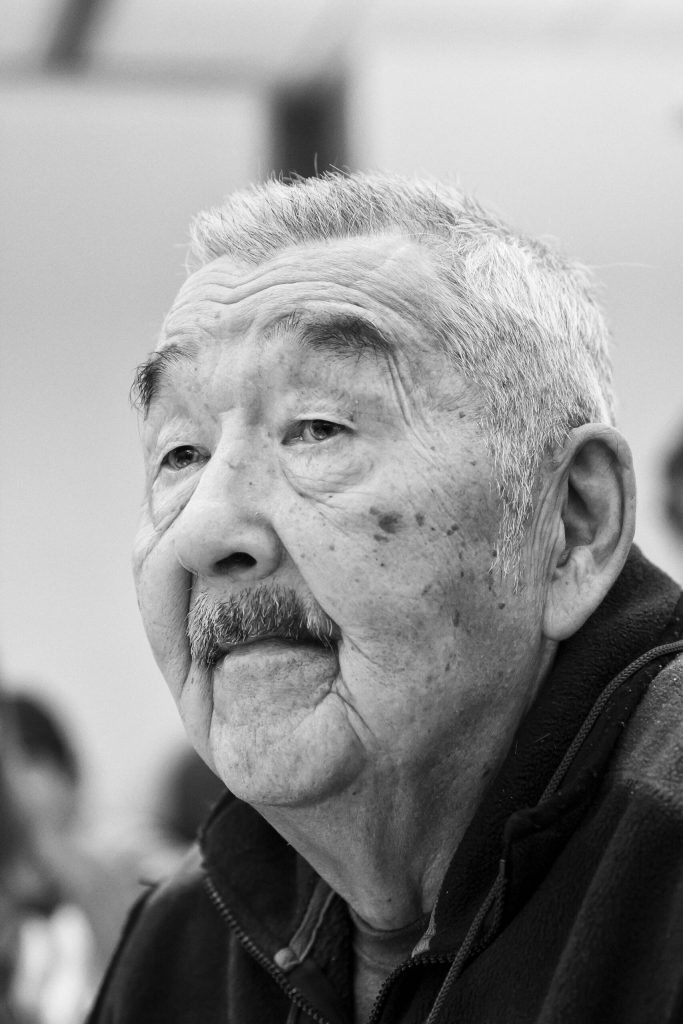
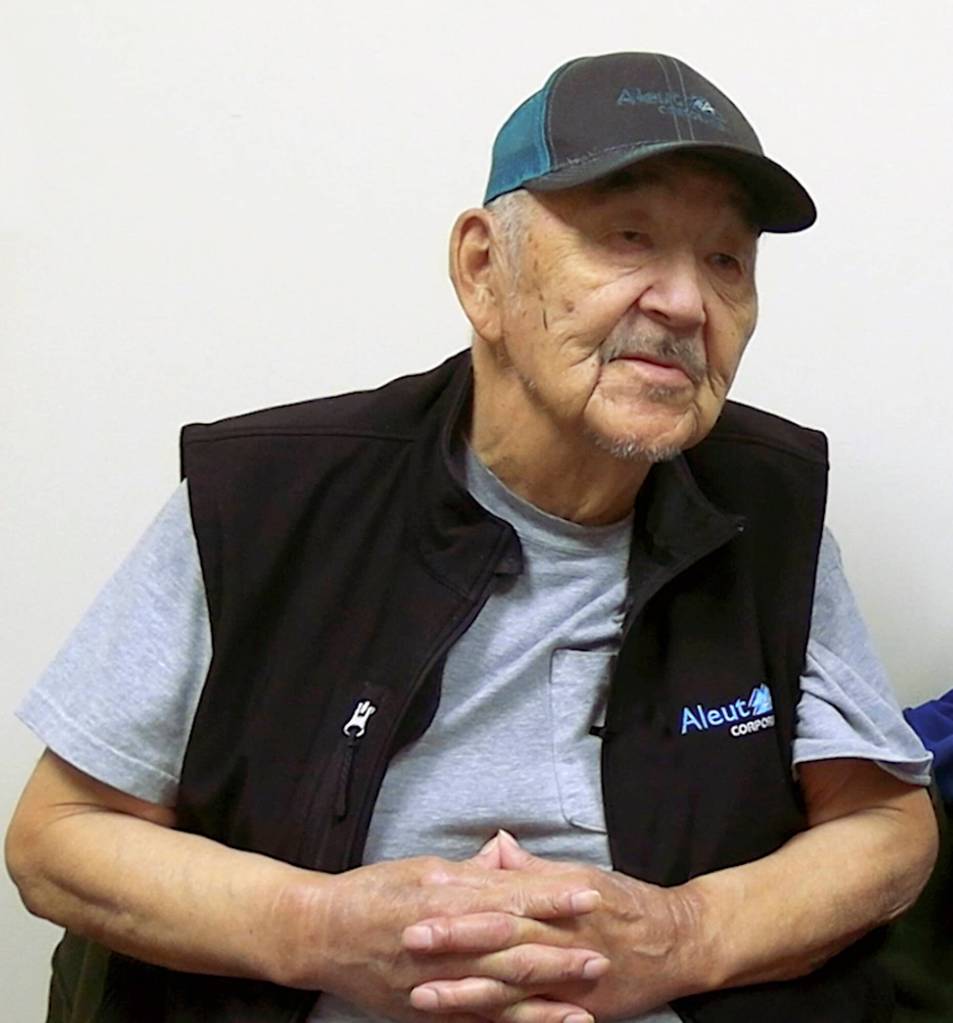
In this photo provided by Aleutian Pribilof Islands Association, Inc., Gregory Golodoff takes part in an interview, April 26, 2023, at the association’s office in Anchorage, Alaska. Golodoff, who died on Nov. 17, 2023, was the last living resident of Attu, Alaska, whose residents were captured by the Japanese in World War II. Residents were interned in Japan during the war, and most resettled in Atka, Alaska, after the war concluded. (Chrissy Roes/Aleutian Pribilof Islands Association, Inc. via AP)

In this photo provided by Aleutian Pribilof Islands Association, Inc., Gregory Golodoff takes part in an interview, April 26, 2023, at the association’s office in Anchorage, Alaska. Golodoff, who died on Nov. 17, 2023, was the last living resident of Attu, Alaska, whose residents were captured by the Japanese in World War II. Residents were interned in Japan during the war, and most resettled in Atka, Alaska, after the war concluded. (Chrissy Roes/Aleutian Pribilof Islands Association, Inc. via AP)

More in News

The northern lights are seen from the North Douglas launch ramp late Monday, Jan. 19. A magnetic storm caused unusually bright northern lights Monday evening and into Tuesday morning. (Chloe Anderson/Juneau Empire)
Rare geomagnetic storm causes powerful aurora display in Juneau

The northern lights were on full display Monday evening.

Students from the Tlingit Culture Language and Literacy program at Harborview Elementary School dance in front of elders during a program meeting in 2023. (Clarise Larson / Juneau Empire file photo)
Sealaska adds more free Tlingit language courses

The new course is one of many Tlingit language courses offered for free throughout the community.

teaser
New Juneau exhibition explores art as a function of cultural continuity

“Gestures of Our Rebel Bodies” will remain on display at Aan Hít through May.

teaser
Juneau protestors urge lawmakers to defund Homeland Security after Minneapolis killings

Hundreds gathered hours before congressional delegation voted on whether to extend ICE funding.

Kyle Khaayák'w Worl competes in the two-foot high kick at the 2020 Traditional Games. (Courtesy Photo / Sealaska Heritage Institute)
Registration opens for 2026 Traditional Games in Juneau

The ninth annual event will feature a college and career fair and international guest athletes.

Juneau School District Superintendent Frank Hauser provides an overview of restructuring options being considered during a Community Budget Input Session in 2024. (Mark Sabbatini / Juneau Empire file photo)
Juneau school district seeks public comment on superintendent search

The Juneau School District is in search of a new Superintendent ahead… Continue reading

The City and Borough of Juneau is at 5600 Tonsgard Ct. (City and Borough of Juneau photo)
Juneau recycling center closed, in need of repairs

The center is shut down due to mechanical issues with recycling equipment.

A statue of William Henry Seward stands outside the Dimond Courthouse in downtown Juneau. (Mark Sabbatini / Juneau Empire file photo)
Juneau man indicted on unclassified felony assault for Jan. 1 rape

Charging documents claim victim was left with soft-tissue swelling, larynx injury.

Gov. Mike Dunleavy gestures during his State of the State address on Jan. 22, 2026. (Photo by Corinne Smith/Alaska Beacon)
Alaska governor debuts fiscal plan, including statewide sales tax and guaranteed PFD

Gov. Dunleavy suggests 4% summer statewide sales tax, falling to 2% in winter; many municipal exemptions and caps would go away

Most Read