Book spotlights fishy stories at the heart of the state’s history
Published 10:30 am Monday, June 10, 2019

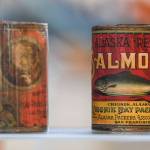
Canneries are some of the most historically important buildings in Alaska, even if not everyone realizes it, said Anjuli Grantham.
That’s one of the reasons Grantham edited the new book “Tin Can Country: Historic Canneries of Southeast Alaska,” which documents the 135 canneries established in the state from 1878 to the present day.
“It’s the story of Alaska, especially coastal Alaska,” Grantham told the Capital City Weekly ahead of her First Friday presentation at the Alaska State Library, Archives and Museum.
She said while many canneries were placed at the site of existing Alaska Native fishing villages, those settlements didn’t become year-round population centers until canneries.
“Nothing has shaped coastal Alaska such as the cannery industry,” Grantham said.
Canneries are also part of Grantham’s personal history.
She said during her presentation that she grew up exploring the remnants of a cannery at Packers Spit at Uganik Bay on the west side of Kodiak Island, where her family had a fish camp, a place where they harvested fish during the summer.
“I am here because the smell of salmon makes me giddy,” Grantham said.
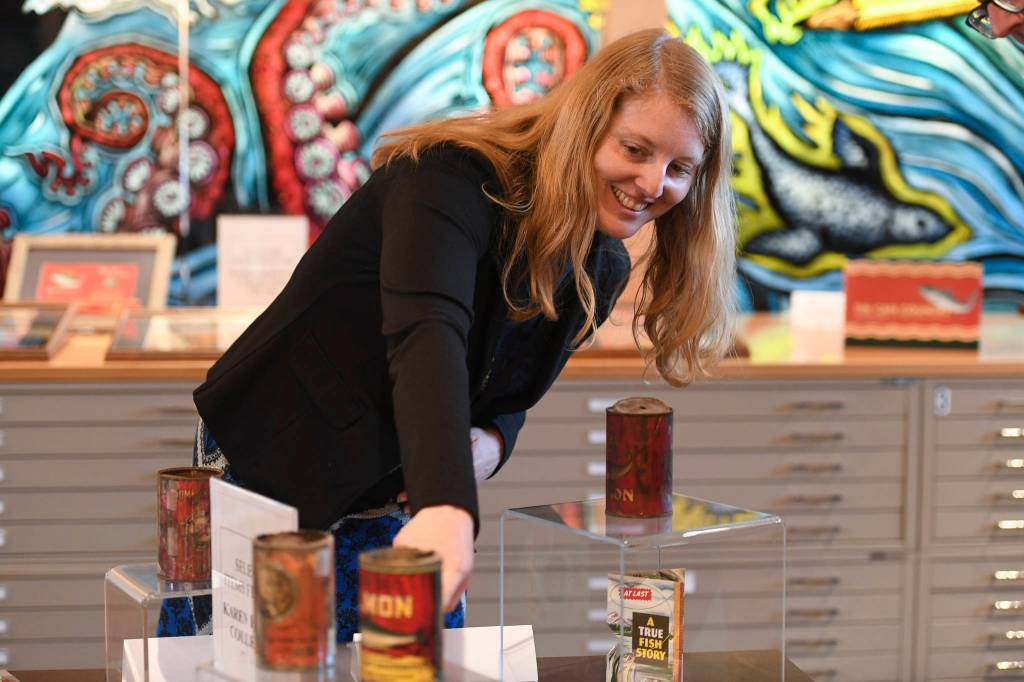
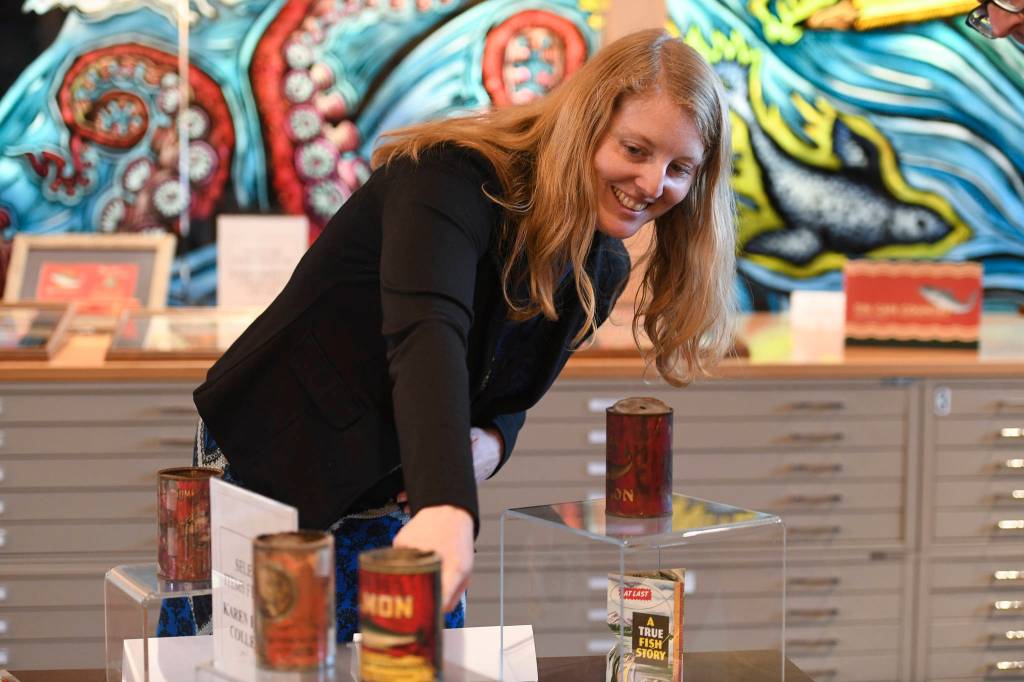
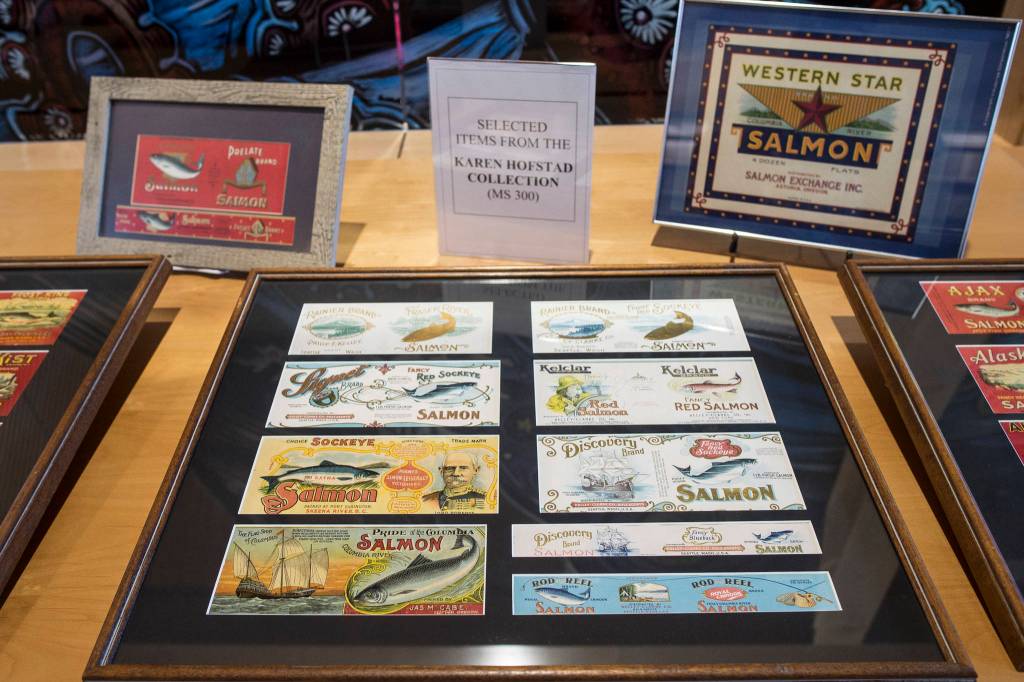
“Tin Can Country” isn’t just an offshoot of a lifelong love of salmon and interest in canneries. Grantham said it’s the culmination of decades of work by the late Pat Roppel of Wrangell, who was Grantham’s friend and mentor. The book also gets a lot of its look from salmon labels meticulously collected over 50 years by Karen Hofstad of Petersburg.
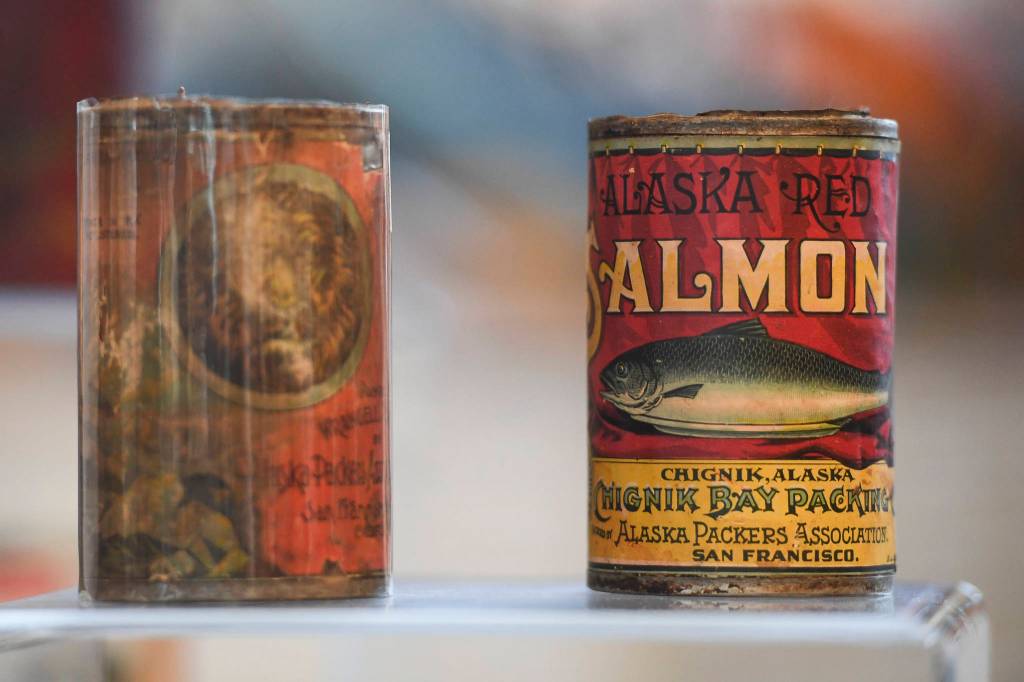
Grantham said not much is known about the actual artists who created the detailed drawings that adorn many of the crimson cans from the early 20th century.
“Some of them are very clearly related to the place they’re from,” Grantham said. “Some of them are totally fantastic representations of place.”
The labels also found their way into the lives of the people who lived near the fisheries.
Some labels from Hofstad’s collection displayed at the archives Friday had at one point served as makeshift stationery.
“The man who was writing describes the devastation of Spanish influenza in Bristol Bay,” Grantham said.
Colorful characters and Costco
Bob King, who also contributed to “Tin Can Country,” also spoke during the presentation. He covered one of the canneries’ most colorful characters — Roland Onffroy.
“He was one of those big idea guys who never followed through,” King said in an interview before his presentation. “His canneries went bankrupt constantly.”
In about three years, from 1901-1903 Onffroy spent millions of dollars on four separate attempts at making it big in the canned salmon business, King said.
[There’s a drought happening, but what does it mean?]
Onffroy was French nobility by birth, but moved to Canada and later New York. During the Klondike gold rush Onffroy became interested in Alaska, but only made it as far as Bellingham where he started his first failed cannery.
“The first cannery went broke because he didn’t have access to fish because he didn’t know what he was doing,” Onffroy said.
So the entrepreneur went back to the drawing board, raised funds and started a second slightly more successful cannery.
However, King said Onffroy had a reputation as a free spender who was more interested in sailing on his yacht than overseeing his business. Onffroy was about to be fired from the cannery he started, but ultimately quit instead.
Still hellbent on making money in canneries, Onffroy went to New York to raise more money, King said. Onffroy ultimately raised $13 million and began buying up fish trapping sites and canneries in Southeast and Southcentral Alaska.
The Frenchman’s goal was to start a consortium of all canneries, and King said at one point he owned one-third of Alaska’s canneries.
However, Onffroy overpaid for the sites and canneries he acquired, King said, so he did not have the funds necessary to buy Alaska Packers Association. That would ultimately be Onffroy’s undoing in the canned salmon business.
In 1903, the “Canned Salmon Wars” — a price-slashing competition between Alaska Packers Association and Onffroy’s outfit — began They didn’t last long, King said. Alaska Packers Association made a lot of money off selling canned sockeye, while Onffroy’s outfit relied on chum and pink salmon.
Alaska Packers Association undercut their competitors, and Onffroy soon had another bankrupt business on his hands.
King said at that point Onffroy was unable to attract new investors to a cannery, so he went back to New York, where he pitched the concept of a grocery and retail cooperative that would be so affordable and expansive that customers would pay to shop there.
More than 500 stores joined the cooperative, King said, but it went bankrupt anyway.
“To give him credit, while his company collapsed, his business model was pretty much the same used by Costco today,” King said.
• Contact reporter Ben Hohenstatt at (907)523-2243 or bhohenstatt@juneauempire.com. Follow him on Twitter at @BenHohenstatt.