Believe it or not, costs and damage of climate change are expanding in Juneau and elsewhere in Alaska
Published 9:30 pm Saturday, December 7, 2024




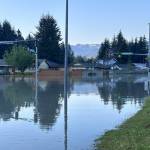


The impacts are the same whether or not people accept climate change is occurring: record floods damaging homes by the hundreds due to melting glaciers, extreme storms triggering fatal landslides, and drastically altered salmon populations swimming in more dangerously acidic seas.
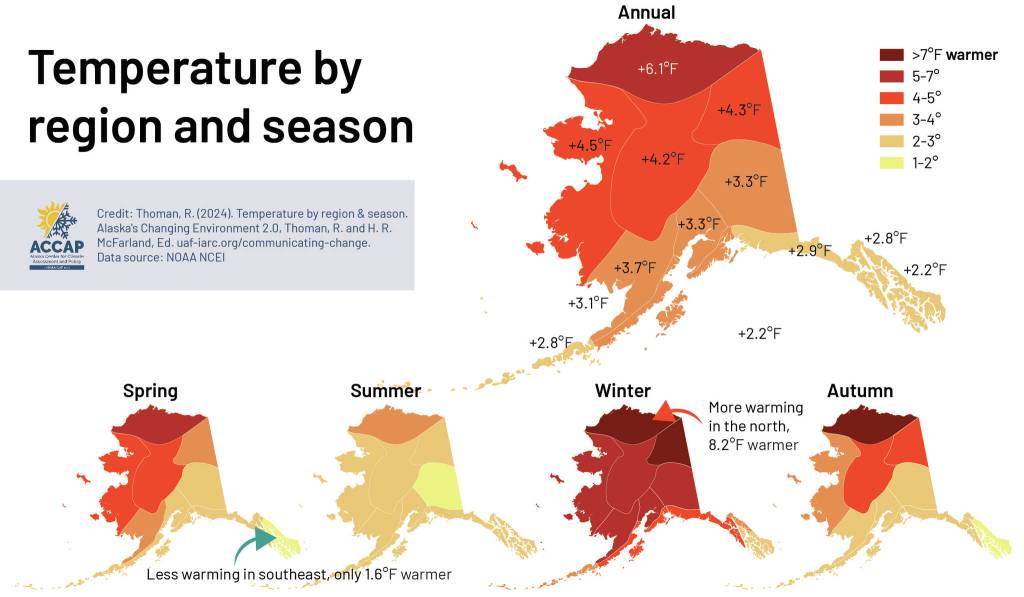
And while Southeast Alaska is experiencing other practical impacts from warmer and wetter weather — such as putting a damper on the length and quality of seasons at Eaglecrest Ski Area — the warming situation is a lot worse in the northernmost part of the state. While the average temperature in most of Southeast has increased 2.2 degrees Fahrenheit between 1974 and 2023, the northern region has increased 6.1°F.
As for the wetter part, Southeast is experiencing the worst of it with an increase of more than 10 inches of rain per summer on average during those 50 years, plus a rise in spring snow even though winter snow is declining.
Those findings are in a report titled “Alaska’s Changing Environment 2.0.″ that was released last week by the Alaska Center for Climate Assessment and Policy at the University of Alaska Fairbanks, updating the first such report released in 2019.
“In the five years since, extreme weather, climate and environmental events have become more frequent,” a summary of the report notes. “All regions of the state have been impacted, from landslides in Southeast and typhoon Merbok along the Bering Sea to long-term erosion and permafrost thaw in northwest Alaska.”
The study also notes the 50-year span of the study is misleading in terms of documenting the rate of temperature change since “six of the 10 warmest years since 1900 have occurred since 2010, and there hasn’t been a top-ten coldest year since 1975.”
Many of the study’s findings are consistent with a plethora of other studies that show Arctic regions warming far faster than the rest of the planet, and more extreme weather resulting in destructive storms, intense droughts, widespread wildfires and mass ecosystem changes. Meanwhile the political climate in the U.S. appears apathetic to the situation as President-elect Donald Trump and a Republican-led Congress are expected to roll back numerous measures intended to reduce climate change impacts.
“It’s probably almost as many positive changes as there are negative changes,” said Chris Wright, Trump’s nominee for Energy Secretary, in a Wall Street Journal story published Sunday. “Is it a crisis, is it the world’s greatest challenge, or a big threat to the next generation? No.”
But it has emerged as the biggest issue of concern for many residents and officials in Juneau due to glacial outburst floods from Suicide Basin that during the past two years have damaged or destroyed more than 300 homes, with officials predicting such flooding are likely to become a regular occurrence. Leaders from the local to federal level are now engaged in evaluating short- and long-term protection measures that could cost $100 million or more.
The Alaska climate report released last week singles out the flooding as one of its “spotlight events” and declares “weather had little to do with the floods.”
“They were instead driven by long-term thinning of the Mendenhall and adjacent glaciers from decades of warming,” the report states.
Other spotlight events include four fatal landslides in the past nine years in Southeast Alaska, major snowstorms that paralyzed Anchorage during portions of the past winter and Typhoon Merbok that caused damage to 40 communities along 1,300 miles of coastline in western Alaska in September of 2022.
Another major climate impact in Southeast is to fisheries, with the industry suffering from both extreme shortages and extreme surpluses of certain species. While the harm of salmon population collapses in some waters is self-evident, a “Southeast Alaska by the Numbers” report released in September noted seafood industry workers got 26% less in total wages in 2023 compared to the year before despite repeating the biggest harvest in a decade.
The Alaska climate report correlates those findings.
“Large sockeye and pink runs benefited many fisheries, but even these had disruptive effects,” the climate report states. “The record high Alaska sockeye salmon harvest in 2022, coupled with large harvests in Russia, led to a global market surplus and price collapse. Some processing plants closed, hurting coastal economies and leaving some fishers without a place to sell their catch. From 2022 to 2023, the Alaska seafood industry suffered a 50% decline in profits and $1.8 billion dollar loss in revenue due in part to the salmon fishery collapse.
As for population drops, “chinook salmon declines in Alaska are linked to climate extremes, including marine heatwaves, high river temperatures during the spawning run, and heavy fall rains when eggs are in the gravel,” according to the report. “Population declines are also linked to declining adult body sizes, associated with more competition at sea with highly abundant pink and chum salmon. Climate-linked changes in predators, prey and disease are also likely important factors. The Yukon chum salmon collapse was linked to lower food quality during recent marine heatwaves.”
Oceans are also becoming more acidic, which affected the health of other species including crab and shrimp, the report states.
“Alaska oceans are becoming increasingly corrosive to shell-building species, and our waters are a hotspot for ocean acidification,” the report notes. As an example it notes “in the Bering Sea, ocean models show that 50% of the summer bottom water in 2022 surpassed the threshold where juvenile king crab experience negative effects, compared to only 10% in the 1970s and 1980s.”
The report was released the same week Eaglecrest opened its 2024-25 season, albeit with only one short lift on its beginner hill after the accumulation of two heavy snowstorms was largely dissolved by heavy rain much of last week. Officials at the ski area also met twice to discuss the resort’s uncertain financial situation, including a future that is largely dependent on an expansion to year-round tourism with a gondola providing summer to summer visitors.
Much of the concern is based on the city-owned ski area not being able to be self-sustaining during the winter and the climate report suggests those concerns are well-grounded.
“The snow season is changing across Alaska,” the report states. “It is typically about two weeks shorter than it was several decades ago. The greatest shift occurs in the spring. The spring date when half of the state has no snow is now 11 days earlier compared to only three days later in autumn. As temperatures continue to rise, the numbers of days per year with snow cover will greatly decrease.”
• Contact Mark Sabbatini at mark.sabbatini@juneauempire.com or (907) 957-2306.