Begich comes out for salmon measure
Published 11:02 am Friday, September 7, 2018
Depending on who’s telling the tale, the Stand for Salmon ballot measure — up for a vote at the Nov. 6 general election — will either kill jobs or protect salmon habitat.
Friday favored the measure’s supporters.
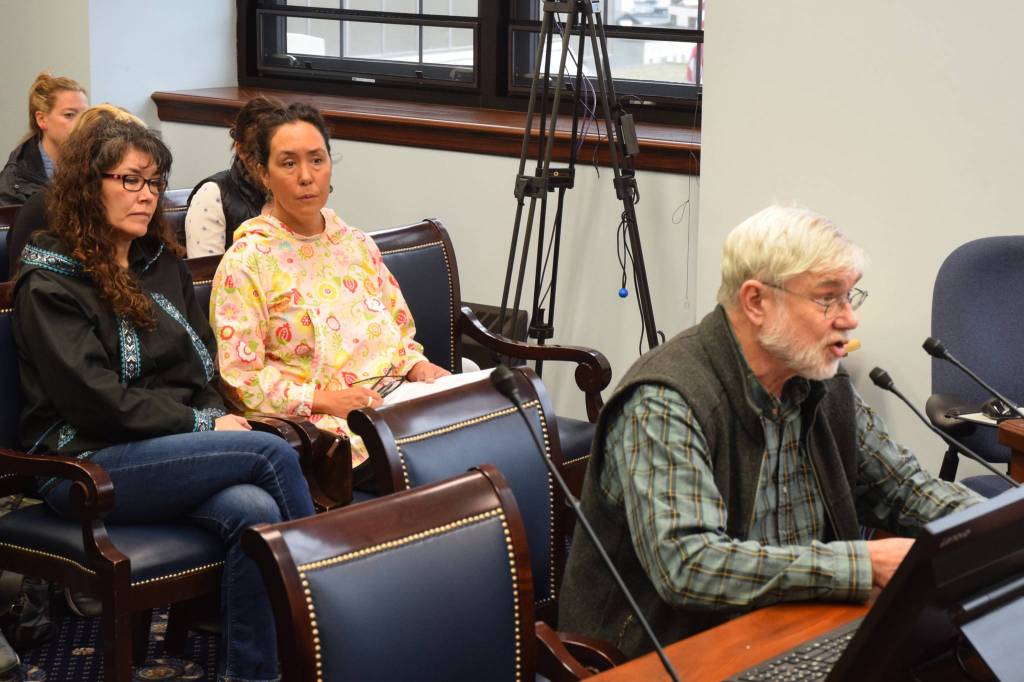
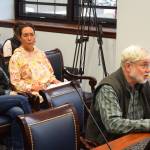
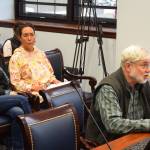
Democratic gubernatorial candidate Mark Begich announced his support on Friday for Ballot Measure 1, the same day Juneau residents spoke for the measure by a tally of 13-4 at public testimony at the Alaska Capitol.
^
At testimony, a plea to read
About 20 people showed up for a weekday morning public testimony. Most spoke in support of the Ballot Measure 1, which would add a language to the Alaska Department of Fish and Game’s permitting processes for development on salmon habitat.
Millions have been spent on both sides of the measure. Opposition group Stand for Alaska has raised over $9 million, mostly from mines and the oil and gas industry. Yes for Salmon, the group backing the bill, has raised $1,120,000.
Lindsay Bloom, who spoke in support of the measure, advised against listening to the spin on either side. Misleading talking points and advertising campaigns are distracting voters from doing what they should, she said: read the eight-page measure themselves.
“The spin that you’re hearing, the $10 million worth of advertising that’s been purchased on your TVs, your radios, your internet, pretty much everywhere you look — please just remember where that’s coming from, who’s paying for it and use your hearts and your minds to make your careful, soulful, thoughtful decision about what matters to you,” she said.
Retired fisheries biologist Roger Harding also spoke for the measure. He addressed the criticism that Ballot Measure 1 treats the entire state as fish habitat.
The measure puts the onus on developers to prove that they’re not building on certain anadromous fish habitat (anadromous fish, like salmon, that live in both fresh and salt water).
Habitat managers in Alaska have to have “two fish in hand,” Harding said, to prove that a water body holds anadromous fish.
He called that the “gold standard,” for proving a water body holds anadromous fish. But it’s costly.
“As you can imagine, this takes a fair amount of time and effort to send people out in the field and collect, trap fish,” Harding said.
Estimates vary, but about 50 percent of the anadromous waters have been identified, Harding said. Much of the waters where biologists have “two fish in hand” are connected to water bodies that haven’t yet been studied. Instead of sending biologists out to every river and stream to catalogue the entire state, it makes more sense, Harding argued, to treat all the state’s water as anadromous fish habitat — most of it, he said, likely is.
Four people spoke against Ballot Measure 1 on Friday.
Republican House District 34 candidate Jerry Nankervis said he worries for the future of Juneau’s economy if Ballot Measure 1 passes. Hecla Greens Creek mine and Kensington Mine are two of Juneau’s largest private sector employers.
Stricter habitat protections under new permitting law would jeopardize their ability to stay in business, Nankervis said.
“I believe it to be misguided, onerous and unnecessary … as a Juneau resident, I fear what this will do, or has the potential to do, to infrastructure projects in this community and some of our employers in this community,” he said.
When it floods in Seward, the airport runway is fish habitat, said Dorene Lorenz, who testified against the measure. The ballot measure’s language is too unforgiving, she said.
“The framers of this act have good intentions,” Lorenz said, but Alaska is a big state, and Ballot Measure 1 wouldn’t fit all of it’s needs.
“When you put big ideas forward with state impact, you have to take the time to vet out unintended consequences like declaring airport runway as designated spawning habitat,” she said.
State law requires a minimum of two public hearings on the initiative in each of Alaska’s four judicial districts. A schedule for public testimony can be found at notice.alaska.gov/189769.
A statewide teleconference session for public testimony will take place on Saturday, Oct. 13 at 1-3 p.m. Juneau callers can dial 586-9085.
Public testimony has been used to create an answer sheet for frequently asked questions about Ballot Measure 1. That’s available at https://aws.state.ak.us/OnlinePublicNotices/Notices/Attachment.aspx?id=114005.
^
Begich backs measure
Begich announced his support for Ballot Measure 1 with a Friday press release, citing economic reasons.
“In Alaska fish are a way of life, as well as $2 billion industry with over 30,000 jobs behind it. I have always been a staunch defender of subsistence rights and Alaska’s fish and that is why I watched carefully to see what would happen with the Supreme Court and Proposition 1,” Begich said. “I am proud to say that I am the only candidate for Governor who will truly stand for Alaska’s salmon and support Proposition 1. As Governor I will continue my proven record of protecting our natural resources while ensuring we are able to permit responsible development projects in a timely manner as I have done all my career whether in the public or private sector.”
A few hours after Begich announced his support, Republican candidate Mike Dunleavy sent out a press release saying he “stands tall” against Ballot Measure 1.
“Ballot Measure 1 threatens responsible resource development in the State of Alaska, a state whose very existence is predicated on its ability to development its resources. But Ballot Measure 1 goes further than that: It jeopardizes infrastructure in communities across the state, including rural Alaska, affecting everything from runways and wastewater treatment to road construction,” Dunleavy wrote in the release.
Gov. Bill Walker opposes the measure.
• Contact reporter Kevin Gullufsen at 523-2228 and kgullufsen@juneauempire.com. Follow him on Twitter at @KevinGullufsen.