Roadless Rollback? Dunleavy and Trump eye Tongass National Forest
Published 3:00 am Thursday, August 29, 2019
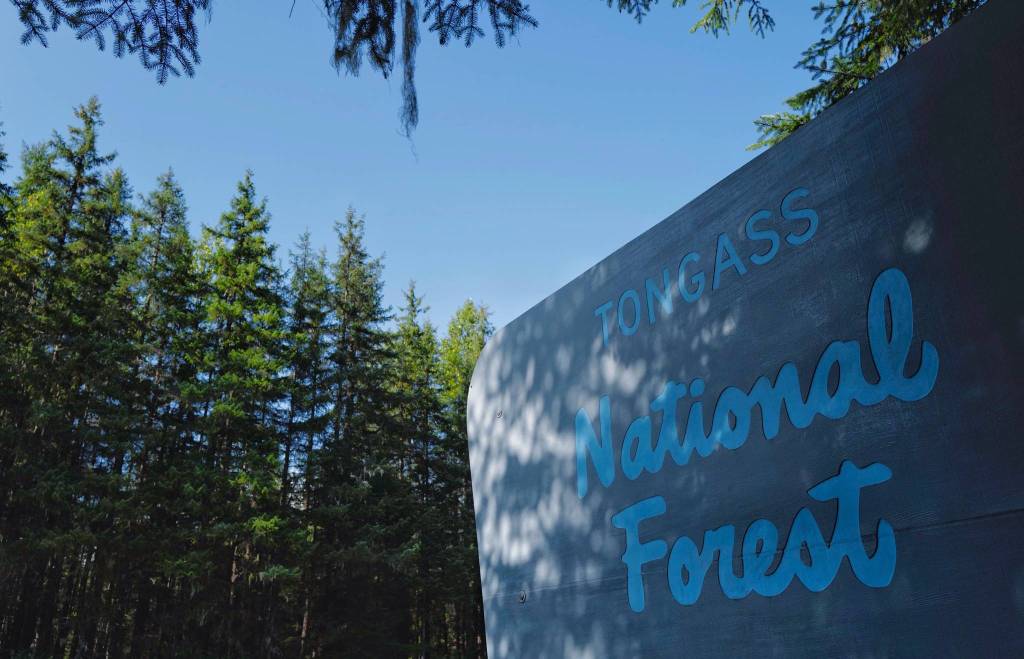
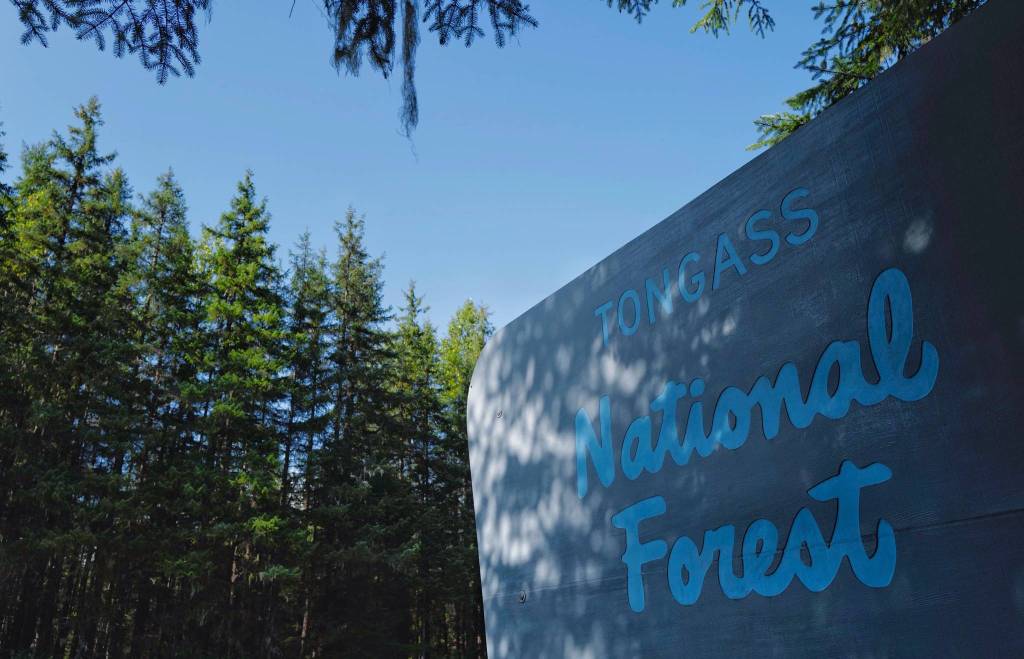


The Tongass National Forest is the largest national forest in the United States, at roughly 16 million acres, or slightly more area than West Virginia. It’s also one of the largest remaining temperate rainforests in the world, protected by rules prohibiting logging.
But Gov. Mike Dunleavy and the Trump administration reportedly want to change that.
“Our general belief is if the Trump administration is moving in this direction, we think it’s very much appropriate,” said Dunleavy’s spokesperson, Matt Shuckerow, in a telephone interview. “Without timber in the United States, I don’t know how we build a home, how to build construction.”
A report by the Washington Post indicated sources within the Trump administration confirmed the president’s desire to roll back protections called the “Roadless Rule,” which exempts more than 9 million acres of Tongass from development. Nearly 6 million further acres are designated as wilderness, barring them from development in perpetuity.
“This one-size-fits-all rule – issued by the Clinton administration in its final days in office – should have never applied to Alaska,” said Sen. Dan Sullivan, R-Alaska, in a quote shared by his communications director Mike Anderson. “That’s why I took the opportunity to voice these views directly to Secretary (of Agriculture Sonny) Perdue and President Trump on numerous occasions in the past several weeks.”
Dissenting voices
The opinion that the Tongass is ripe for logging and other economic development is not a universally beloved one.
“That could have a very devastating effect, as we’ve witnessed over the years of clear-cut logging,” said Joel Jackson, president of the Organized Village of Kake. “As time goes on, with everything getting tight, with the governor cutting everything, the rural villages are going to be relying heavily on hunting and fishing and gathering.”
Dunleavy has been accused of antipathy toward Alaska Native villages by Native leaders, allegedly demonstrated through his attempts to cut funding to many services critical to their safety and way of life. Opening the Tongass’ roadless-rule protected areas would threaten the hunting and fishing grounds many Alaska Natives rely on for deer and salmon.
Record warm water blamed for salmon deaths
“I talked to the tribes, I talked to fishermen, I talked to people on the ground, everyone knows what’s going on,” said Dominick DellaSala, president and chief scientist of the Geos Institute. “This is food on our table and we can’t get that food because of what’s going on,”
Logging has the effect of removing top cover and stabilization offered to streams by the trees, DellaSala said. This makes streams both more murky and warmer, both of which negatively impact salmon’s willingness and ability to swim up them to reproduce.
“It’s going to be devastating, because we rely heavily on the streams for the fish,” Jackson said. “We work all summer to catch enough fish and it’s getting tougher and tougher to do that because there’s less and less fish.”
Dan Cannon, Tongass Forest program manager with the Southeast Alaska Conservation Council, said it makes no sense to open the Tongass up to new roads. SEACC is a nonprofit dedicated to responsible and environmentally sustainable use of the land and waters of the region.
“These areas are really important to Alaska Natives,” Cannon said. “These are their sacred lands.”
The next Amazon?
“There’s been a lot of attention about what’s going on in Brazil right now, as the president of Brazil has lifted environmental protections for the tropical rainforest,” said DellaSala. “Are we headed for the same thing now? With our president wanting to open up vast tracts of roadless areas?”
Massive fires in the Amazon captured international attention this summer, both for the vast scale of the human-initiated infernos and Brazilian President Jair Bolsonaro’s response to international uproar over his inaction as the rainforest burns, reducing its capability to generate fresh oxygen, and releasing millions of tons of carbon into the atmosphere, hastening climate change.
The Tongass is unique, not just in its size, but the biodiversity of the region imparted by its old-growth status and the sheer amount of carbon tied up in the trees that will be released by logging.
“The Tongass is exceptionally rare, as it’s holding on to 8 percent of all the carbon in the Lower 48 states,” DellaSala said. “It’s got a massive amount of carbon compared to the Lower 48.”
Carbon is produced by burning fossil fuels, but also by burning or cutting down trees, said DellaSala. Conversely, it can be trapped in trees, which absorb it from the atmosphere and trap it in their trunks. Old-growth trees, which have been around for hundreds of years, are particularly impregnated with atmospheric carbon, removing it from the atmosphere and stabilizing the local climate.
Much of the carbon is released by burning it, but even if the logs are cut down and left to rot, the carbon still returns to the atmosphere. This happens alarmingly often with old growth wood.
“They can’t use 70 percent of the trees cut down because of defects. I was stunned about how much was left, how much is wasted,” DellaSala said. “We know the defect in young trees is about 1 percent. The kinds of trees they would be logging over a smaller footprint with less climate impact have 1 percent defect.”
Defect means rot or other inconsistencies in the trees, making them useless as lumber. While old-growth trees can exhibit a defect rate as high as 70 percent, DellaSala said, younger trees grown on a rotating, sustainable model typically demonstrated less than a 1 percent defect rate.
Economic viability
“If you put in these roads and clear cut the forests, the tourism industry isn’t going to want to go here,” said Mary Catharine Martin, communications director with Salmon State, a nonprofit aimed at responsible fishing and ecological practices to ensure the long-term viability of Alaska’s fishing industry. “More than a million people a year don’t come to Southeast Alaska to see clearcuts.”
Tourism and fishing bring in more than $2 billion a year for Alaska, Martin said.
“The logging industry, if you look at the economy, is less than 1 percent of the economy,” said Jackson.
The United States Forest Service, responsible for the administration of national forests, actually loses a significant amount of taxpayer money every year, Cannon said, bleeding more than $20 million per year for more than a decade attempting to maintain logging roads in the rough terrain.
“There’s $68 million in backlogged maintenance on roads in the Tongass,” Cannon said. “It makes no sense to open up more roads.”
This money, effectively constituting subsidies for the paltry timber industry here, should not be wasted hurting the only actually viable industries in the region, Martin said.
“Responsible, selective, small scale timber harvest is one thing,” Martin said. “Rolling back the roadless rule to put roads across and clearcut 9 million acres of previously protected Tongass is quite another.”
Not everyone agrees.
“The vast vast majority of the Tongass is set aside and protected,” said Robert Venables, executive director of the Southeast Conference, an economic-development organization for Southeast Alaska, referring to the roughly 40 percent of the Tongass protected as wilderness. “Zero roads could be built tomorrow because it’s a public process.”
Venables argued the Roadless Rule makes any economic development in the region wildly cost-inefficient, no matter what good it would do for the community.
“It’s going to be a public process going forward. We should look at the facts,” said Venables. “What does the region need? Let’s work the process and help the region grow.”
• Contact reporter Michael S. Lockett at 523-2271 or mlockett@juneauempire.com.