Sitka’s first postmistress forged her own path
Published 1:58 am Thursday, November 30, 2017

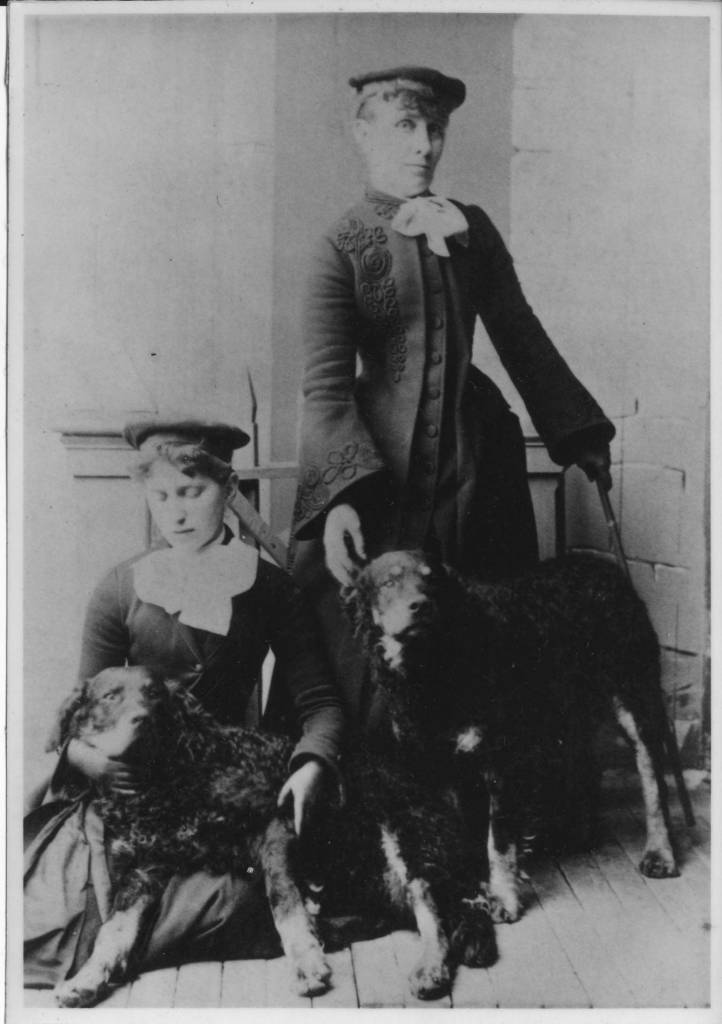


The westward expansion of the United States did not just open new lands to eager settlers; it opened new doors of opportunity for women. Nineteenth century social ideals limited a woman’s sphere to home and family, but the demands of the western experience pushed women to venture beyond accepted standards of feminine behavior and find independence as homesteaders and entrepreneurs. A child of westward expansion, Sitka’s former postmistress Paulina Cohen challenged prescribed notions of womanhood as a businesswoman, artist, and avid traveler.
Born in 1859, Paulina Cohen grew up in the gold camps of California. Just nine years before her birth, Paulina’s parents, Bertha and Abraham, had emigrated from Prussia, where Abraham had trained as a brewer. Seldom in one place for very long, the Cohen family followed the gold discoveries north, operating breweries as they went in San Francisco, Portland, and British Columbia.
In 1867, Russia transferred its claims on Alaska to the United States. Enticed by new opportunity, Paulina’s father quickly secured passage to Sitka, established partnerships, and opened the Sitka Brewery in 1868. He became one of the first Jewish merchants in the town. Paulina, her siblings, and mother Bertha joined Abraham a few years later. From the beginning, Paulina was an instant favorite among Sitkans.
“The best masked ball this year was given by the Kohens (sic) who caused everyone to get inebriated with beer of his own manufacture. Many of the visitors were interested not so much in the reception by the hospitable hosts as in their newly arrived daughter, Pauline, good looking young girl who likes to dance.” –Stephen Ushin, 1874.
Influenced by her family’s hard-working, industrious nature, as an adult Paulina proved a strong businesswoman and an active member of the community. In 1878, Paulina began teaching. By 1887, she also held a job at the post office. When the postmaster retired in 1890, Paulina received the appointment. She held the position for a decade and became the first to offer a money order service in Sitka. She only stepped down in 1900 in order to run the Baranof Hotel. Paulina also remained involved in her family’s brewery. When the Organic Act of 1884 prohibited the manufacture and sale of alcohol, Paulina worked to keep her family’s business afloat by applying to the Department of the Interior for a license to produce beer for “medicinal” purposes.
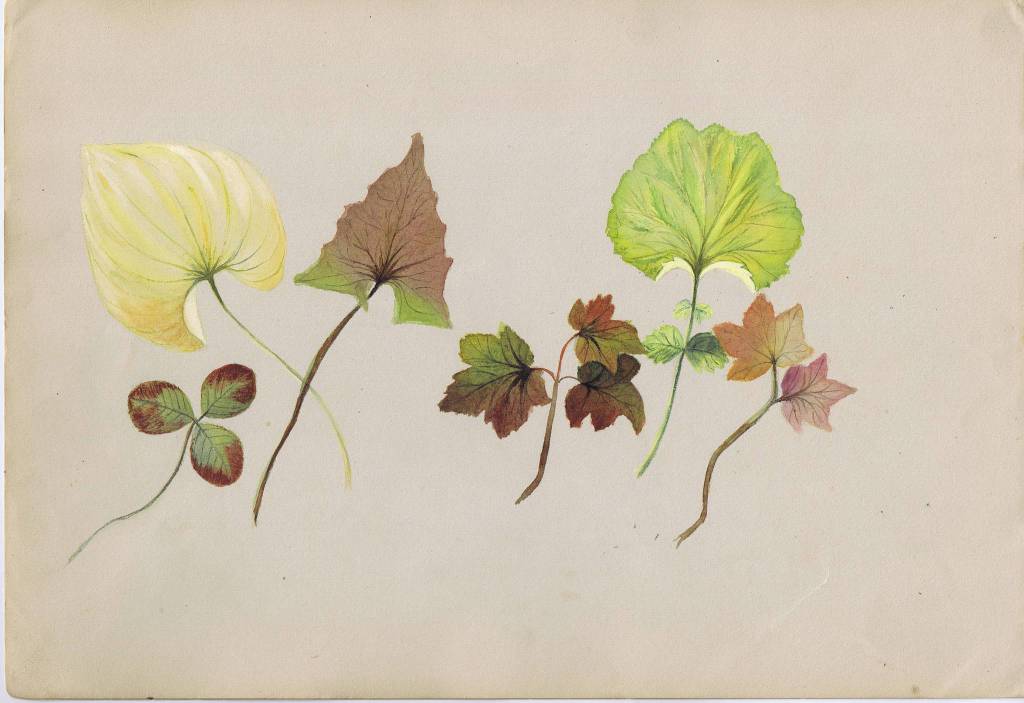
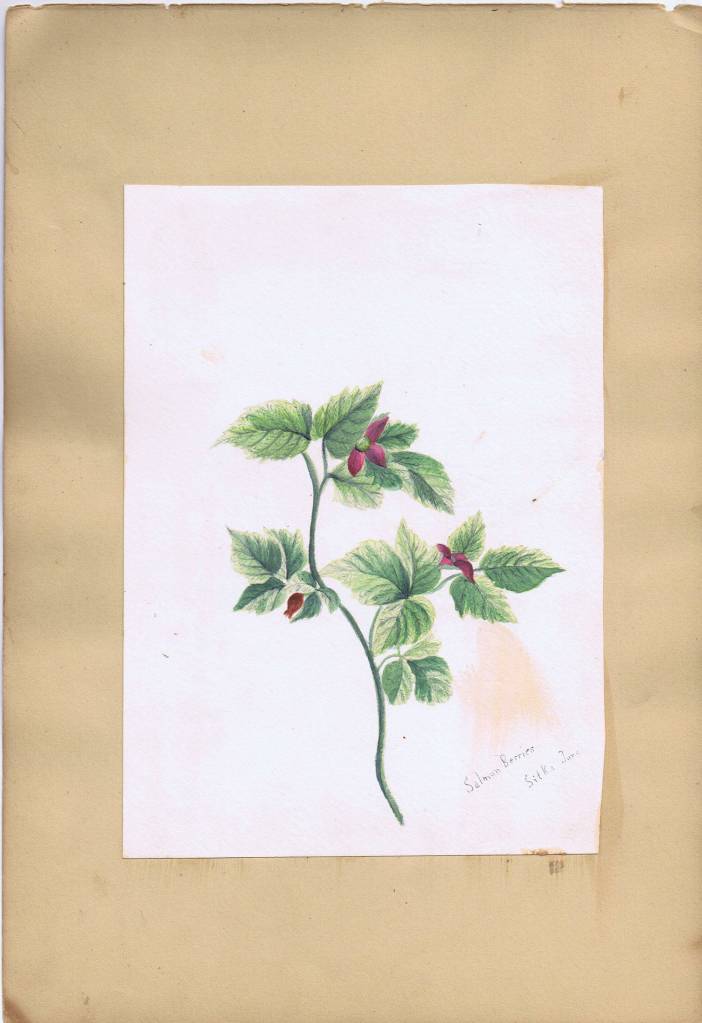
In her spare time, Paulina organized picnics, volunteered to teach English at the Russian school, taught Sunday school, and participated in amateur theatricals. Paulina also pursued her love of painting. She took lessons from visiting and local professional artists, such as Edward Chamberlain. She captured the local flora in watercolor studies, and her landscapes recorded early post-transfer Sitka scenes seldom seen in photographs.
In no apparent rush to “settle down,” Paulina did not marry until she was thirty-six years old — a mature age for a woman’s first marriage near the turn of the 19th century. When she did marry, it was to Alexander Archangelsky, a man more than ten years her junior. She continued to work after her marriage and even supported her husband by renting furnished rooms in California when the couple moved there in 1903 so that Alexander could go back to school to further his mining education. Upon his graduation, the couple returned to Alaska, where Alexander worked in Treadwell’s Red Bullion mine and mill, and helped to discover claims that would develop into the Hirst-Chichagof Mining Company on Chichagof Island.
In 1910, Paulina and Alexander left Sitka for Seattle and Honolulu, but soon continued on to Tahiti where the tropical environment and natural beauty of the islands won a place in their hearts. Paulina made numerous trips back to Sitka and the United States through the years but she always returned to Tahiti. In 1941, Paulina passed away in Vairao, a small port town on the southwest coast of Tahiti.
Westward expansion played an important role in fueling the women’s rights movement, and it is easy to understand why when one considers stories like Paulina Cohen’s. Paulina’s life choices challenged many of the traditional social norms of the period. As an entrepreneur, she helped to pave the way for independent businesswomen to follow. As an artist, Paulina left an invaluable visual record of life in Sitka at the turn of a new century.
• Kristy K. Griffin is the curator at the Sitka History Museum.