Living and Growing: The paradox of freedom
Published 10:30 pm Friday, September 19, 2025
I would like to take a moment to acknowledge that we are on the traditional territory of the Áakʼw Ḵwáan, the original inhabitants of Lingít Aaní. We pay respect to the Áakʼw Ḵwáan elders, both past and present, and honor the spiritual wisdom they bring to our society.
Freedom is one of the most prized ideals in our society. We celebrate it, fight for it, and defend it with passion. But in all our talk of freedom, we rarely stop to ask: What kind of freedom are we really talking about? Is freedom simply the absence of rules? Is it the ability to do whatever we want, whenever we want?
The teachings of the Bahá’í Faith suggest something deeper — and more demanding. Bahá’u’lláh, the founder of the Bahá’í Faith, offers a striking perspective that turns modern assumptions upside down. In His words:
“The liberty that profiteth you is to be found nowhere except in complete servitude unto God, the Eternal Truth. Wh’oso hath tasted of its sweetness will refuse to barter it for all the dominion of earth and heaven.
— Baha’u’llah, The Most Holy Book, pp. 63-64.
At first glance, this sounds like a contradiction: How can liberty be found in servitude? Isn’t freedom the opposite of obedience?
But here we encounter a spiritual paradox — one that, like all true paradoxes, reveals a deeper truth once we begin to live it.
Imagine a sailor on the open ocean. To the untrained eye, the sailor appears to be at the mercy of the wind and sea, bound by the need to study charts, follow currents, and adjust the sails with precision. But in truth, that sailor is freer than someone drifting aimlessly in a boat with no rudder and no knowledge of navigation. Freedom on the sea doesn’t come from ignoring its laws — it comes from understanding and working within them. It is only by aligning with the realities of wind and water that the sailor can chart a true course.
In the same way, religion teaches that spiritual freedom is found not in the rejection of all limits, but in choosing the right ones. The moral laws revealed by God are not chains to bind us — they are the compass, the current, and the sail that carry us forward. To live a life in service to a higher purpose is not to lose freedom, but to gain it in its most meaningful form.
This perspective challenges many of our cultural assumptions. We often equate freedom with individual choice, autonomy, or resistance to authority. These are not true freedom. Freedom “from” oppression, injustice, and fear is vital. But freedom to grow, to serve, to live with integrity — that is a higher form of liberty. And that kind of freedom requires discipline, intention, and often sacrifice.
The paradox is that submission — when it is to truth, to justice, to the will of God — does not diminish us. It refines us. It frees us from the tyranny of ego, from the chaos of impulse, from the emptiness of a life without purpose. It replaces drifting with direction. And that is a kind of sweetness we would never trade once we have tasted it.
As we move through the fall season — a time of change, of turning inward, and of setting down roots — we might reflect on what freedoms we are pursuing. Are we chasing the kind that scatters us, or the kind that shapes us? Are we merely seeking escape from constraint, or seeking the kind of discipline that leads to strength?
True freedom, like sailing, requires knowing where you’re going, and whom you’re trusting to guide you there.
Much love to all,
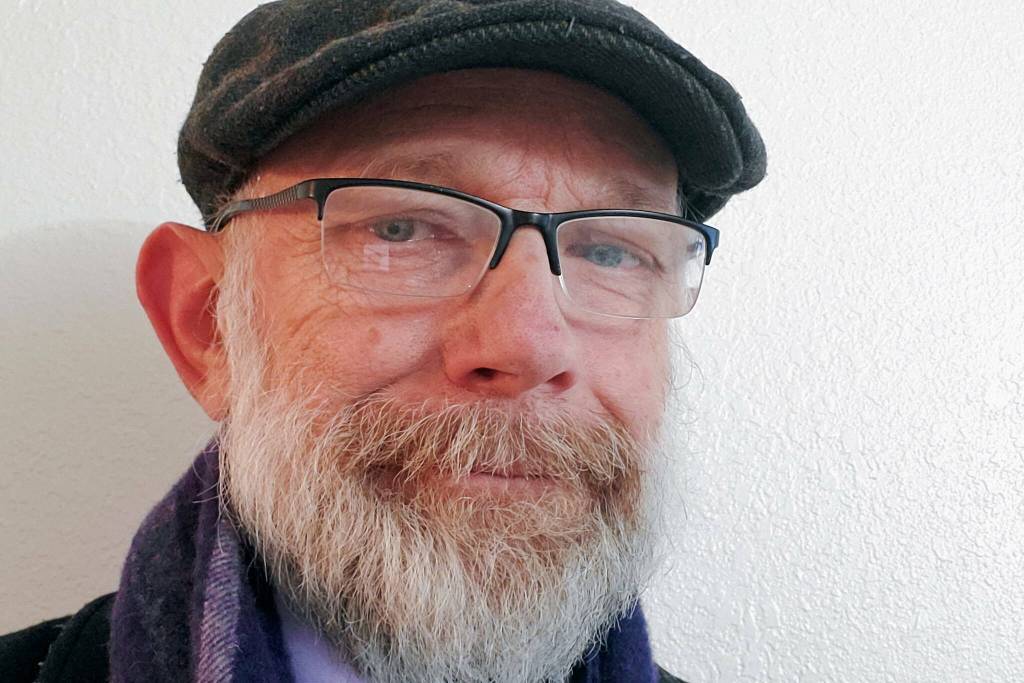
Adam Bauer is secretary Juneau Bahai Assembly.