Living and Growing: Christianity or Churchianity?
Published 9:30 pm Tuesday, December 31, 2024
Several cruise ship passengers arriving in Juneau this September were greeted on the dock with a sign that asked a religious question: “Why Aren’t Christians More Like Jesus?” Why indeed?
Having read widely as an amateur theologian, I have concluded that what Jesus started as a spiritual movement, Christianity, has often degenerated into various forms of bureaucratic religiosity, churchianity. To state the obvious, if church-goers do not have becoming more like Jesus as a personal goal, it is unlikely that they will make any progress in that direction.
Further, religious institutions that do not have similar spiritual goals can lose sight of their purpose. Who can dispute, for example, that the Vatican lost track of its identity when it allowed pedophile priests to continue their criminal abuse of unsuspecting families and their children?
If you need details on this systemic problem, read the Boston Globe’s investigative report in book form, “Betrayal, The Crisis in the Catholic Church.” If you prefer a DVD version, check out the Blu-Ray edition of “Spotlight” which features an interview with the actual reporters who did the hard work exposing patterns of criminal abuse later detected by others worldwide. Both versions are available via Juneau’s Public Library and its statewide partners. I own and cherish both.
Aside from the value of investigative journalism, the theological question remains: how did it happen? It appears that Rome’s spiritual shepherds forgot their sheep, all those innocents who were taught to depend on their church to dispense anything related to God. While Christ condemned those who would harm children, (see Matt 18:6, Mark 9:42, & Luke 17:2), the Roman Catholic Church put institutional interests ahead of individuals. Jesus did not matter.
This conflict of interests illustrates the root problem of churchianity: Christ’s messages get lost. Jesus ends up as a ceremonial mascot or icon designed to attract members rather than being treated as Lord and Master, as in the original spiritual movement known as Christianity.
Lest readers think I am just beating up on the Vatican, I overheard at one church conference, “We Protestants are more Catholic than we like to admit.” The churchianity problem is an ecumenical indictment; other faith tribes who think they are immune are deluding themselves.
Just as Scripture needs to be discussed in context, so does the history of modern Christianity. Revisiting history does not mean it should be revised to make it more palatable to current sensitivities. Rather, looking back to the past is important for understanding where we have been.
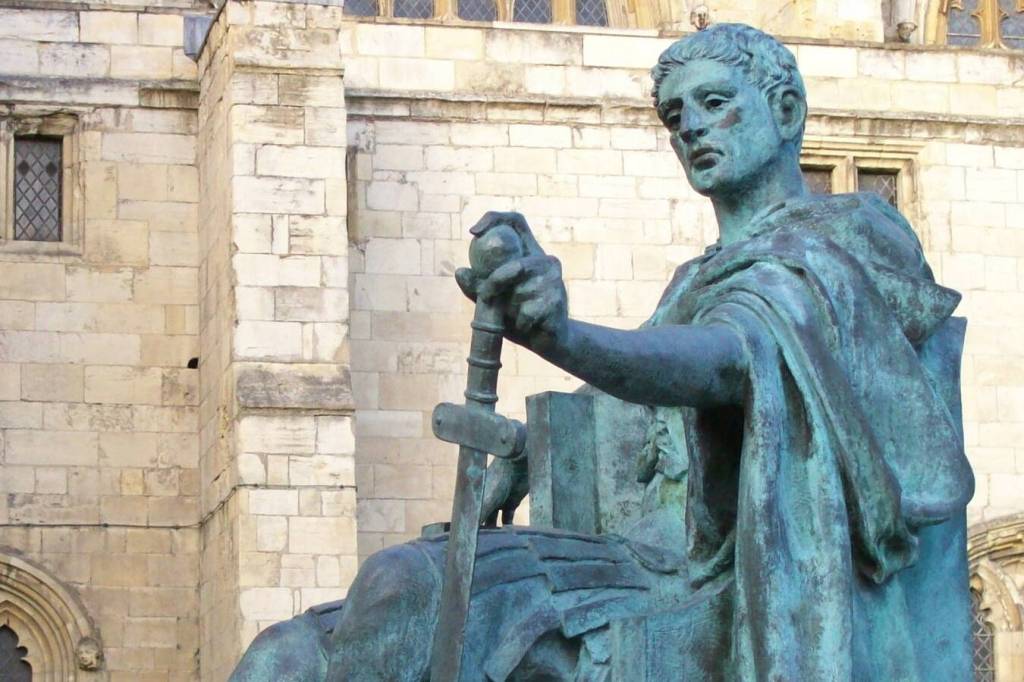
Constantine the Great, the fourth-century Roman Emperor, had a major impact on the Christian religion. Prior to his reign, Christianity was illegal and persecuted, but it then became the official religion of the Roman Empire.
It is difficult to exaggerate the significance of this Constantinian shift as a relatively new religion moved from persecuted to privileged. Earlier converts to Christ risked their lives; in contrast, those who joined the church after its governmental acceptance faced no such trials. Before Constantine, Christians could be killed for their belief; later, those who did not convert could be killed for their unbelief.
Earlier, faith involved personal transformation within an intimate spiritual community. After Constantine, Christianity became a structured institution with creeds, clergy, and canon. Gradual transition to the state church changed the character of what had been apostolic practice.
After the Constantinian shift, this religion’s organizational focus shifted from personal deeds to gatekeeper creeds along with other systematized rituals.
While the Protestant Reformation tried to deal with some unfortunate aspects of Christianity’s legacy organization, over time, the problem recurred: Jesus got lost.
At Judgment, God will determine whether churchianity or Christianity prevails, but I urge believing readers to consider what Jesus said (Matt 7:21-29), especially verses 24 and 26:
“…everyone who hears these words of mine and puts them into practice is like a wise man who built his house on the rock.”
“But everyone who hears these words of mine and does not put them into practice is like a foolish man who built his house on sand.”
Heed the warning in Revelation chapters 2 and 3:
“He who has an ear, let him hear what the Spirit says to the churches.”
• Mike Clemens has previously written columns in this space headlined “Twisting Scripture to suit themselves” and “Rethinking Hell?” “Living and Growing” is a weekly column written by different authors and submitted by local clergy and spiritual leaders. It appears every Saturday on the Juneau Empire’s Faith page.