A historic storm in Juneau: 10 sunken boats and what it takes to re-float them
Published 6:00 am Friday, January 16, 2026

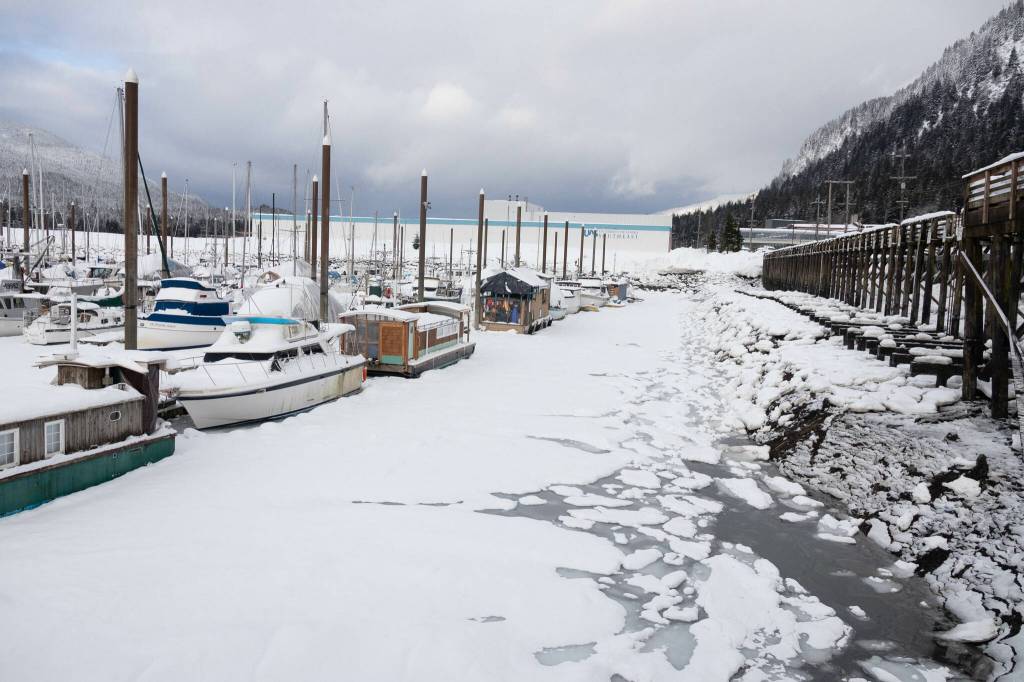
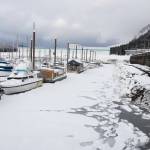
As the snow melts around Juneau in January, the city is still reeling from the historic snowfall of December.
A storm that wrapped up the new year dumped roughly 50 inches of snow over four days, breaking a four-day snowfall record that had stood since 1964. It also pushed Juneau past its snowiest December on record.
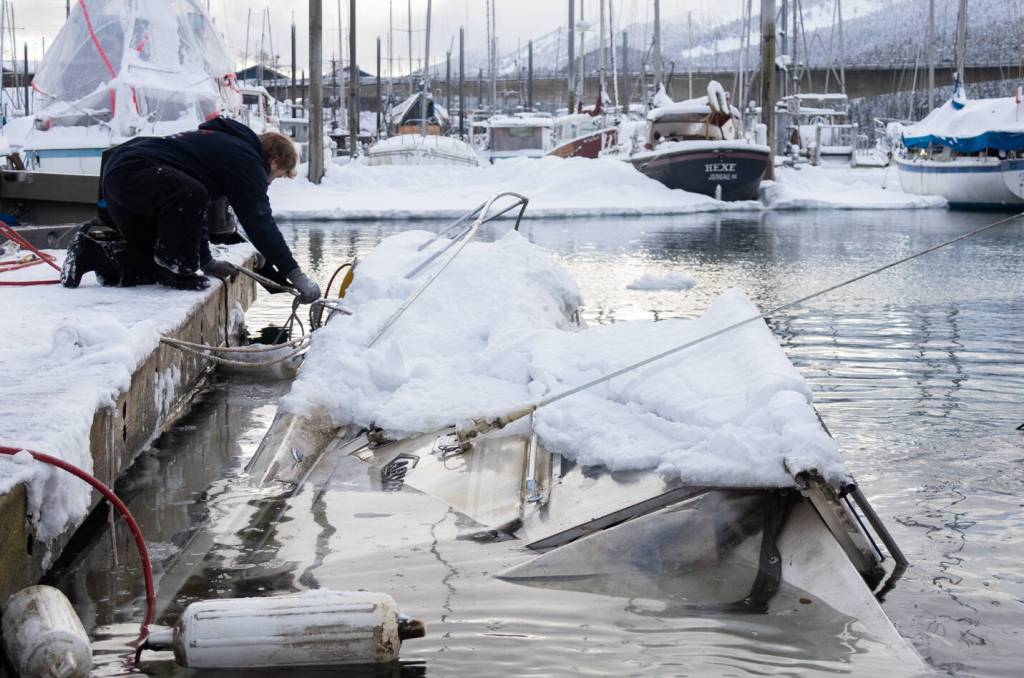
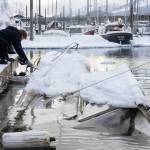
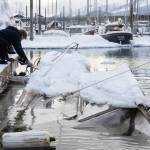
Among the many impacts of the storm, 10 boats sank in harbors across the city, weighed down by snow loads. Juneau Docks and Harbors deployed extra hands to shovel boats out before they went under.
“This is not a normal storm,” Docks and Harbors wrote in a social media post on Dec. 30. “The amount of snow we’re dealing with is something that comes around only once every few decades. With a very limited staff, our crews have been pulled in many directions responding to sinking vessels, safety issues, and emergency situations, which makes it difficult to focus solely on snow removal.”
Sunken boats don’t become wrecked relics. Left underwater, they can damage vessels overhead and threaten the environment by leaking fuel and other pollutants into the harbor.
Freeing a boat from frozen water
The crew of Melino’s Marine Service took to the docks at Harris Harbor on the morning of Jan. 8. Temperatures hovered just around 15 degrees.
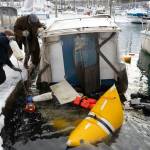
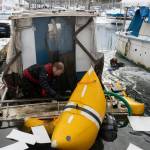
Their target was a 32-foot carver, submerged in water and ice.
“What’s going through my mind is, why do we have to do it today?” said John Melino, commander of Melino’s Marine Service. “Like, can’t we just wait for 40-degree weather on Saturday? That would be nice. We think 40 degrees is going to feel warm.”
Melino pointed to a sheen of oil spreading across the water’s surface.
“But, that’s why we have to be out here today.”
The Coast Guard contracted Melino to clear the wreck as soon as possible because the sunken boat posed a pollution threat.
Melino has worked in marine salvage for 15 years. His company is one of several operators contracted by the Coast Guard and private boat owners to raise boats after the storm.
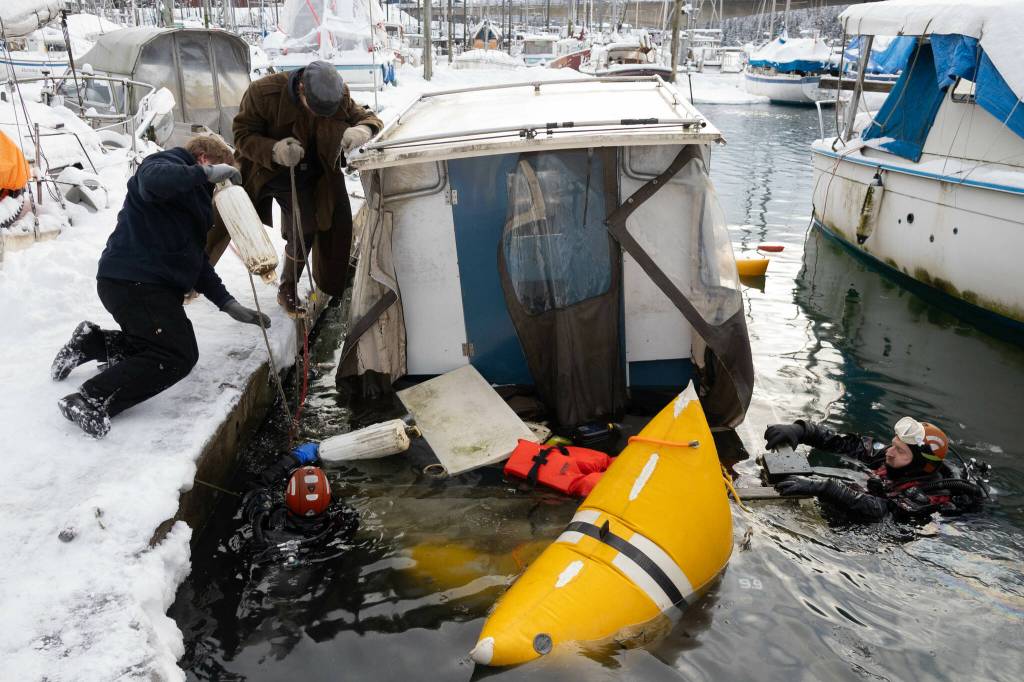
The crew began by hacking away ice from around the boat. Then they set up two pumps to blast water and clear the small bergs so divers could get below the surface.
Once the boat is raised, salvage captain Trevin Carlile said, there’s about an 80% chance it will float on its own if it sank due to snow load alone.
A boat under ice
The boat’s owner arrived at the dock later that morning. He declined to give his name, saying he didn’t want additional attention.
“I got the harbormaster and the Coasties and the environmental people to deal with,” he said. “That’s enough phone calls.”
He said he got a call from the harbor early in the week warning him to check on the snow load. He said he shoveled most of the snow from the boat, and checked the bilge pump and saw that it was clear. A few days later, the boat had gone down.
“I’m just wondering what could have prevented it,” he said. “That’s what just drives me nuts. What can I have done to prevent this?”
He said he has another boat in another harbor that has stayed afloat.
“It’s got a bunch of heavy snow on it,” he said. “You gotta chisel it away. You can’t even pick it up with the snow shovels. Those are useless.”
Raising a boat
At Harris Harbor, two divers jumped in the frigid water.
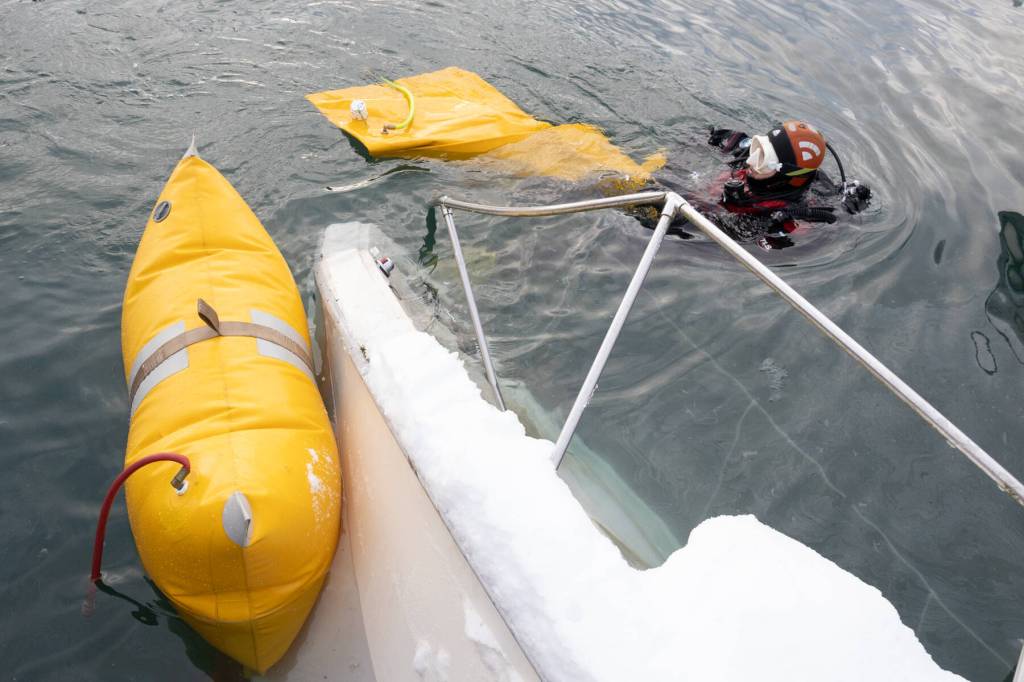
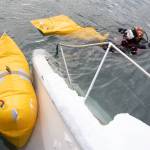
They maneuvered around the murky water, attaching bright yellow lift bags to the bow and stern. At times, the crew pushed the boat away from the dock to keep it from rising up under the dock.
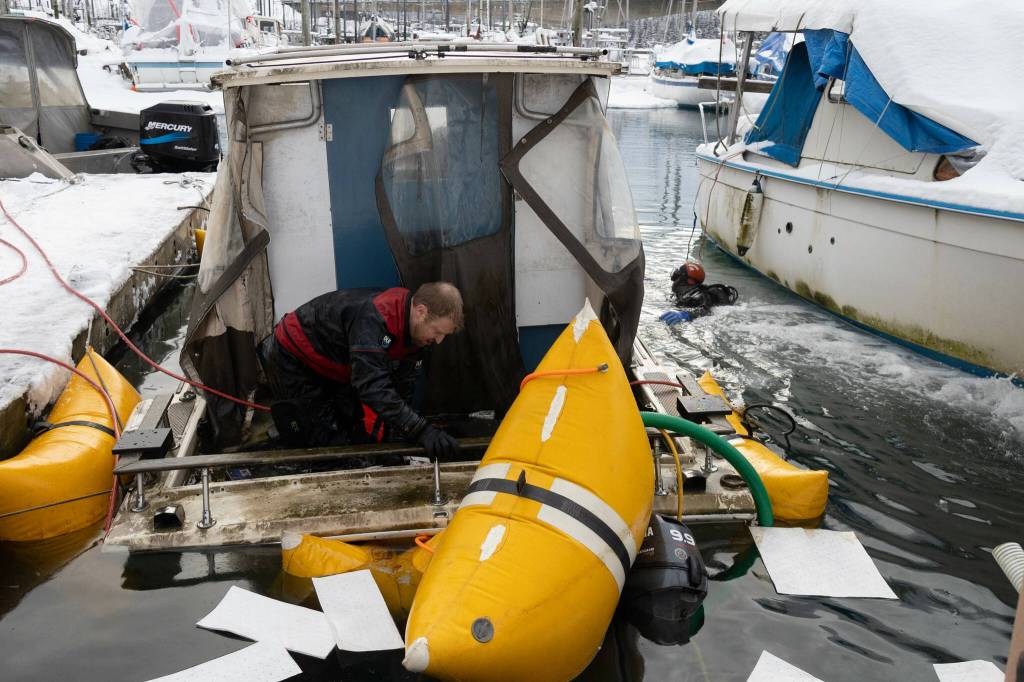
It took seven lift bags to bring the boat above the surface, where they pumped out the remaining water.
Melino’s crew found around 80 gallons of fuel on board, along with household hazmat, such as motor oil, fire extinguishers and refrigerators. The owner ultimately decided to scrap the vessel, forfeiting it to the harbor. Melino’s crew sorted through the hazardous materials from the boat, before demoing it for disposal.
The carver was one of four boats Melino’s Marine Service has raised since the storm.
Who pays for the cleanup?
Two Coast Guard officials stopped by the re-floating operation. Their biggest concern was the threat of pollution.
When a boat sinks, the harbormaster or owner submits a notification to the National Response Center. The Coast Guard assesses the situation, determines whether fuel is onboard, and contacts the owner to see if they have a response plan. If pollution is present or likely, the Coast Guard may take over the cleanup.
In those cases, the USCG hires contractors like Melino’s, and the National Pollution Funds Center pays for the initial response. The boat owner can later be held financially responsible.
At 6:30 a.m. Alaska time on Dec. 31, James McCants was out of town when he got the call that his boat, “Care Free,” had sunk at Statter Harbor.
Fuel was bubbling to the surface, and the smell of oil was strong, prompting the Coast Guard to intervene. They contracted a Seattle company to immediately respond and float the vessel.
The next day, the Coast Guard issued McCants a notice of federal interest, stating that McCants is financially responsible for the pollution damages. The letter stated that failure to comply with cleanup orders could result in penalties of up to $59,000 per day, up to three times the cost incurred by the Oil Spill Liability Trust Fund.
By the end of the week, the salvage company had re-floated the boat.
“You can delegate authority, but you cannot delegate responsibility. I learned that in the army,” McCants said. “I’m not blaming any of this on anybody. It’s your boat. You bought it, you pay for it, end of the day. You’re ultimately the responsible person, you know, and that’s always going to be true.”
McCants said he had someone staying in Juneau looking after his boat, but the caretaker wasn’t physically able to keep up with the snow. When McCants learned his boat was in danger of sinking, he reached out to people online trying to find someone to shovel the boat. He said he wasn’t able to find help, as much of the city was buried under snow and most were dealing with emergencies of their own.
“People were proactive about the snow,” McCants said. “We saw the storm coming. Some of us already had people watching our boats. But we still had a boat sink because the whole city’s underneath feet of snow.”
Watching the docks
At the docks, crews worked under the heaviest snowfalls trying to keep up with heavy snow loads on boats and docks.
Kelly Leamer recently joined the team at Juneau Docks and Harbors, aiding snow clearing amidst the storm. He described one night when staff spotted a boat taking on water.
“It was all hands on deck,” Leamer said. “They just pumped all the water out, but it was about 10 minutes from sinking.”
He’s lived in Juneau for 54 years and said he had never seen a storm like the one at the end of December. Leamer said the harbor crews and volunteers helped save more than a dozen boats in just a few weeks on the job.
“That’s what I remember about Juneau — everybody’s watching everybody’s back,” Leamer said. “People would say, ‘Hey, that boat looks funky.’ Now, all of a sudden, there’s people who don’t even know me, don’t know whose boat it is, and just start cleaning it off. That’s the kind of community we have.”
This story has been updated since its original version to correct photo captions.