Juneau group concerned B.C. mine will bring large vessels up Taku River
Published 4:30 am Wednesday, April 22, 2026
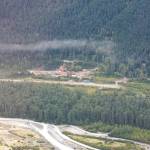

A Juneau-based group is voicing concerns about the company behind a B.C.-based mine potentially making large-vessel trips up the Taku River.
Salmon Beyond Borders issued a news release Tuesday (April 21) warning that New Polaris had reached a new stage of the project – submitting it’s application to British Columbia’s environmental assessment office – and the potential for large-vessel trips up the Taku River.
“Canagold’s excessively long vessel is a spectacularly bad idea for the Taku, Southeast Alaska’s most productive wild salmon river — and one of the few rivers in Alaska that not only made but exceeded Chinook salmon escapement last year,” Salmon Beyond Borders director Breanna Walker said.
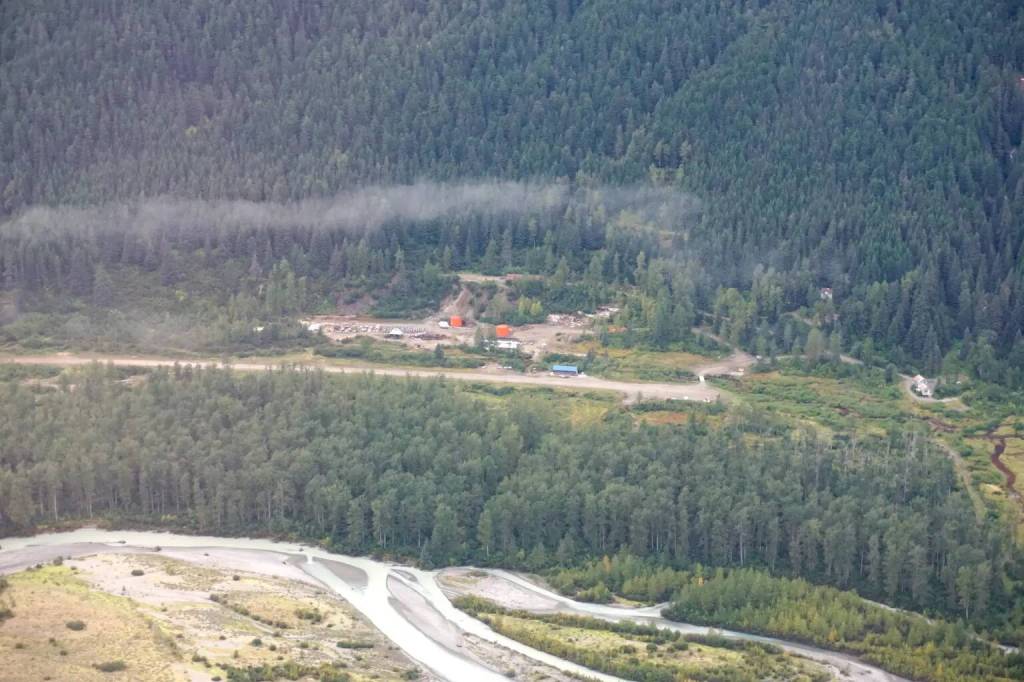
The project site, which is 67 miles northeast of Juneau and 62 miles south of Atlin, B.C., is not accessible by road, according the to New Polaris’s application to B.C.’s environmental assessment office.
It’s currently accessible by light aircraft, using a small airstrip located on the property. New Polaris plans in the future to replace is with a larger airstrip for private charter flights carrying personnel, supplies and concentrate to and from Whitehorse, Yukon, Atlin or Juneau.
New Polaris is also planning to use the Taku River to the confluence of the Tulsequah River to transport bulk supplies and heavy equipment during the construction period and occasionally during operations for non-hazardous items that cannot be transported by the available aircraft.
“With this plan, Canagold is endangering the health and productivity of the Taku River, its salmon, and the people who are connected to it,” said Salmon Beyond Borders advisor Heather Hardcastle, who grew up commercial fishing with her family in Taku Inlet.
Cabin owner Ed Shanley’s property is the farthest upriver private property on the U.S. side of the Taku.
“The river gets funneled through a spot that might be 100 yards, at that. I’ve seen a lot of incidents over the years, as far as boats getting into trouble right there. And a lot of folks on the river are on a floodplain and pretty sensitive to bank erosion,” he said.
The application says about 75 return trips from Juneau to a landing site and back would happen each season between June and September. It adds the trips would be on a self-propelled landing craft with 60 ton capacity or greater.
New Polaris says planning for the number of vessels required and final specifications will be determined through field trials in 2026.
The company has evaluated two new landing sites as the previous mine’s landing sites are now inside a parks conservancy area.
The application says there are “considerable environment and social drawbacks” to constructing a landing site on the Taku River, also know as the T’aakú Héeni.
However, morphology changes of the main stem of the Taku has left the landing site under shallow water during high-flow months – the barging seasons of June to September. The shallow water, combined with substantial annual movement of river substrate, would mean dredging would be required on an annual basis to maintain a landing location.
An access road causeway would need to stretch south of the airstrip and below the high-water mark of glacial outburst floods.
A landing site on the Taaltsuxéi Héen is the preferred location, the application notes. It says the location is in deeper water and the access road to it from the airstrip would result in less new clearing area and be logistically simpler to maintain and operate.
The drawback to the site is that it’s located on an outside bend of the Taaltsuxéi Héen, and active, natural erosion of the bank during freshet and glacial outburst flooding will need to be armoured to protect the longevity of the location.
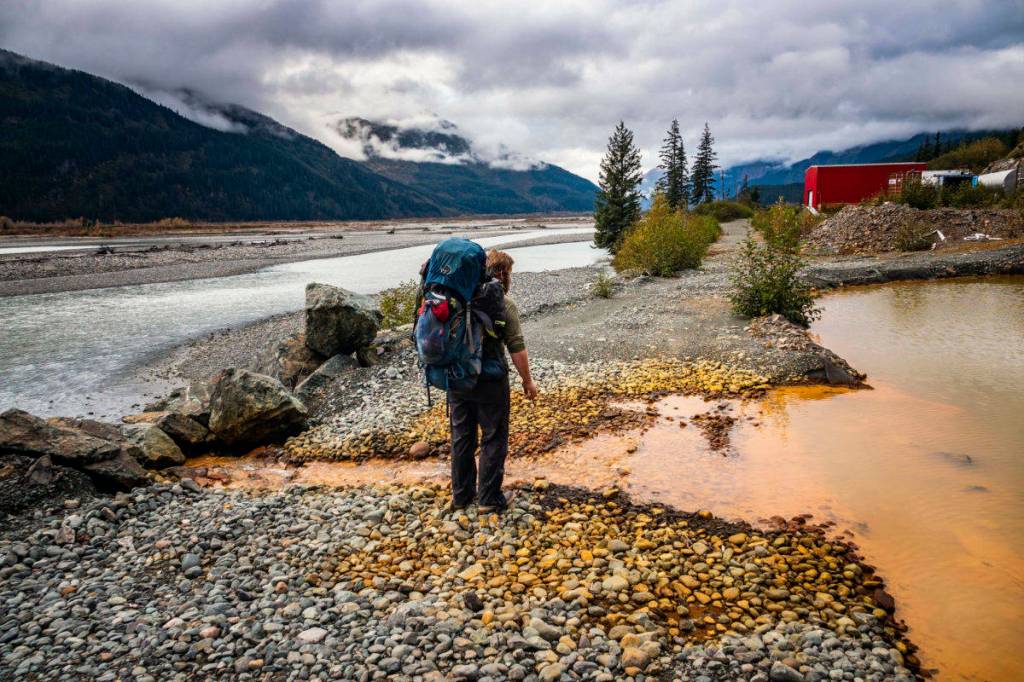
Salmon Beyond Borders also warned that in 2008 a tug operating for another Canadian mining company, Redfern Resources, almost capsized trying to get up the Taku River to the Tulsequah Chief Mine. The Tulsequah Chief Mine, an abandoned copper, lead and zinc mine, had been leaking toxic acid mine drainage into the Tulsequah River — a main tributary of the Taku River and a prime Alaska salmon habitat — for more than six decades since the mine’s original closure in 1957.
New Polaris isn’t actually a new mine, but a re-development of an underground mine previously known as the Polaris Taku mine that operated between 1937 and 1951. However, Polaris Taku operated prior to the B.C. Mines Act, which came into effect in the mid-1960s, so it’s now considered a new mine from a reulatory perspective.