Bears: Beloved fuzzy Juneau residents — Part 2
Published 10:30 pm Tuesday, September 2, 2025
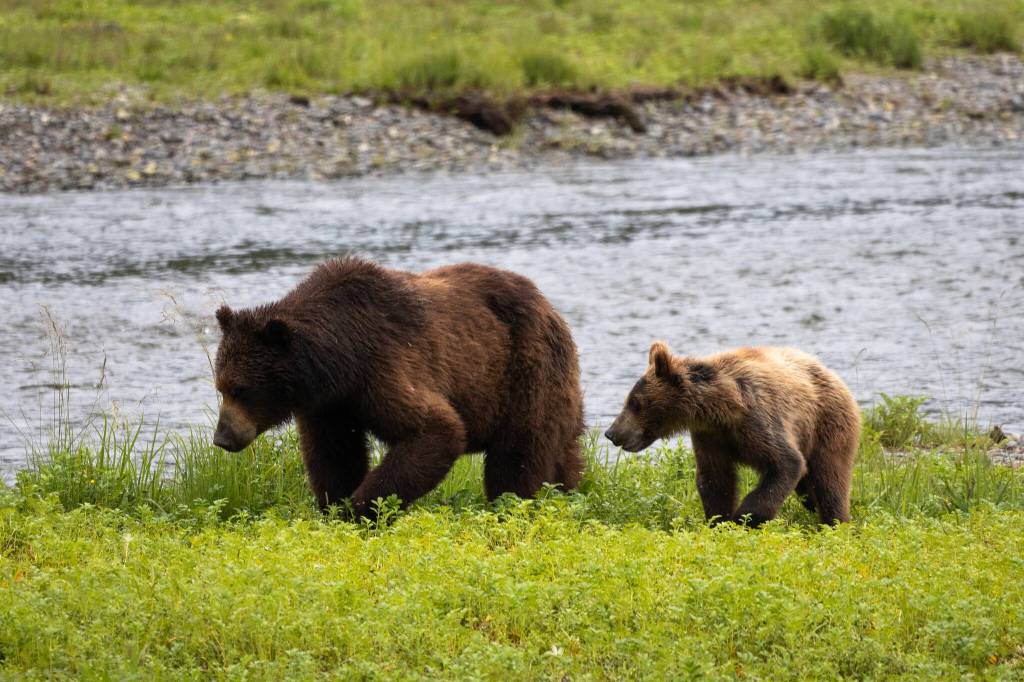
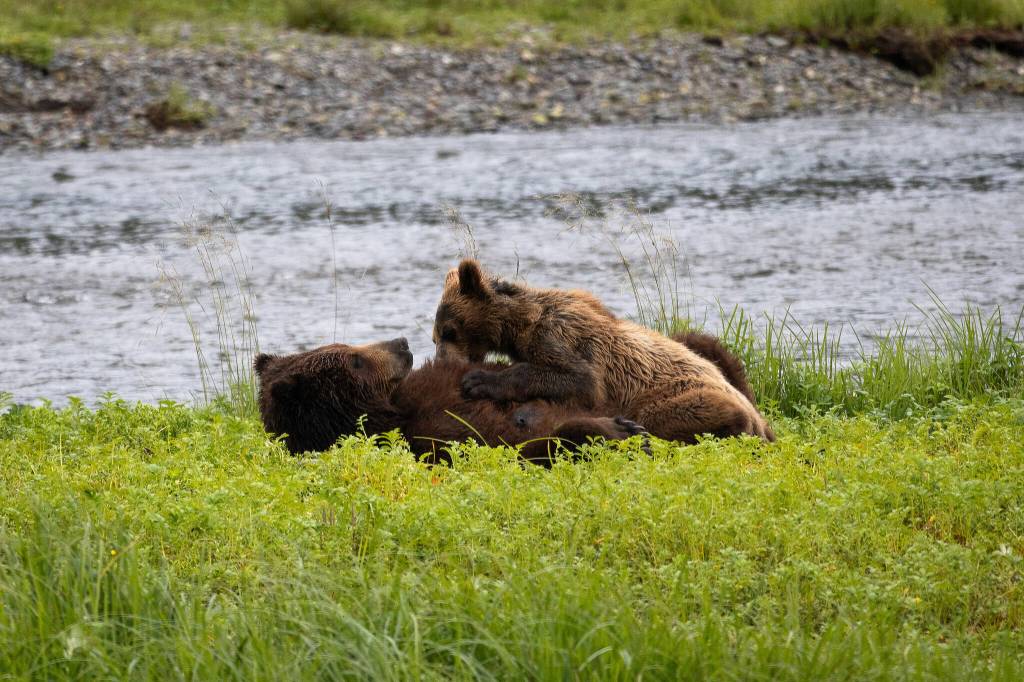


Last summer, I stepped off a float plane into a lake on Admiralty Island. All of my camera gear was on my back, and a group of friends and I carefully made our way first to shore, then to the Pack Creek viewing area, where we sat in the dirt and photographed brown bears for the better part of a day.
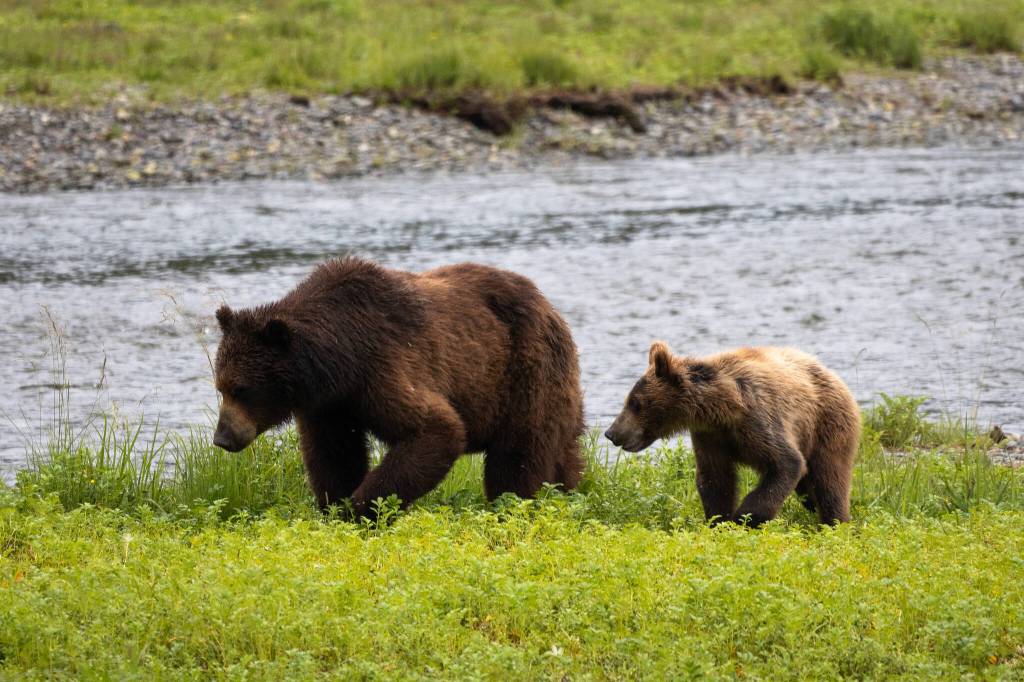
That afternoon, a sow and her cub ambled toward our group and plopped down about a hundred yards away. The massive bear rolled onto her back, and to my amazement, her fuzzy little cub crawled on top of her and started nursing.
That was the day my fascination with bears began.
Humor me for a moment and picture yourself next to a brown bear. Your short, rounded teeth don’t stack up well against the bear’s longer canines: He has 10 more teeth than you do, and his bite force is seven times as strong.
You get one point for having opposable thumbs, but your furry counterpart has claws up to 5 inches long. If you were to hold your hand up to the bear’s paw, your middle finger wouldn’t even reach his upper pads.
When the bear is on his hind legs, he towers over you. When he’s on all fours, you’re almost eye-level, and can see the hump of muscle between his shoulders that gives him the ability to deliver bone-crushing blows. If he’s a big bear, he’ll weigh over 1,500 pounds. His thick hide is vastly stronger than the puny layer of skin protecting your vital organs. Yet humans still consider ourselves the top of the food chain simply because we’ve used our intelligence to figure out how to kill other beings more effectively and from further away.
In Western Alaska, the Department of Fish and Game has taken it upon themselves to boost the ailing Mulchatna caribou herd by reducing its natural predators. Despite a lack of sufficient bear population counts, ADFG has killed at least 186 bears in the past two years. Without knowing how many bears live in the region supposedly needing management, they run the risk of pushing them to the brink of extinction by shooting at will. Additionally, most scientists agree climate change — not predation — is what’s affecting the caribou population. The arrogance of assuming we can fix a problem we’ve created by wreaking even more havoc on the environment is astounding.
In 1948, the legendary conservationist Aldo Leopold wrote, “Conservation is getting nowhere because it is incompatible with our Abrahamic concept of land. We abuse land because we regard it as a commodity belonging to us. When we see land as a community to which we belong, we may begin to use it with love and respect.”
The Mulchatna caribou herd — as important as it is for subsistence hunting — doesn’t belong to us. The bears who have occupied Western Alaska far longer than we have don’t belong to us either. This delicate ecological balance is one we’ve already upset. We don’t get to fix it by slaughtering bears so we can continue to kill caribou.
When I first read about these aerial killings, I thought of the moment on Admiralty when the mama bear looked directly at us. There was a wary understanding: She could kill one of us with a mere swipe of her paw, and we could make her life hell by bear spraying her. Neither of these things happened. We all simply stayed still and shared our peaceful corner by the coastline.
• Chloe Anderson is a naturalist photography guide and freelance photojournalist based in Juneau. Her work has appeared in The Associated Press, The Denver Post, Alpinist magazine and more. For more, visit www.chloeandersonphotography.com.