‘Work, actual work’ is underway in the state Senate
Published 1:30 am Monday, February 7, 2022
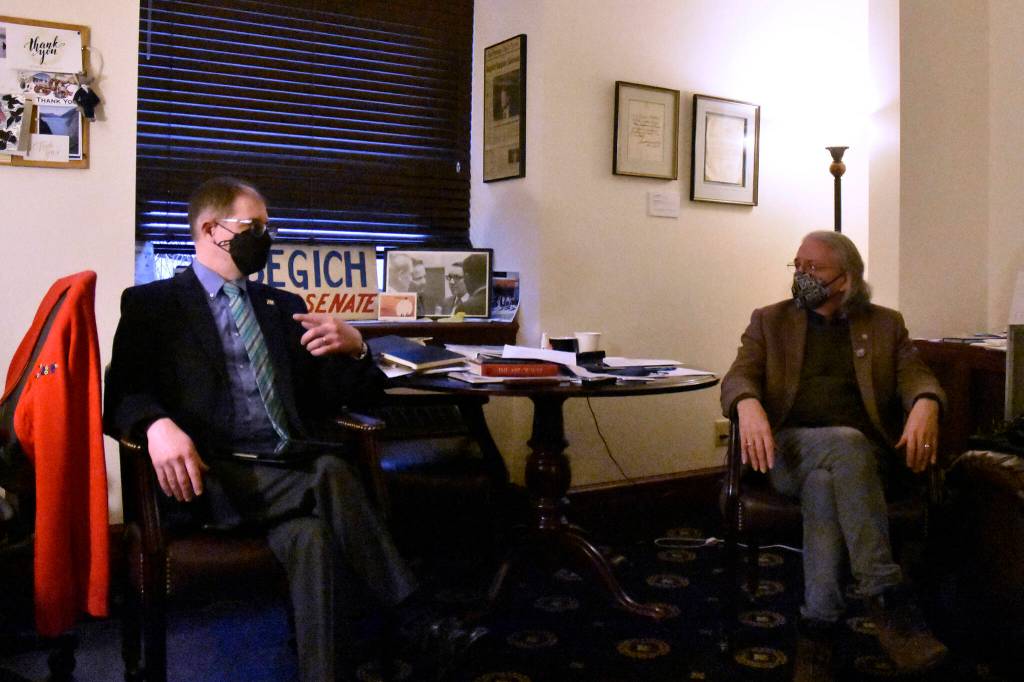
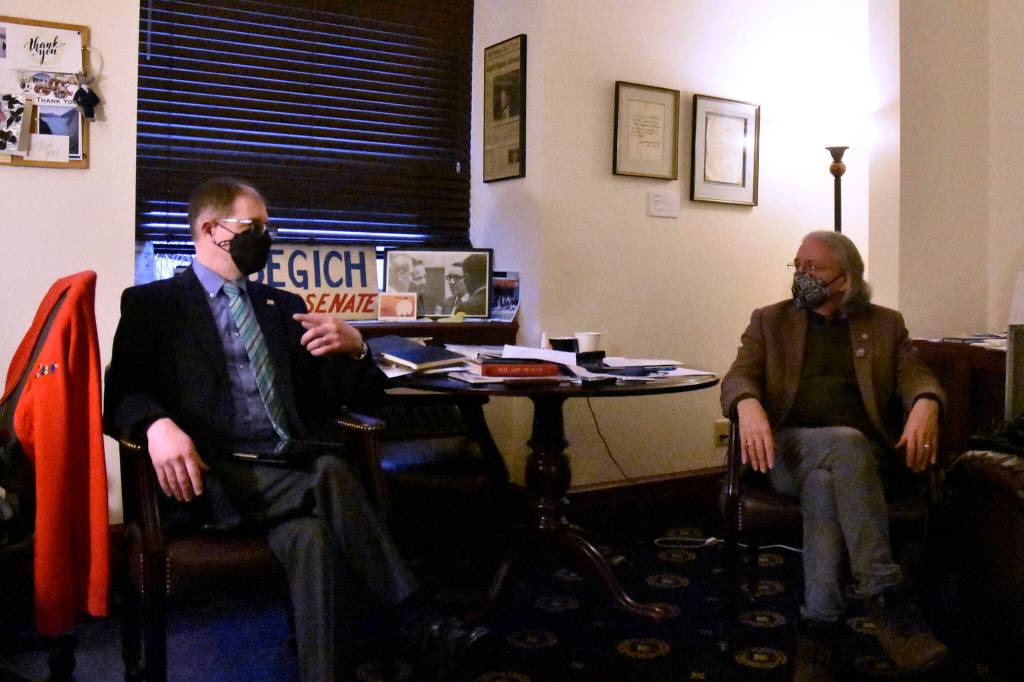
Members of the state Senate Minority are optimistic about the progress being made in their body, saying communication and cooperation between caucuses has been good.
In a meeting with reporters Monday, Senate Minority Leader Tom Begich, D-Anchorage, and Sen. Jesse Kiehl, D-Juneau, said the possibility of beneficial legislation passing during this session was high.
Communication from Gov. Mike Dunleavy’s office has increased, the senators said, and while disagreements on policy certainly exist, Begich said the governor’s office has shown a willingness to engage.
“I don’t agree with about two-thirds of what the governor’s putting out there, but I’m willing to sit down with him,” Begich said.
There were elements of the governor’s elections bill Begich said he could see working with and the same is true of other pieces of legislation coming from the governor or Senate Republicans.
Begich has championed a comprehensive reading bill for the past few years and an altered version of that bill has gained bipartisan support in the Senate. The original version of that bill, the Alaska Reads Act, was originally introduced by Begich and Dunleavy in 2020.
But there’s a lot on lawmakers’ plates this year. It’s an election year with the governor’s seat up for grabs and a raft of federal funding coming to the state. The Legislature has a constitutional obligation to pass a budget during their session, but lawmakers want to have a say in how funds for the Bipartisan Infrastructure Law are spent.
“If the federal guidelines take as long as they tend to take, it may be an extra session,” Kiehl said. “I don’t think there’s interest in the Senate in letting the governor divvy up all the money.”
Begich said there was a willingness in the Senate for lawmakers to call themselves into special session, allowing them to tackle whatever topics they choose. Special sessions called by the governor are limited to what the executive puts on the call of the session. All of last year’s four special sessions were called by Dunleavy.
Begich estimated there would be around 18 votes out of 20 in the Senate willing to call themselves into session.
[House to hold committee hearing on Oath Keepers]
But any momentum in the Senate is tempered by what happens in the Alaska House of Representatives where the Majority Coalition has only a razor-thin edge of 21 of 40 members. House members were deeply divided last year over the budget, with members of the minority calling for more of a focus on the Permanent Fund Dividend and the state’s long-term fiscal deficit.
Kiehl served on the fiscal policy working group established by the governor in one of last year’s special sessions, and said there was some momentum that came out of that group that could lead to some kind of legislative action.
“It’s tough to get people to make painful decisions when there’s some cash around, and there’s some cash around,” Kiehl said. “And there are a number of us who are continuing to work on that, I think in an election year with some cash around, it’s an uphill struggle.”
The Legislature has refused to follow the statutory formula for the PFD for the past several years, and there are several pieces of legislation that could change the formula. Dunleavy previously advocated paying a dividend based on the current formula but last year changed his position. Dunleavy last year proposed splitting the money the state draws from the Alaska Permanent Fund in half, with half used for state services and the other for dividends.
A few lawmakers, Kiehl included, have introduced legislation that would similarly split the state’s Permanent Fund money 50-50, but whether any of those bills pass remains to be seen.
“The conversations are ongoing,” Kiehl said. “I think the biggest fight is whether you constitutionalize a split.”
Whether this can all be done in the 121 days of a regular session is an open question, the budget and other more controversial bills are typically reserved for later in the session, Begich said. But both Senators said they were confident of meaningful action.
“Conversations in the Senate are more open across caucuses than I have seen them in the two-and-a-half decades I have been in the building,” Kiehl said. “In the Senate, the atmosphere is one of work, actual work.”
• Contact reporter Peter Segall at psegall@juneauempire.com. Follow him on Twitter at @SegallJnuEmpire.