Tribes, environmental groups happy with Murkowski water quality money
Published 2:51 pm Wednesday, June 27, 2018
Correction: A previous version of this article stated that the 2014 mine tailings dam failure at Mount Polley affected Alaska waters. It affected waters near Alaska in British Columbia. This article has been updated to reflect the change.
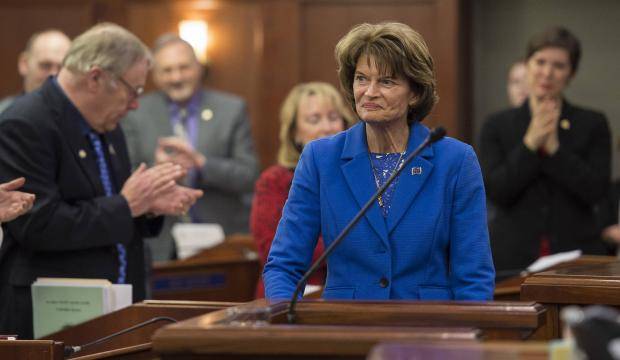
Environmental and tribal groups worried about mining development in British Columbia are celebrating a recent move by Sen. Lisa Murkowski to spend $1.5 million on studying water quality on Southeast Alaska’s border-crossing rivers.
The money, allocated in a series of provisions to an Interior Department spending bill June 14, will go to data-gathering via stream gauges on the Taku, Unuk, Alsek and Chilkat rivers should it get final approval from a Senate vote.
The data will help establish the state of water quality on four rivers in Southeast. If water quality dips after a mine opens, that data will make the change clear, explained Southeast Alaska Conservation Council scientist Guy Archibald in a Wednesday phone interview.
It’s something environmental groups have been asking for for a while. They fear that if one of the more than a dozen proposed mines on transboundary rivers pollutes waters — like it did with the catastrophic failing of a mine tailings dam at Mount Polley in 2014 — Alaska would have to foot the bill for cleanup. B.C.’s mines, an audit has shown, are under insured by $1.2 billion and there aren’t enforceable rules for Alaska to wrest cleanup money from the provincial government.
Murkowski’s stream gauges would help establish a baseline for water quality on the Taku, Chilkat, Unuk and Alsek. In the case that a mine does pollute Southeast’s water, that data could prove it.
Archibald is happy with the move, but added that B.C. needs to kick in their fair share of money toward water quality monitoring. A Memorandum of Understanding signed in 2015 between B.C. and Alaska calls for both B.C. and Alaska to work together to monitor water quality monitoring and make the data available to the public.
“I think this is a great step in the right direction and I think now the ball is in B.C.’s court to reciprocate on the Memorandum of Understanding,” Archibald said.
The spending bill passed through the Interior, Environment and Related Agencies Appropriations Committee, which Murkowski chairs, and has proceeded to the Senate floor for final consideration. Murkwoski’s provisions direct the U.S. Geological Service to work with local tribes to establish the stream gauges, some of which are already in place but need maintenance.
Raymond Paddock, Environmental Coordinator for the Central Council of Tlingit and Haida Tribes of Alaska, said they’re in talks with the with the USGS over how the two can partner to monitor water quality. Central Council samples water monthly on the Taku and Stikine rivers, analyzing it for heavy metals. They’ve recently added the Alsek, near Yakutat, to their monitoring.
Paddock said it’s a “positive thing” that the federal government wants to partner for further monitoring. Central Council doesn’t want to duplicate water monitoring efforts, Paddock said, and the two groups are currently working out how to best do that. If one can’t get out to a river for field work, maybe another can, Paddock said.
The Ketchikan Indian Community is the other tribe working with the USGS and will be heading up new monitoring efforts on the Unuk River, downstream of the Kerr-Sulphurets-Mitchell mine.
“Partnership is in development right now. One of the main things we’re looking to do is share resources and build off each other,” Paddock said.
Jill Weitz, head of the environmental group Salmon Beyond Borders, said in a statement that the stream gauges will prove important should Alaska’s water become tainted by the more than a dozen mines in these watersheds. Currently, no enforceable protections are in place to provide Alaska money for mining pollution abatement.
“It’s imperative we have good, reliable science documenting the quality of these rivers so that we can hold the Canadian government accountable for downstream impacts to U.S. resources,” said Weitz said. “Senator Murkowski’s leadership is huge for this important work, and we look forward to the USGS collaborating with tribes and state agencies that are already on the ground.”
• Contact reporter Kevin Gullufsen at 523-2228 and kgullufsen@juneauempire.com. Follow him on Twitter at @KevinGullufsen.